A few days ago in a video, we discussed a multi-wavelength light source scheme based on Kerr frequency combs. This article explains its principle.
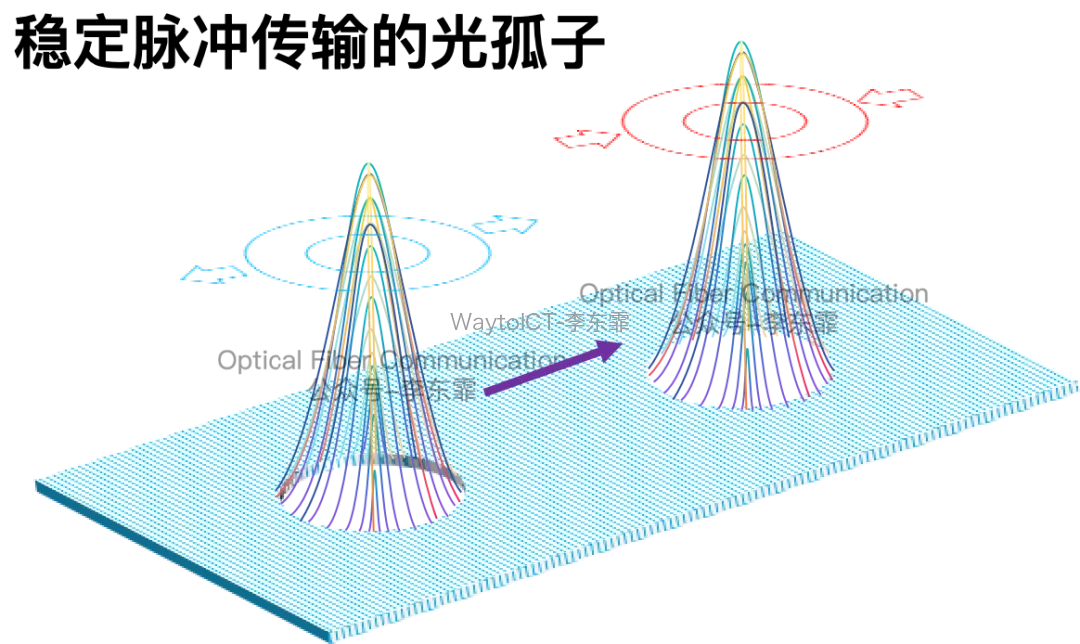
The principle is that, in a passive microring resonator with anomalous dispersion, a continuous pump produces gain through Kerr four-wave mixing. When the dual balance of “dispersion and Kerr nonlinearity” plus “gain and cavity loss” is satisfied, a stable Kerr frequency comb can form.
Without this balance, the optical pulses broaden and eventually dissipate during propagation. In addition, in the common communication bands, the material dispersion of most materials (such as silica and silicon nitride) is normal dispersion.

Whether normal or anomalous, dispersion alone broadens the pulse. We usually regard dispersion as harmful: over a long transmission distance, the intra-cavity pulse broadens, causing waveform distortion and degraded sensitivity.
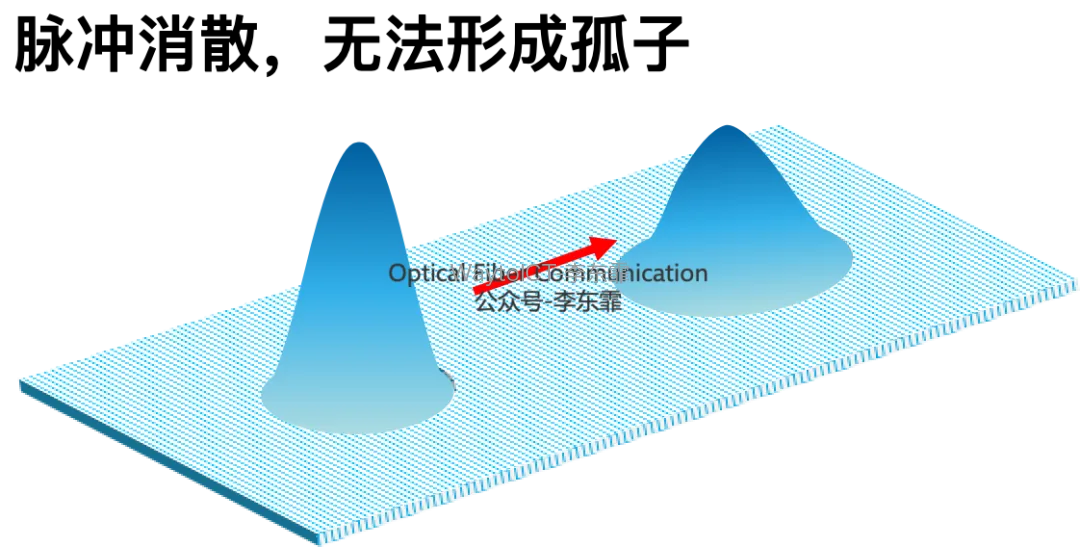
However, dispersion can also be used to balance the Kerr nonlinearity in the resonator. Changes in light intensity produce a Kerr frequency shift, changing the propagation speed and thereby compressing the pulse.
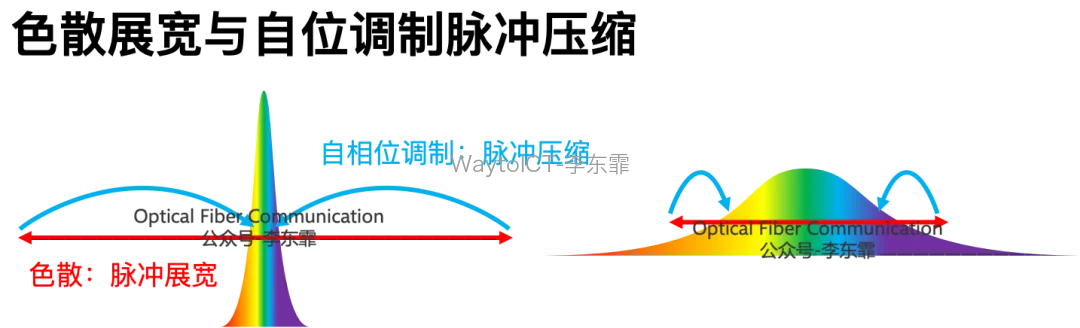
When nonlinear compression and dispersion broadening exactly cancel, and gain and loss are balanced, a stable optical soliton can form.
Dispersion is always present, but Kerr nonlinearity (such as four-wave mixing or self-phase modulation) does not necessarily occur. It requires the pump power to exceed a specific threshold to excite sufficient nonlinearity.
Moreover, the Kerr effect causes a red shift of the resonance frequency, giving the resonator a bistable characteristic. Depending on the detuning direction, the system is roughly divided into blue-detuned and red-detuned regions, and the pulse evolution is completely different in each.
So sufficient optical power is only a prerequisite; the final state also depends on the detuning between the pump frequency and the resonator.
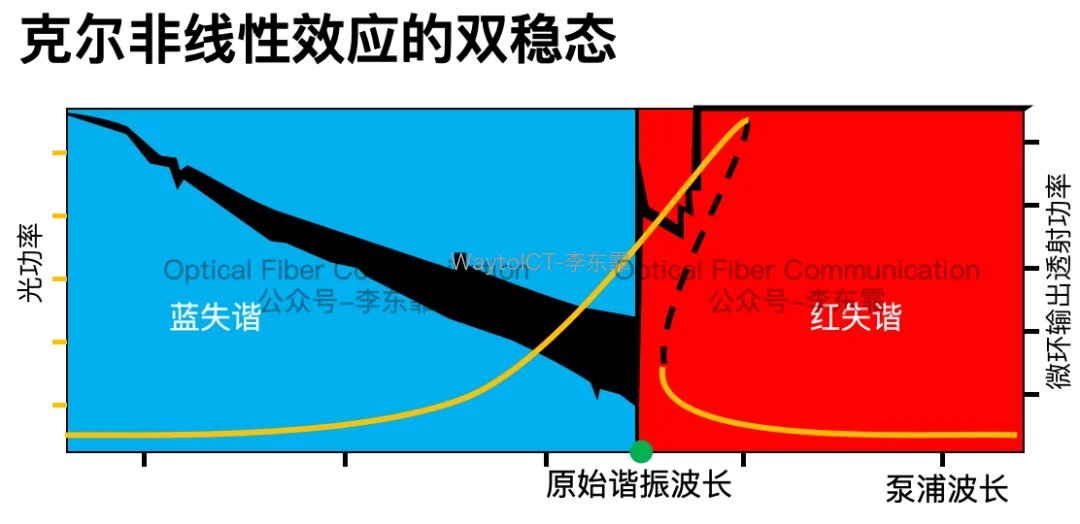
In the blue-detuned region, as the wavelength approaches the resonance peak, the intra-cavity power keeps rising, dominated by a strong continuous wave. High power triggers modulation instability, producing primary sub-combs and low-coherence chaotic combs.
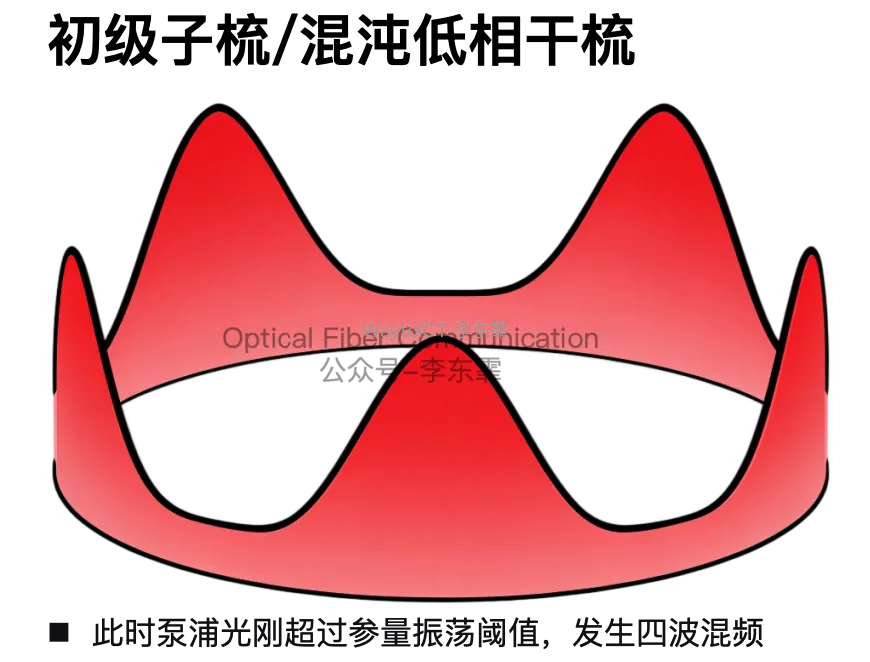
Once there is light in the cavity, a Kerr frequency shift occurs, and the actual operating resonance is pushed to longer wavelengths, i.e., a red shift.
In the transition region toward red detuning, the intra-cavity accumulated power reaches its maximum, and the waveform is very messy, full of dense and uneven spikes with no regularity.
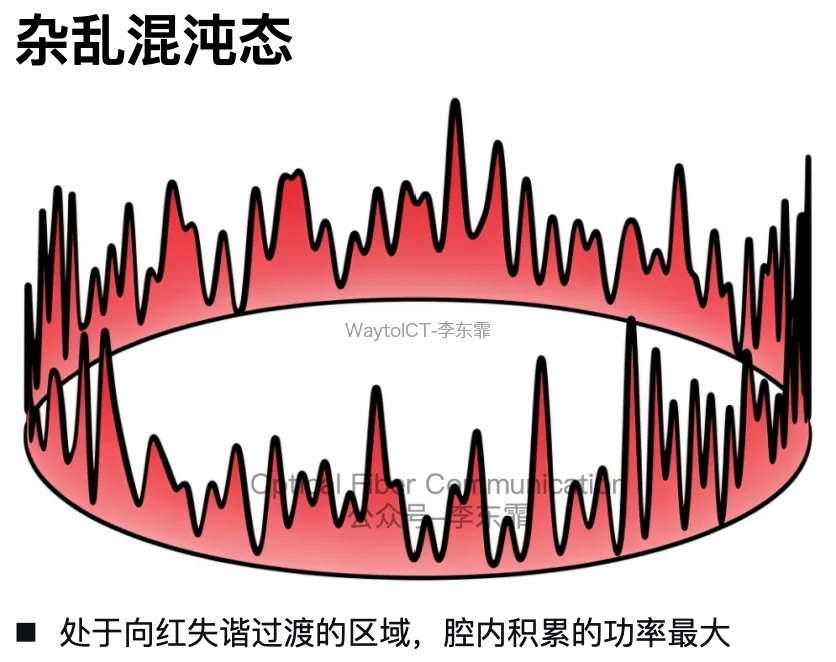
When the system jumps into the effective red-detuned region, energy concentrates to form soliton pulses, and the balance between dispersion broadening and self-phase-modulation (SPM) compression is restored inside the pulse.
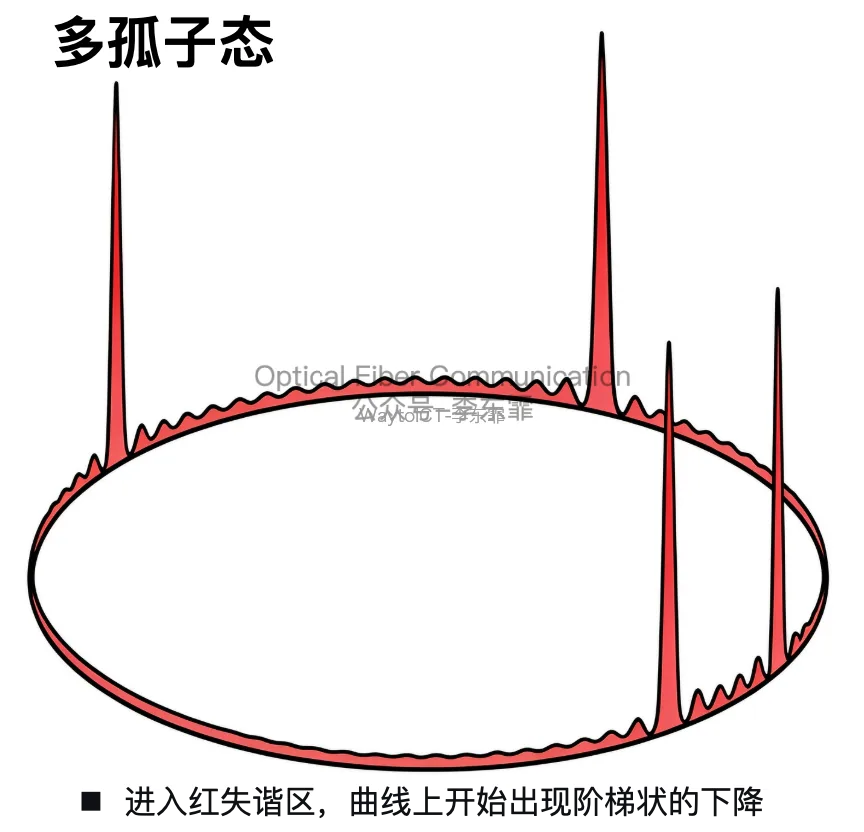
At this point, multiple sharp, relatively evenly spaced pulses appear, though the background between pulses still fluctuates.
Further increasing the red detuning passes through several soliton annihilation steps, until finally only a single soliton circulates in the cavity — this is the ideal single-soliton state.
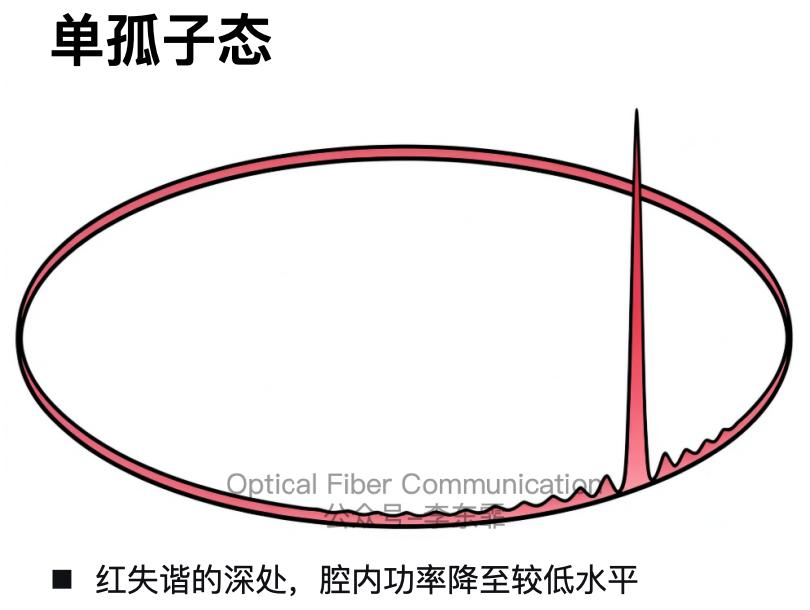
At this point, the dual balance of dispersion and Kerr nonlinearity, and of gain and loss, is perfectly achieved.
Note that the soliton mentioned here is a single optical pulse in the time domain; in the frequency domain it corresponds to a complete set of equally spaced optical frequency comb lines, containing dozens to hundreds of wavelengths (comb teeth), rather than a single wavelength. For example, in the single-soliton state, its comb teeth are precisely equally spaced in the frequency domain, with the spacing exactly one FSR.
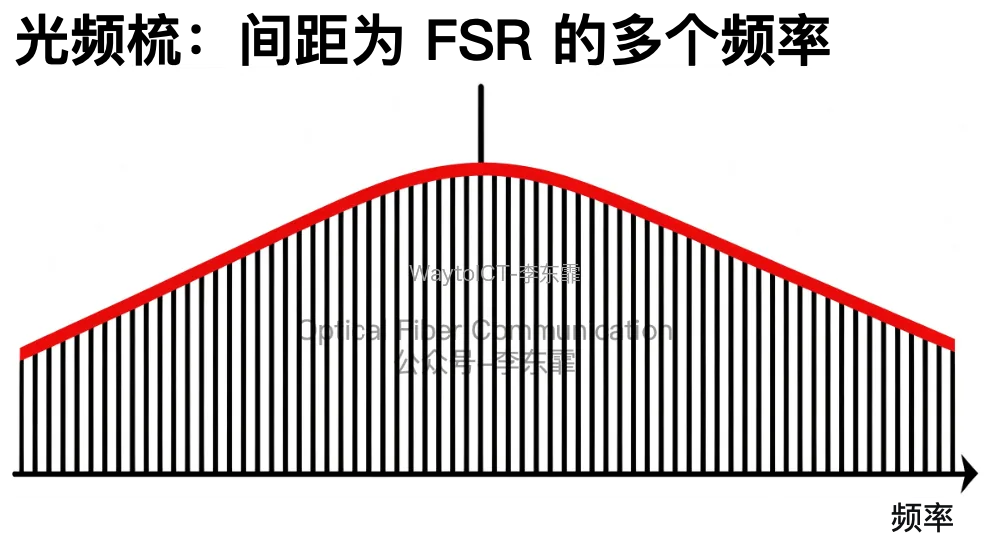
At the output of the microring resonator, this is exactly the multi-wavelength source we need.
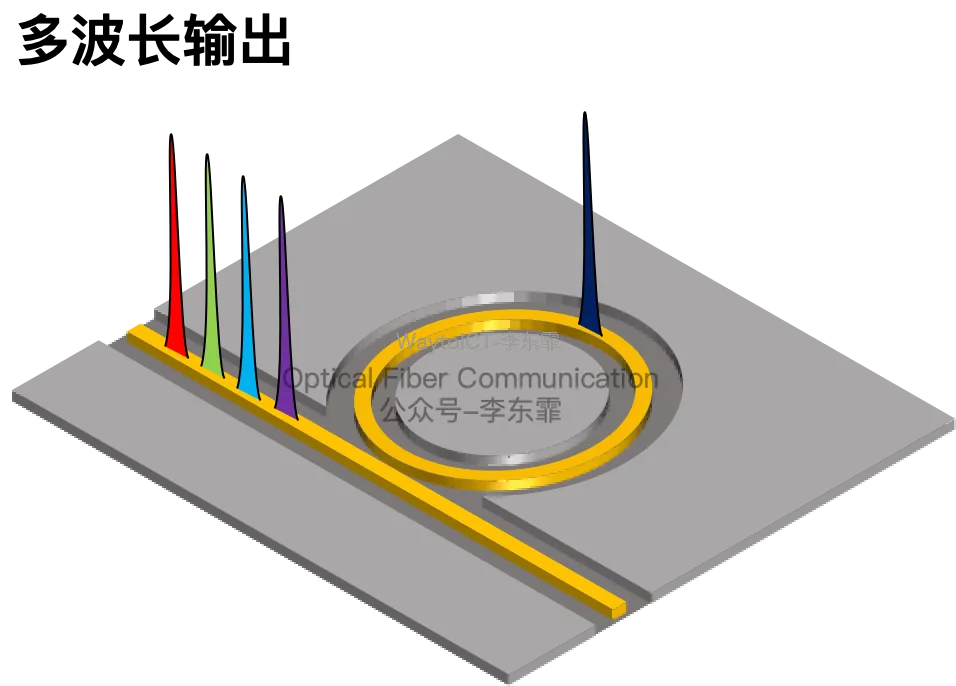
Finally, let us discuss the advantages and shortcomings of the Kerr frequency comb multi-wavelength source.
Compared with traditional laser arrays, Kerr frequency combs achieve better nonlinear suppression and phase-noise compensation, and thermal tuning and wavelength control are easier and lower-cost, so they are often used to replace laser arrays in WDM communications.
Meanwhile, the Kerr microcomb is not limited by gain bandwidth and can cover the full 100 nm bandwidth of the O-band, with excellent scalability.
However, precisely because a Kerr comb contains dozens to hundreds of spectral lines, the optical power of each individual line is relatively low, which is something that still needs optimization.
You can add WeChat WaytoICT to join the Semiconductor & Optical Device Industry Group 2.

If you are interested in semiconductors, optical devices, optical modules, and fiber-optic communications, welcome to follow us!
Related Reading
- Optical frequency combs and optical transmission?
- Probabilistic constellation shaping (PCS) (2)
- 800G in data centers: PAM4 or coherent?
Enjoy this article?
Subscribe to get new optical communication insights delivered to your inbox. Free, unsubscribe anytime.