In the field of optical fiber communication, coherence is a very critical concept. It describes the consistency of light waves in time and space, that is, the frequencies, vibration directions, and phase differences of multiple light waves are all the same. When these light waves meet, interference occurs between them, such as mutual superposition or cancellation.
However, a seemingly counterintuitive phenomenon is that the better the coherence of the light source, the greater the noise that often appears in multimode fiber.
What is the reason for this? The principle behind it involves the propagation mode of light waves in the fiber and the interference effect.
First, we need to understand the modes in the fiber. In multimode fiber, light can propagate in different paths or modes, and these modes include different propagation paths and angles. When the light source is highly coherent, that is, the light waves have very stable frequency and phase relationships, these different modes will meet and interfere at the output end after propagating through the fiber.
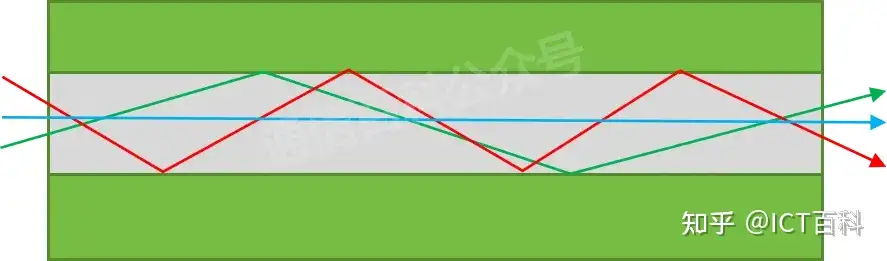
Therefore, in multimode fiber, due to the interference between modes, a pattern of alternating bright and dark spots forms on the cross-section of the fiber. This phenomenon is called modal noise or speckle noise.
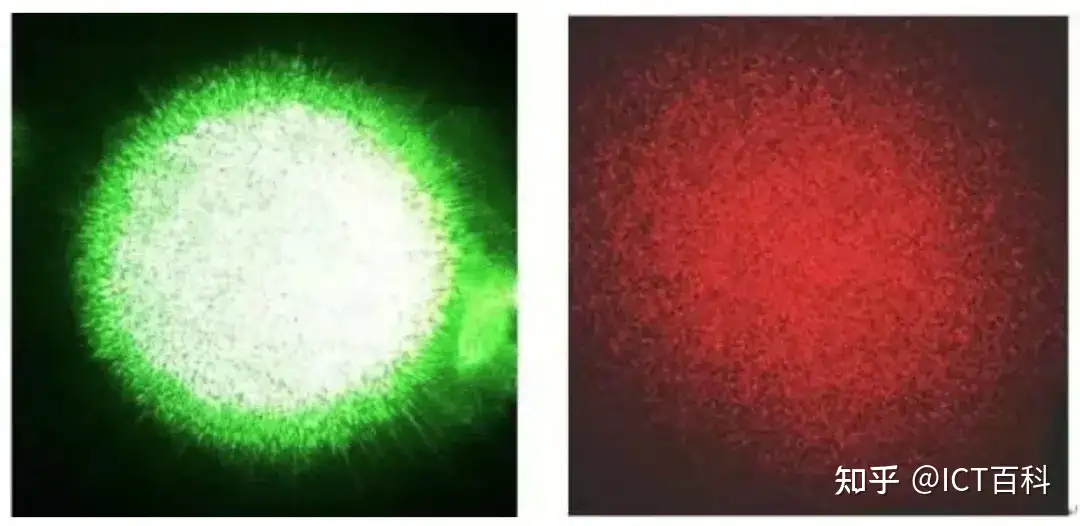
The formation of modal noise is closely related to the coherence of the light source. The better the coherence, the higher the consistency of the light waves emitted by the light source in time and space, which makes the interference effect between modes more significant. When the wavelength or phase of the light source changes, since the interference pattern strictly depends on the wavelength, the positions of these spots will change accordingly, causing the bright and dark points to move randomly across the fiber cross-section.
In addition, physical displacement of the fiber, such as temperature changes or vibration, also changes the propagation path of the modes, further affecting the interference pattern. Such continuous random temperature changes or physical displacement cause the spots to change continuously and randomly, thereby causing random variations in optical power.
In single-mode fiber, since there is only one mode, there is no interference between modes, so modal noise is not produced. But in multimode fiber, modal noise is a problem that must be considered, especially when a high-coherence light source is used.
To reduce modal noise, there is no other way except to weaken the coherence of the light. We can take some measures, such as using single-mode fiber, low-loss connectors, or low-coherence light sources.
Thanks for reading!
Related Reading
- How to Understand the Performance of Coherent Network Solutions
- Does 800G in Data Centers Use PAM4 or Coherent Technology?
- A Brief History and Popularization of Digital Coherent Systems
Enjoy this article?
Subscribe to get new optical communication insights delivered to your inbox. Free, unsubscribe anytime.