Published with the permission of the WeChat official account “Optical Fiber Communication.”
In Intel’s laboratories, the standard uniform worn on the manufacturing line is called the “Bunny Suit.” It would look even more fitting with a pair of fluffy ears added.
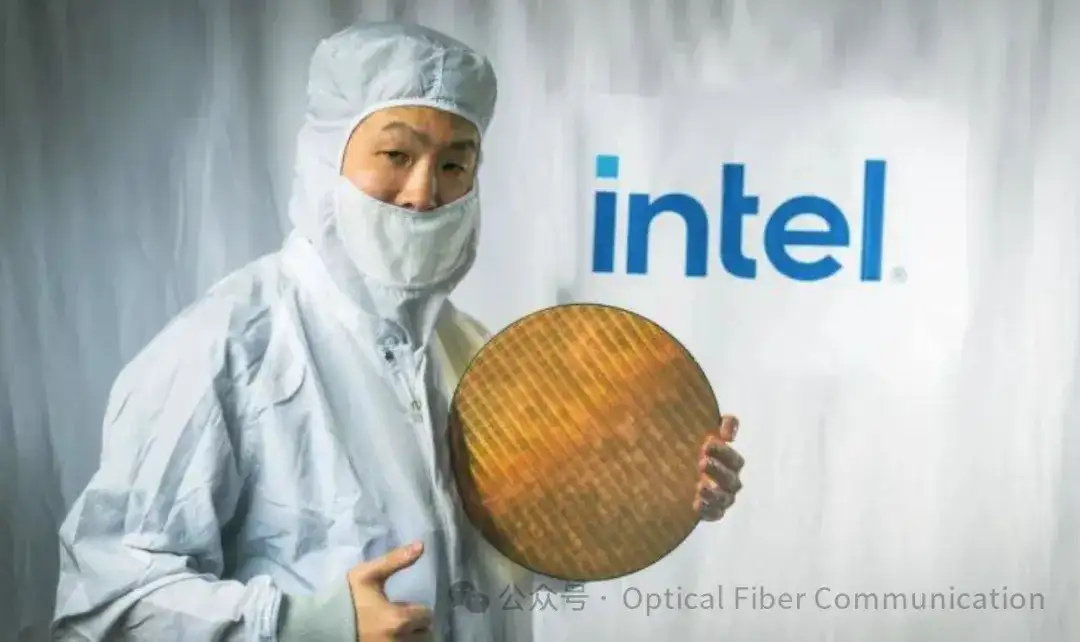
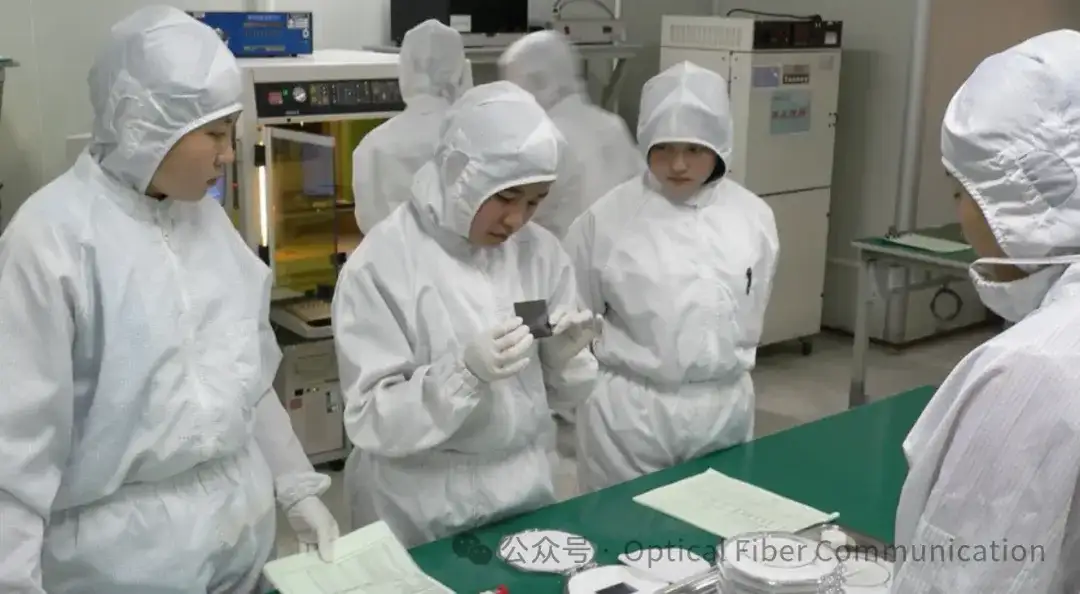
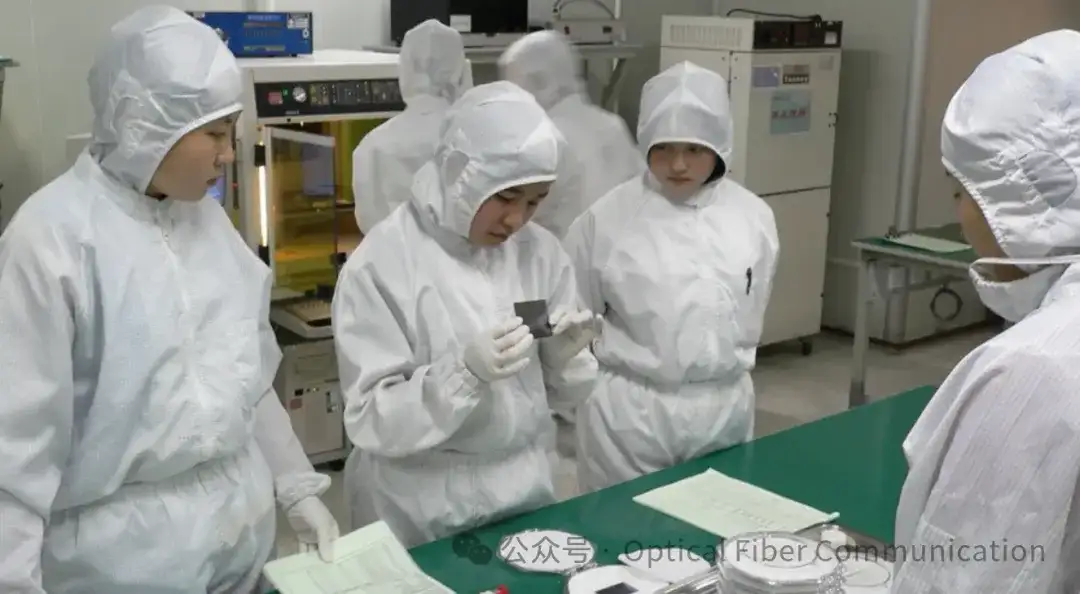
The “bunny suit” here refers to the “cleanroom suit,” the standard equipment for personnel working in cleanrooms. On semiconductor and nanotechnology production lines, engineers and technicians must all wear this type of one-piece workwear to ensure the cleanliness of the working environment. Such protective suits are designed to comprehensively cover the wearer’s body, preventing skin flakes and hair from falling into the cleanroom. The suit can be a single piece, or it can be composed of several closely fitting garments, including breathable and lightweight boots and hoods. The materials are mostly polypropylene with a polyethylene coating or Tyvek polyethylene. These materials are used not only for cleanroom suits but also widely for personal protective equipment.
With the advancement of technology, more advanced designs were introduced in the 1990s, such as the style with a face mask, as worn by the Intel fab workers in the first figure above. Once the protective suit is contaminated, it is usually placed in a dedicated storage box for dry cleaning, autoclaving, or repair, to ensure it still performs well the next time it is used. This type of protective suit usually consists of a main garment, a head cover, thin cotton gloves, rubber gloves, ordinary work shoes wrapped in plastic bags, and rubber boots, with the wrists and ankles sealed with tape. It is very troublesome to put on; as shown below, the dressing process proceeds from left to right and top to bottom.

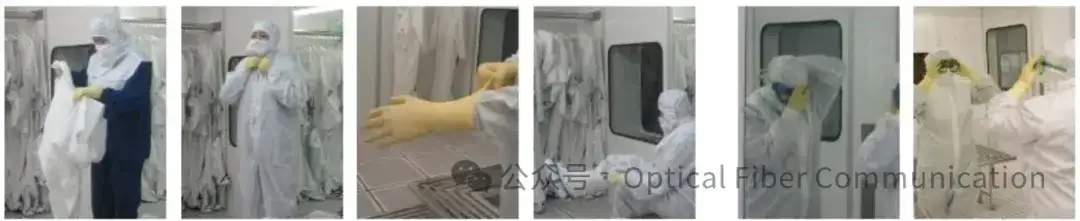
Do you think removal is simple? No, this is also an extremely complex process requiring precise operation, as shown in the process below.
In the field of cleanroom suits, according to their protection levels, they are usually divided into Class 100, Class 1000, and Class 10000. The Class 100 cleanroom suit, as the highest level, is mainly used in environments with extremely strict dust control requirements, such as semiconductor and precision instrument production. In addition, cleanroom suits come in various styles, including cleanroom gowns, cleanroom two-piece suits, and cleanroom coveralls. Different levels of cleanroom suits use different anti-static fabrics; for example, Class 100 cleanroom suits often use 0.25-grid anti-static fabric, Class 1000 mostly uses 0.5-grid, and Class 10000 mostly uses 0.5-stripe anti-static fabric. In addition, fabric grades also include 5mm stripes, 5mm grids, 2.5mm grids, and cleanroom suits made of conductive silk. These different fabrics and styles provide personalized protection solutions for different working environments.
Enjoy this article?
Subscribe to get new optical communication insights delivered to your inbox. Free, unsubscribe anytime.