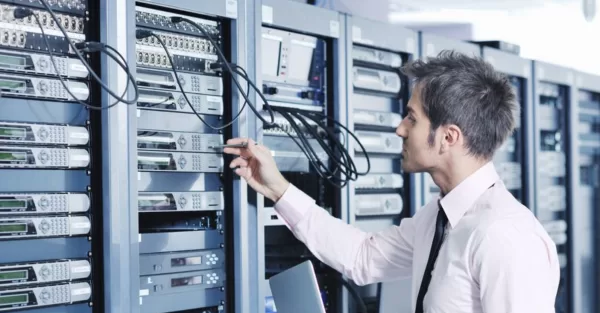
During the Northern Song Dynasty, movable-type printing revolutionized the way information was spread, and this innovation had a profound impact on later generations.

Today, we stand on the edge of a technological revolution led by artificial intelligence (AI). Will this revolution reshape the landscape of network engineering and operations in an unprecedented way?
As everyone knows, because early networks had relatively simple architectures and were not very large in scale, network management mainly focused on device supervision, while fault handling still relied heavily on people – time-consuming and labor-intensive.
Take a common problem as an example: “Why is there a critical alarm on port 1 of the board in slot 5, and how do I resolve it?”
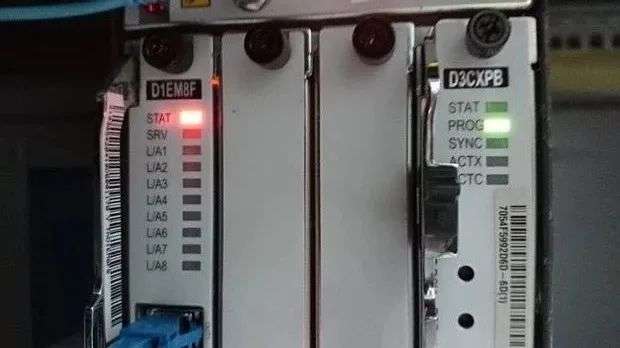
We know that this could be caused by hardware failure, configuration errors, or conflicts in communication protocols. Even an experienced network engineer may need to invest a great deal of time digging deeply into massive network logs and documents. In some cases, it is even necessary to remotely connect to the R&D center and analyze logs together with R&D colleagues to locate and solve the problem.
Traditional O&M typically brings the following problems:
- Difficulty in sensing services
Current network O&M is constrained by numerous alarm events, and the filtering mechanism limits the overall evaluation capability of the network. The adoption of new technologies such as SDN has aggravated this challenge, as both the physical and virtual network layers need to be maintained simultaneously. The traditional O&M model is too passive and lacks fault-prediction capability, leaving O&M personnel frequently stuck in the predicament of after-the-fact remediation.
- Slow fault recovery
One reason is difficulty in locating anomalies, and another is low handling efficiency. In the financial industry, if a single institution in a single province is interrupted for half an hour, it is classified as a Level-III incident and reported to the banking regulator. For most enterprises, business interruption causes economic losses of varying degrees. This requires that, in the event of a fault, service must first be restored in the shortest possible time.
- Manpower shortage
In China, with the demographic advantage in place, labor cost may not be a big problem, but many companies have already outsourced O&M to save costs. In addition, the O&M job is tedious and the workload is huge – people often have to carry a computer out in the middle of the night. Yet O&M also demands very high technical skills, so in general, the O&M position is not very attractive to talent, leading to insufficient manpower.
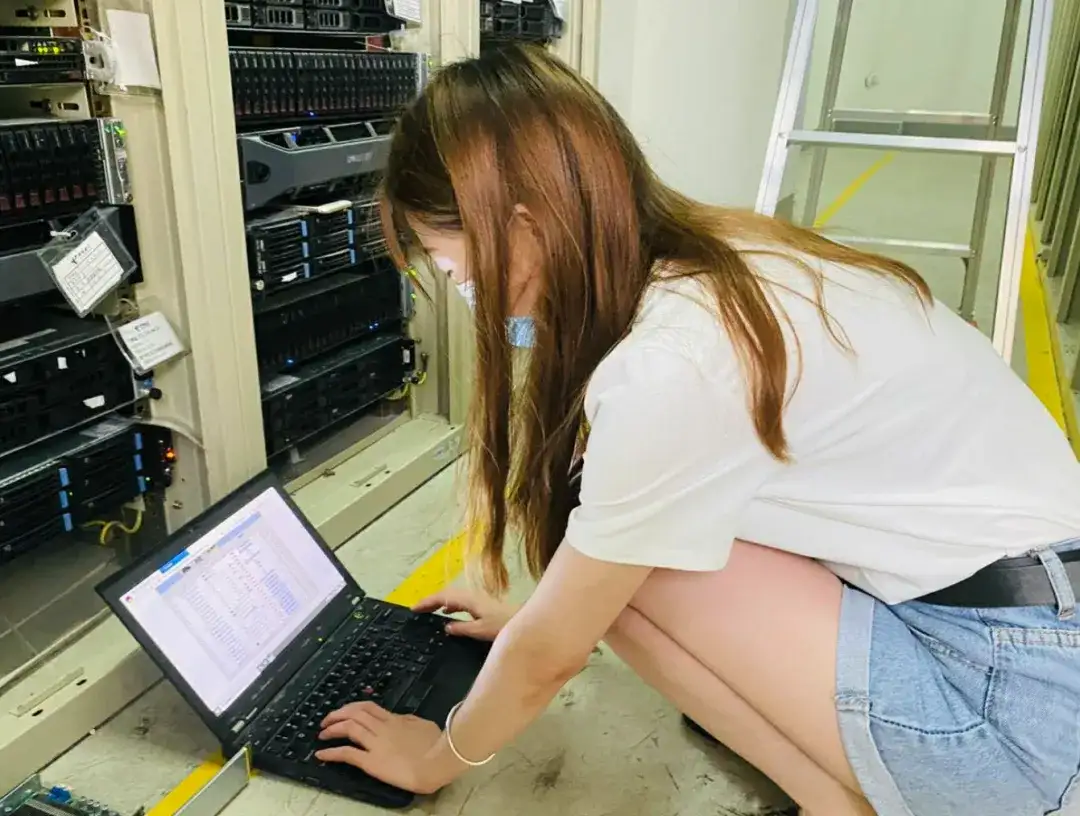
To address the above problems, equipment vendors and carriers have also developed automated O&M functions. However, the main advantages of automated O&M lie in improving O&M efficiency, reducing human errors, and realizing fault prediction – which is already far from sufficient to meet the needs of enterprises.
Now, with the emergence of AI, especially the maturity of large language models (LLMs), enterprises and O&M personnel have new expectations.
First, what is an LLM (Large Language Model)? An LLM refers to a model with billions of parameters, obtained by training on massive data (at the terabyte level) from the internet. When the model parameters and the amount of training data reach a certain scale, the LLM will exhibit emergent intelligence, possessing a certain capability for generation, understanding, and creation. This brings new possibilities for network management and O&M.
Therefore, an LLM is in fact an effective combination of algorithm, data, and computing power. At present, some vendors have already released network O&M large models. For example, at MWC24 in Barcelona, Huawei released the communications industry’s first network large model – Net Master. Huawei’s Net Master is trained based on Huawei’s Pangu large model, reportedly integrating more than 50 billion corpus entries from Huawei’s data communications domain and the experience of more than 10,000 network experts (this may be marketing rhetoric).
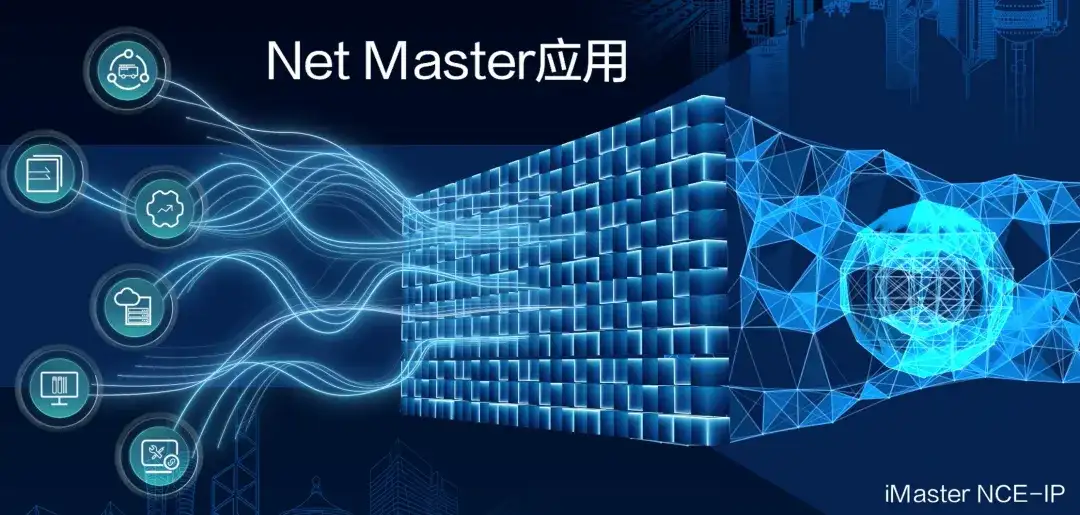
Back to the theme. That is to say, in O&M and network management, by leveraging AI and large models, we can analyze the release notes of router firmware and automatically identify configuration requirements related to compatibility. We can also scan router debug logs to detect abnormal entries that may lead to hardware failures, and provide troubleshooting suggestions.
For example, a network engineer can ask the AI: “Why has the latency on port ge 0/0/23 surged?” The AI might answer: “CRC errors indicate a possible optical module problem; it is recommended to check or replace the transceiver.” Such interaction not only simplifies the troubleshooting process but also improves the engineer’s efficiency.
Early experiments show that AI large models perform excellently in analyzing network logs and identifying problems, with an accuracy exceeding 97%, far surpassing traditional methods. This result not only demonstrates the potential of AI in automatic log analysis but also foreshadows its huge role in network optimization and management.
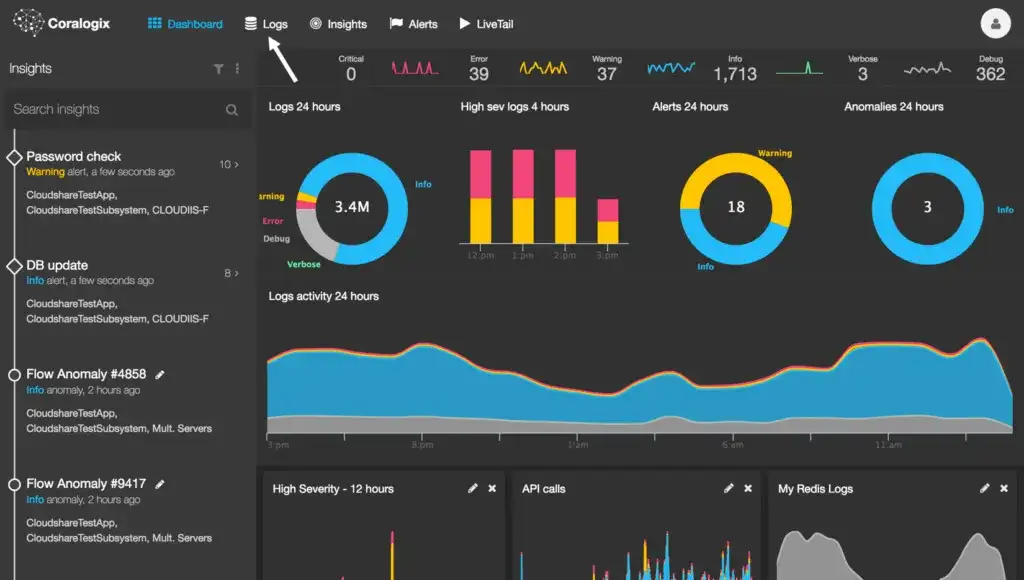
AI can adjust network parameters through reinforcement learning techniques, such as TCP buffer size and VLAN configuration, to improve network performance. It can handle routine network adjustment tasks, freeing up network engineers’ time so they can focus on more complex strategic issues.
However, large models still have some problems to be solved in network O&M. One is data standardization – how to clean and label massive amounts of data; the second is the urgent need for specialized talent to solve the model’s structural design, as well as how to train and perform inference; and another is how to properly handle the relationship with data security.
Just as Bi Sheng’s movable-type printing opened a new era of knowledge, AI and LLM technology are expected to greatly lower the threshold of expert-level network automation and analysis, perhaps even allowing an ordinary network novice to do O&M work.
So, having done O&M for many years, are you looking forward to it or worried?
Related Reading
- Ethernet and Optical Transport – FlexE (2)
- Introduction to 400G Ethernet Transceivers
- Flex Ethernet (FlexE) Link Interface Test Method (YD/T 3992-2021)
Enjoy this article?
Subscribe to get new optical communication insights delivered to your inbox. Free, unsubscribe anytime.