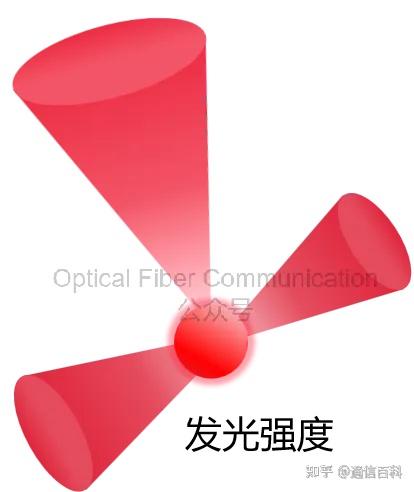
An ordinary light source, such as a bulb or an LED, does not actually emit light uniformly in all directions. It is usually particularly bright at some angles and dimmer at others.
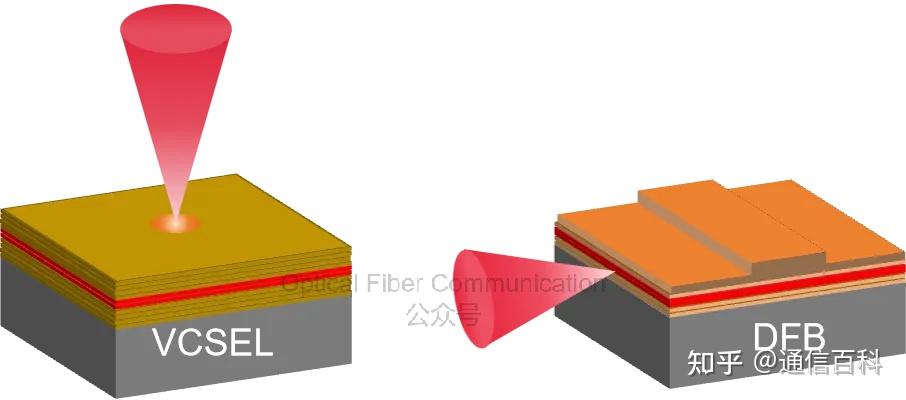
The laser sources we commonly use, such as VCSELs, FPs, or DFB lasers, also do not emit ideal parallel light, but have complex spatial radiation distributions.
Broadcom & HiSilicon: VCSEL NPO/CPO and Silicon Photonics CPO
An ordinary detector can only measure the portion of light that shines on its surface and cannot capture all directions of light at once. As a result, the measurement result depends heavily on the relative position and distance between the probe and the light source, as well as the receiving area of the probe.
Especially for light sources with a large divergence angle, many rays are not detected at all, causing the measured power to be much lower than the actual total power.
For this reason, the integrating sphere came into being.
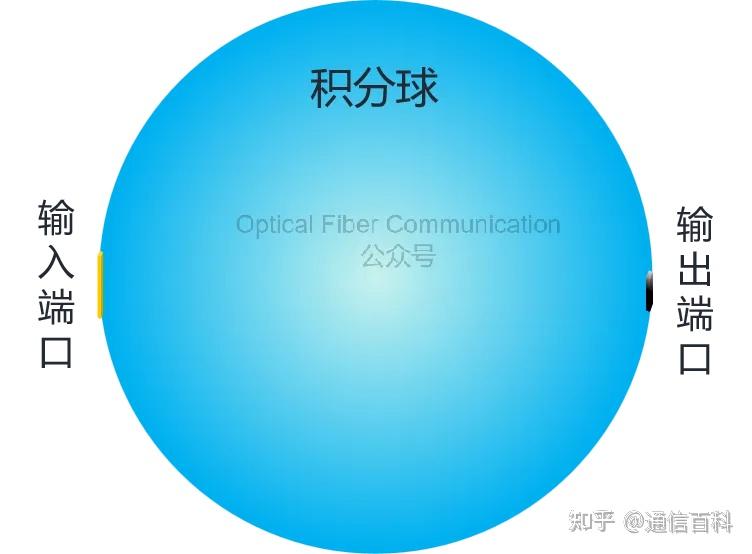
Simply put, the “integrating” here means that the integrating sphere can perform “spatial integration” of light from all directions and all angles of the light source, collecting them all together and homogenizing them, ultimately outputting a stable optical signal.
An ideal integrating sphere system is like this:
- The inner surface of the sphere is a perfect spherical surface, with equal radius everywhere;
- The inner wall of the sphere has a uniform diffuse reflective coating with the same diffuse reflectance for light of various wavelengths.
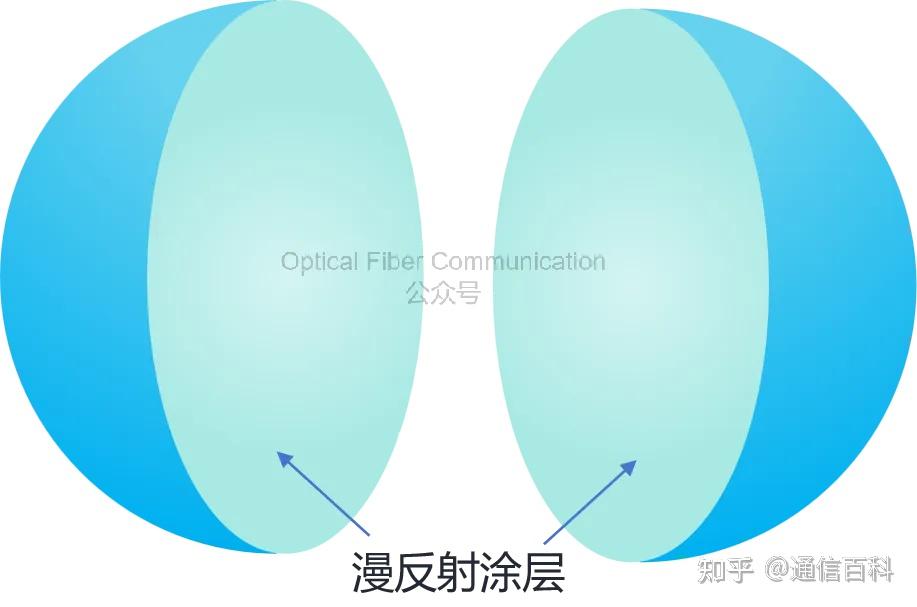
When light strikes the inner wall, it is not directly reflected out like a mirror, but is uniformly scattered to all directions inside the sphere.
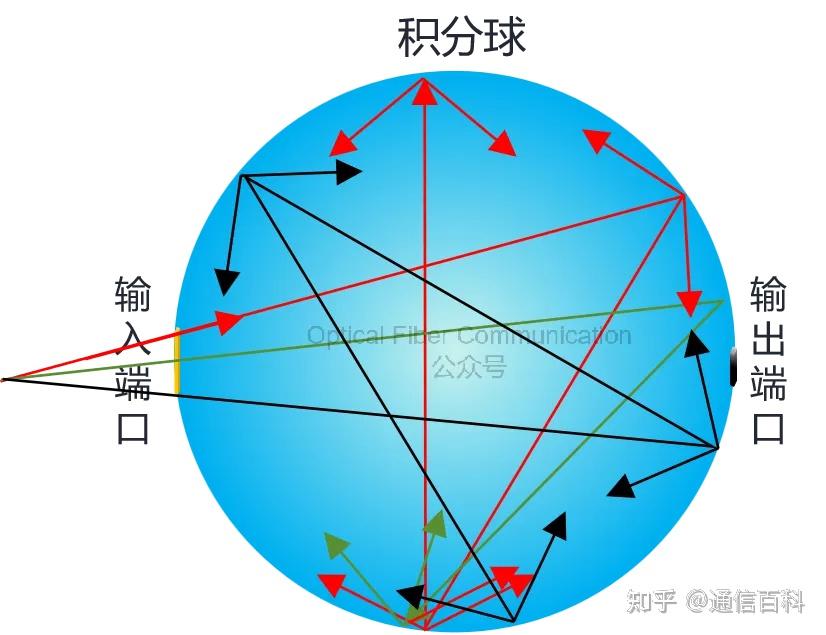
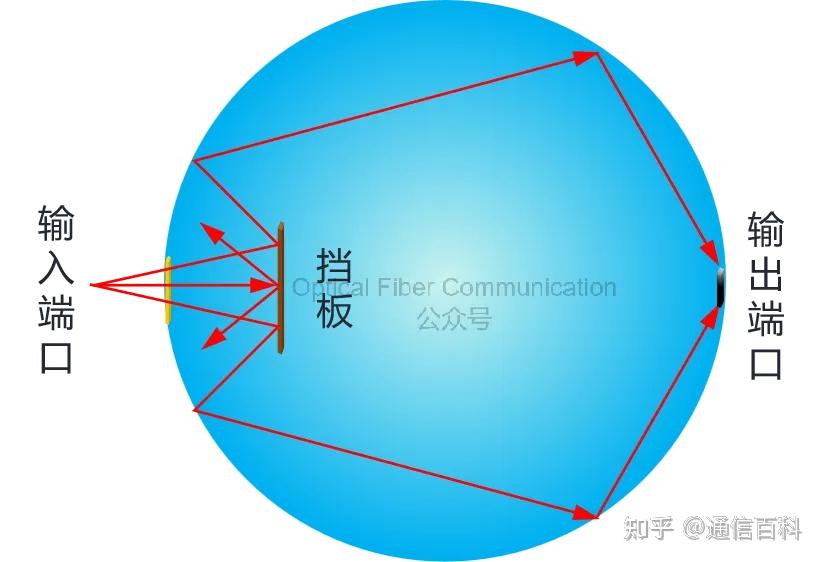
From the figure above, it can be seen that there is a possibility that light from the input port directly passes through the sphere without undergoing the homogenization process of multiple reflections inside the sphere, causing measurement inaccuracy.
To avoid the input light directly shining on the detector, we usually add a baffle inside the sphere.

If we already know the input optical power, then based on the area ratio of the input port, output port, and the inner surface of the sphere, we can calculate the output optical power.
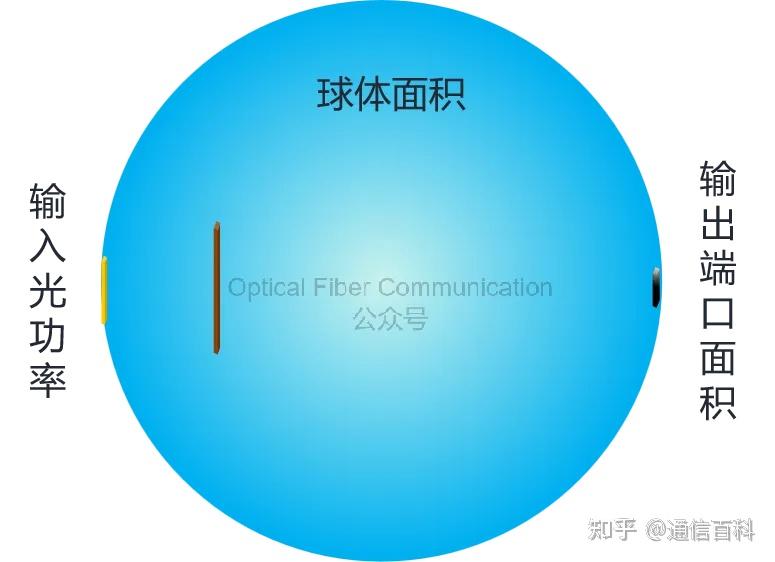
Because light undergoes sufficient reflection and diffusion inside the sphere, what is finally obtained from the output port is a very uniform diffuse beam. Output optical power:

Moreover, regardless of the incident light’s angle, spatial distribution, or polarization state, it will not significantly affect the intensity and uniformity of the output beam.
Thanks for reading!
Recommended reading: Laser MPD Scheme: How to Realize Backlight Monitoring?
Enjoy this article?
Subscribe to get new optical communication insights delivered to your inbox. Free, unsubscribe anytime.