From the birth of the first optical fiber to the present, the types of fiber have become increasingly diverse, supporting optical communication systems in various fields.
Today, let us talk about a new type of fiber – G.654E fiber, and its advantages compared with traditional G.652D fiber.
Let us first give the basic concept.
What Is G.654E Fiber?
G.654E fiber is a new type of fiber specially designed for terrestrial long-haul trunk transmission systems.
While maintaining low attenuation, it has a larger effective area, enabling it to better cope with the challenges brought by high-rate, long-distance transmission.
Those who are familiar with fiber naming will notice that since it is named G.654E, there naturally must be G.654A, G.654B, G.654C, and G.654D before it.
So next, let us summarize the background of the emergence of G.654E.
How Did G.654E Fiber Come About?
To understand G.654E fiber, we have to mention its predecessor (or rather its larger family) – G.654 fiber.
In the mid-1980s, to meet the long-distance communication needs of submarine cables, G.654 fiber was developed.
The attenuation of this fiber near the 1550nm wavelength is more than 10% lower than that of traditional G.652 fiber, earning it the title of “the single-mode fiber with the lowest attenuation at the 1550nm wavelength“.
In the 1990s, WDM technology began to be applied in submarine optical communication systems. This technology allows multiple optical channels to be transmitted simultaneously in a single fiber, greatly improving the transmission capacity of the fiber.
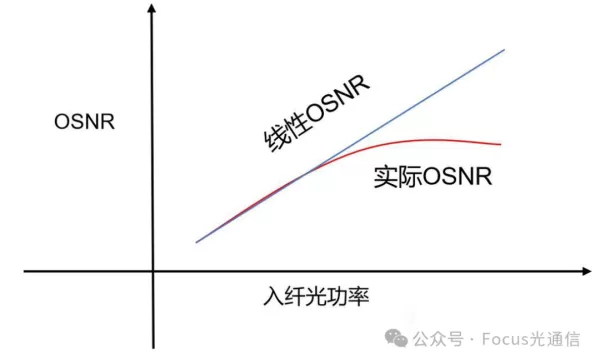
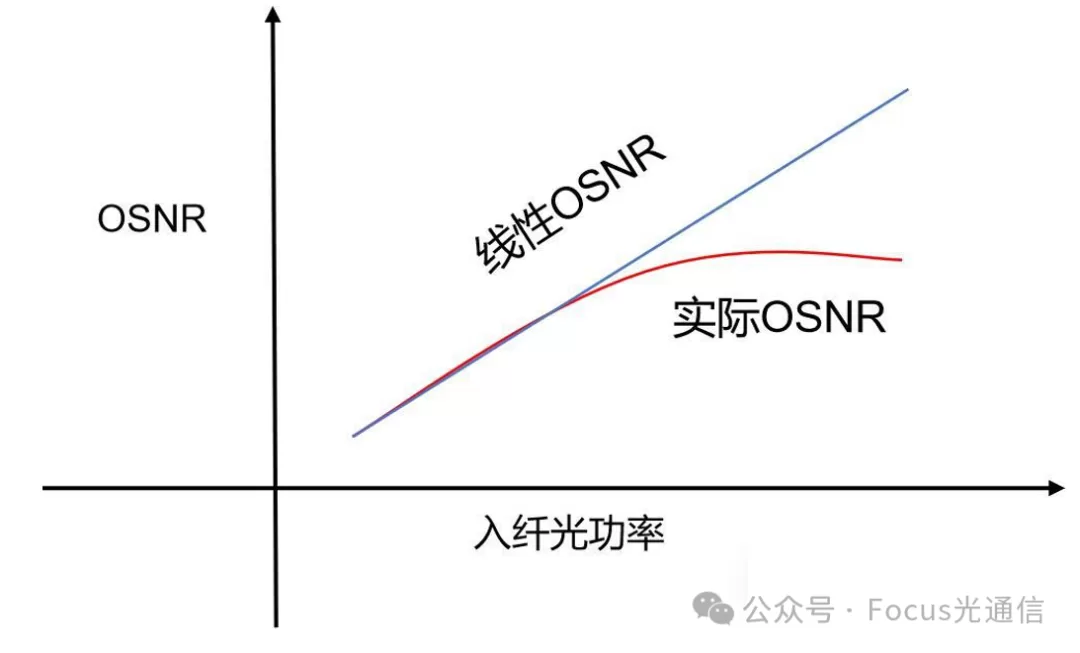
However, with the use of optical amplifiers, high-power multi-wavelength optical signals are coupled into a single fiber, causing the fiber to begin exhibiting nonlinear characteristics.
We also know that the nonlinear effect of fiber is related to the optical power density of the fiber core.
If the input optical power remains unchanged, by increasing the effective area of the fiber and reducing the optical power density of the core, the purpose of reducing the nonlinear effect can be achieved. So people began to research increasing the effective area of the fiber on the basis of G.654 fiber.
There is another small problem: the increase in the effective area of the fiber will also lead to an increase in the cutoff wavelength.
The increase in cutoff wavelength will limit the use of the fiber, so the cutoff wavelength must be controlled.
Specifically, in order not to affect the use of the fiber in the conventional C-band (1530nm to 1565nm), the cutoff wavelength of G.654 fiber was set at 1530nm.
By 2000, when the ITU revised the G.654 fiber standard, it renamed it “cutoff wavelength shifted single-mode fiber“.
Thereafter, G.654 fiber was mainly optimized around attenuation and large effective area, gradually developing into four subclasses A/B/C/D.
So far, we understand that G.654A/B/C/D fibers are mainly aimed at submarine cables.
Next, let us talk about the emergence of G.654E fiber (this is where we get to the main topic).
Unlike submarine cable systems, in terrestrial trunk transmission lines, G.652D fiber is mainly used.
However, as the single-carrier rate in WDM systems breaks through 100Gbps, the nonlinear effect becomes more obvious, affecting the transmission performance of the system. Therefore, researchers thought of introducing G.654 fiber and applying it to terrestrial long-haul trunk transmission systems.
However, terrestrial transmission systems are different from submarine transmission systems, so the characteristics of G.654 fiber were improved, resulting in G.654E fiber.
What specific improvements were made?
The macrobend loss requirement of terrestrial G.654 fiber is much stricter (macrobend loss is consistent with G.652D), while the requirements for effective area and attenuation are more lenient than those for submarine use. The main transmission index differences of the various subclasses of G.654 fiber are shown in the table below.
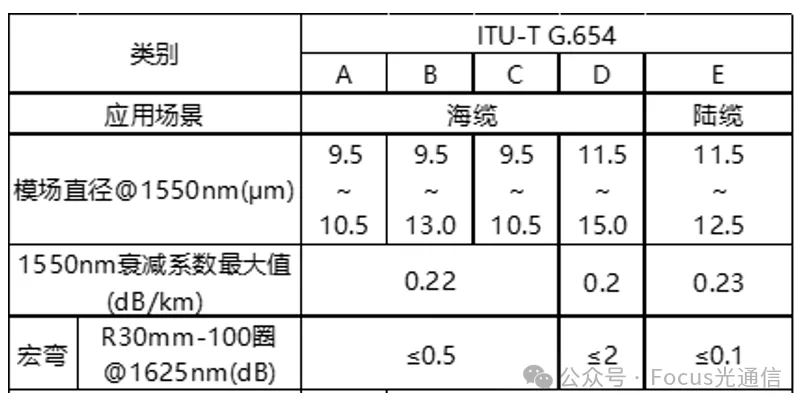
The application scenario of G.654E is mainly terrestrial, while G.654A/B/C/D are mainly for submarine use.
What Are the Advantages of G.654E Fiber?
Since terrestrial cables previously mainly used G.652D fiber, we will use it for comparison.
Compared with traditional G.652D fiber, G.654E fiber has the following significant advantages:
1. Large effective area
The effective area of G.654E fiber mainly comes in two types: A110 (110 um2) and A130 (130 um2). After 2018, newly built trunk lines uniformly chose A130 fiber, so A130 is the main type.
Compared with G.652D (A80) fiber, the effective area of G.654E fiber increases by about 47%. This improvement, on the premise of keeping the nonlinear effect unchanged, raises the optimal input optical power by about 1.7dB, thereby supporting higher transmission rates and longer transmission distances.
2. Low attenuation
The typical attenuation of G.654E fiber is also about 0.02dB/km lower than G.652D fiber. Although this may seem negligible within a single optical amplifier span, in long-distance transmission this advantage is amplified, significantly reducing the attenuation of the entire system.
3. Better OSNR performance
Due to the large effective area and low attenuation of G.654E fiber, its OSNR (optical signal-to-noise ratio) performance is also significantly improved. This is crucial for high-rate, long-distance transmission systems.
What Is the Application Status of G.654E Fiber?
Currently, G.654E fiber has been widely used in the construction of multiple inter-provincial and intra-provincial trunk lines. Actual usage results show that G.654E fiber has significant advantages in improving transmission performance and reducing system attenuation.
Especially in WDM systems with single-carrier rates exceeding 100G, G.654E fiber shows its unique charm.
Of course, G.654E fiber is not perfect.
Because its cutoff wavelength is 1530nm, it cannot be used in the wavelength range below 1530nm. For example, in metropolitan area networks, transmission systems with single optical modules exceeding 100G mostly operate near the 1310nm wavelength, where G.654E fiber is not suitable.
In addition, the application scale of G.654E fiber cannot compare with G.652D, so production volume cannot ramp up, and the price is relatively high.
Related Reading
- What Is the Propagation Path of Light in Optical Fiber?
- Optical Fiber Communication: The Structure of Optical Fiber
- Optical Fiber Communication: Mode Field Diameter and Cutoff Wavelength
Enjoy this article?
Subscribe to get new optical communication insights delivered to your inbox. Free, unsubscribe anytime.