Since Bell invented the telephone in 1876, human communication has undergone earth-shaking changes. These changes have not only reshaped people’s communication patterns but also driven the continuous innovation of data transmission technology.
For nearly a hundred years, whether wired telephones or wirelessly transmitted radio and television, analog signals were used to transmit signals for a long time. But this mode has inherent problems of signal attenuation and crosstalk. I believe friends born in the 80s and 90s have basically all seen the flickering snowflake phenomenon on TV images.
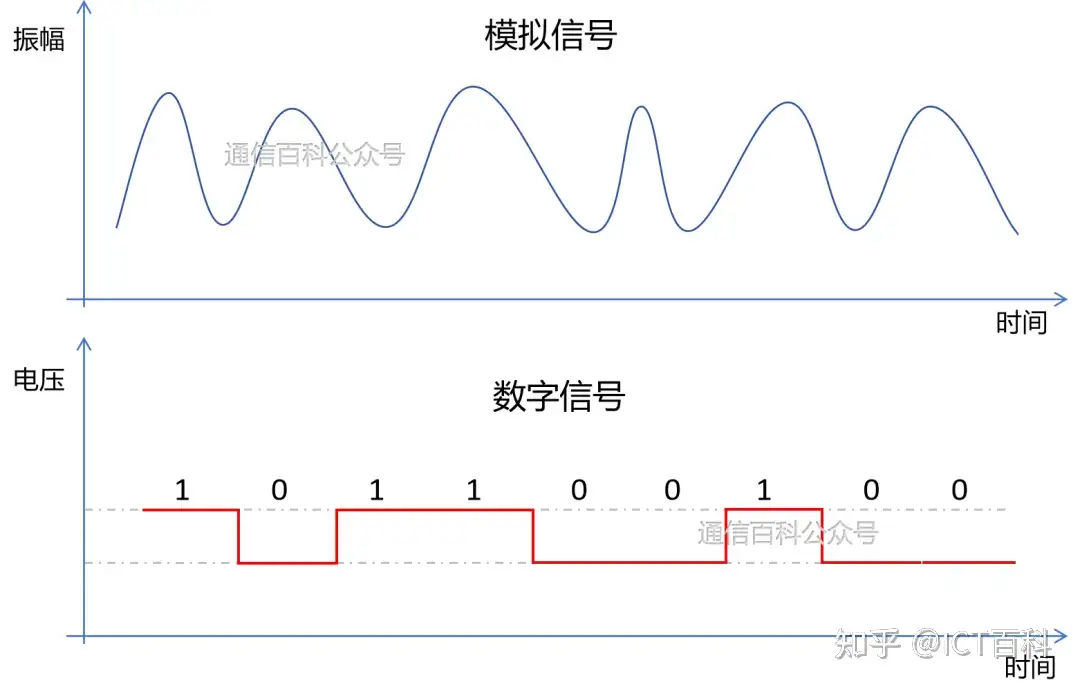
In the mid-20th century, the rise of digital technology completely changed this situation. It represents data as a series of discrete values. Specifically, digital signals use discontinuous sequences of electrical pulses to represent information, like the “yes” and “no”, “on” and “off” of the binary world. Digital telephony, through digital signal processing, not only greatly improved call quality but also paved the way for the capacity expansion and service diversification of telephone networks.
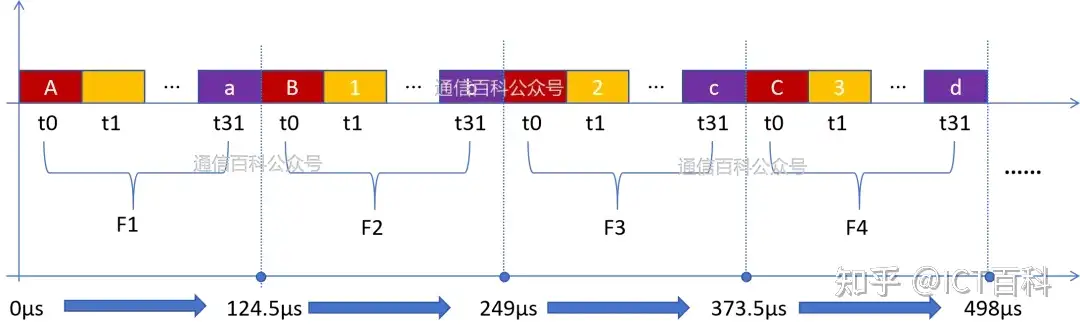
To cope with this expansion, TDM (Time Division Multiplexing) technology came into being. This technology divides the time axis of the transmission medium (such as optical fiber or copper cable) into multiple time slots, each assigned to a different communication channel, enabling multiple signals to be transmitted concurrently on the same physical line without interfering with each other.
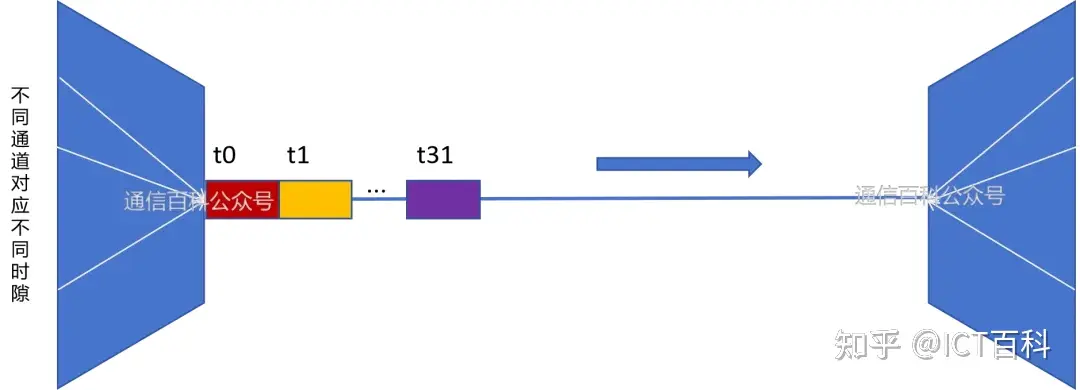
In traditional telephone systems, a standard TDM frame may contain 30 time slots, each transmitting a 64 kbit/s telephone call. To standardize digital transmission, the International Telecommunication Union (ITU) formulated the Plesiochronous Digital Hierarchy (PDH) standard, including the T1 standard used in North America and Japan, and the E1 standard promoted in Europe.
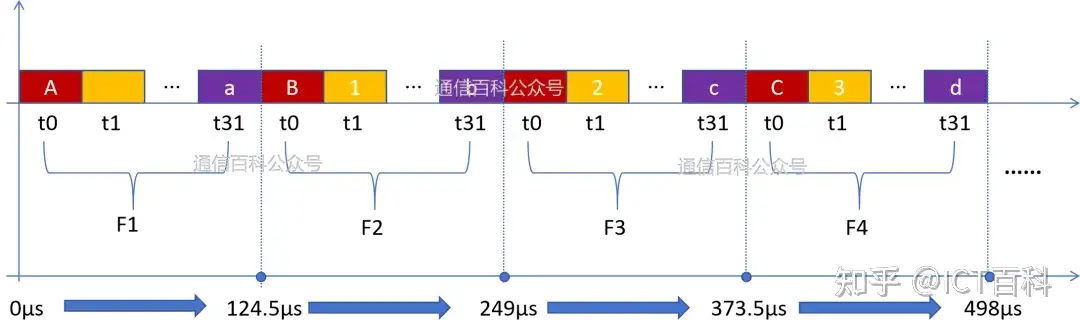
For the E1 standard, the frame structure contains 32 time slots, achieving a data transmission rate of 2.048 Mbit/s. In the T1 standard, one frame contains 24 time slots, with a frame rate of 1.544 Mbit/s. By combining multiple low-rate digital signals into a higher-rate transmission level, the PDH standard achieves effective transmission of signals at different rates. For example, four 2 Mbit/s signals can be combined into the next-level digital group of 8 Mbit/s, and in this way, groups of four can form higher-rate digital groups, such as 34 Mbit/s, 155 Mbit/s, 622 Mbit/s, 2.5 Gbit/s, and up to 10 Gbit/s. This method of combining low-level digital signal groups into high-level groups not only improved the transmission capacity of the network but also laid the foundation for subsequent network expansion and upgrades.
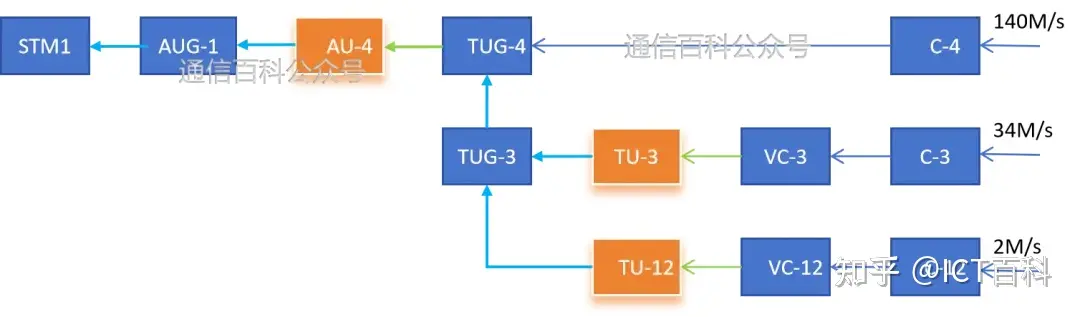
With the continuous advancement of communication technology, the PDH standard gradually revealed its limitations, such as:
- Three regional standards, difficult to interconnect internationally
- Non-standardized optical interfaces, unable to be horizontally compatible
To solve these problems, the ITU further developed the Synchronous Digital Hierarchy (SDH), aiming to provide a more unified and efficient global standard to support higher rates and larger capacity communication needs.
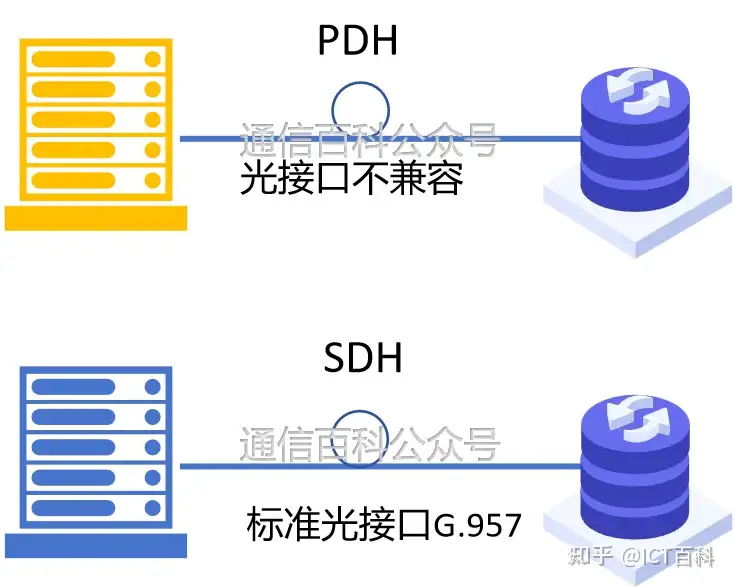
SDH not only optimized the frame structure and introduced a more flexible and efficient transmission framework, but also achieved a qualitative leap at the network management level. The SDH frame is composed of precisely defined segment layers, including the frame header, the container unit carrying service data, and the frame tail. The frame header carries network management information, and the container adapts to the data transmission needs of different rates and types.
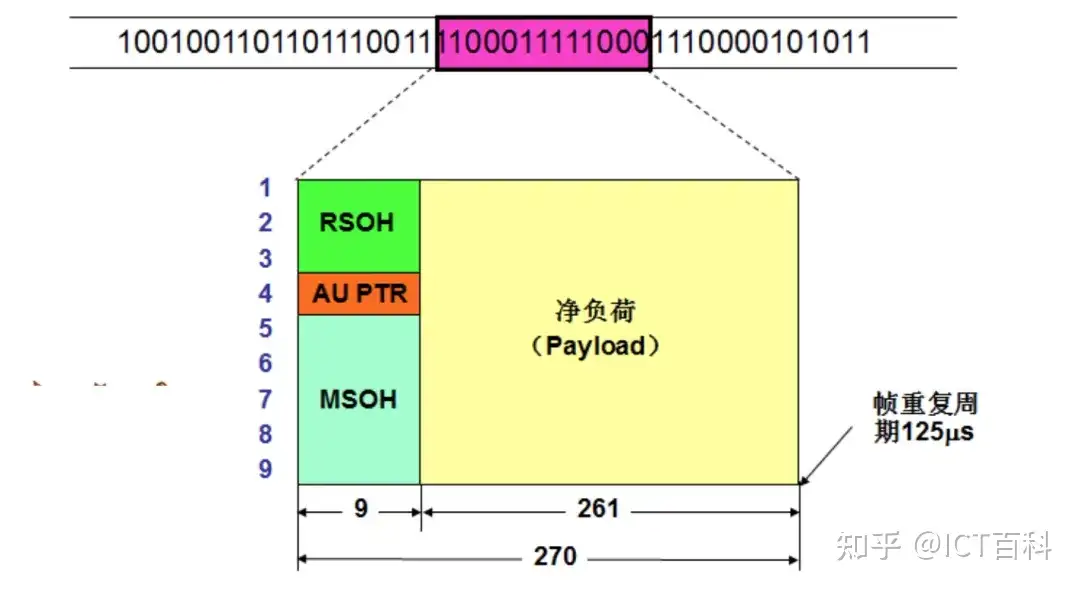
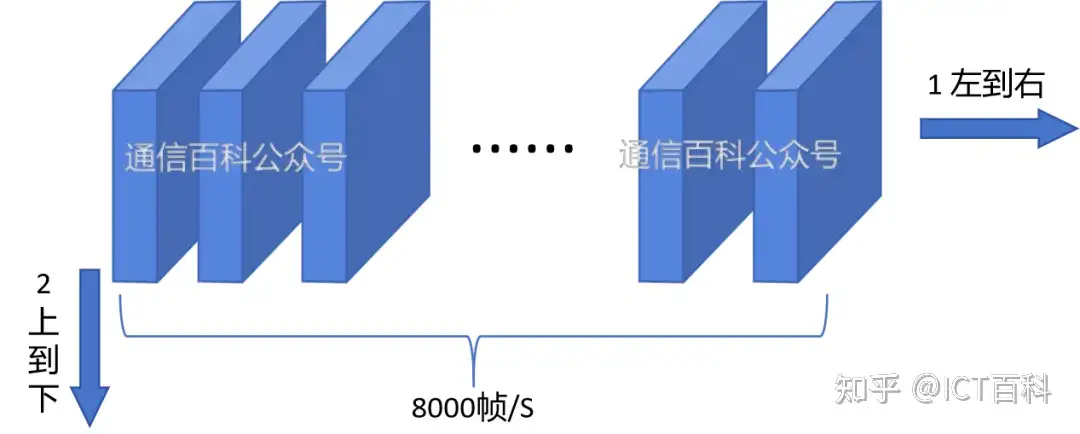
As shown above, the SDH frame structure consists of 9 rows vertically and 270×N columns of bytes horizontally. During transmission, they are arranged in serial code stream from left to right and from top to bottom, with 8000 frames transmitted per second. Therefore, for STM-1 in the figure above, the transmission rate is 8×9×270×8000 = 155.520 Mbit/s.
This design of SDH not only facilitates the flexible insertion and extraction of services, but also provides rich network performance monitoring and maintenance functions, greatly simplifying network management and improving the reliability and flexibility of the system.
But, with the emergence of a large amount of Ethernet services in LANs and MANs, various services are becoming increasingly IP-based, and traditional SDH is no longer suitable. So how does SDH cope with this IP-ization? This promoted the combination of SDH and Ethernet, and MSTP (Multi-Service Transport Platform) technology appeared, enabling the same network to carry multiple services such as voice, data, and video simultaneously.
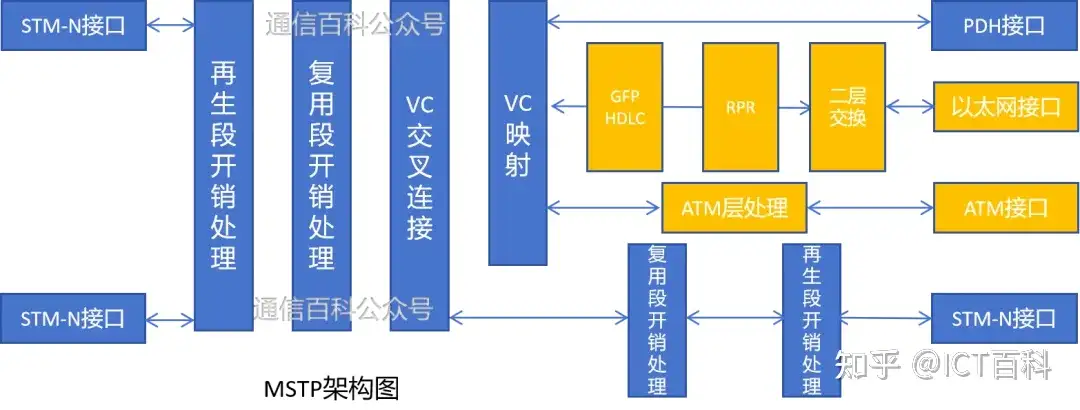
That is, MSTP = SDH + Ethernet (Layer-2 switching) + ATM (for signaling), which adds an Ethernet interface or ATM interface on the user side of SDH, realizing an IP-based interface. But the essence of MSTP is still TDM switching, just improved on the basis of SDH. Therefore, it has the shortcomings that SDH has, especially the fact that traditional time division multiplexing technology still faces limits on fiber capacity.
In my work experience, the highest rate of commercial systems I have come into contact with was 40 Gbit/s. This is mainly limited by the electron and hole mobility of integrated circuit silicon and gallium arsenide materials, as well as by the dispersion and polarization mode dispersion of the transmission medium, and by whether the performance-to-price ratio of the developed system has commercial economic value.
Someone once used vehicles as a metaphor for this process. E1 is like a bicycle/motorcycle, STM-1 is like a car, STM-4 is a minibus, STM-16 is a medium bus, and STM-64 is a large bus, then STM-256 can only be imagined as a train. The question is, is it really worthwhile to build an even larger-capacity vehicle, and a single optical fiber can only transmit one wave. This is not just a technical issue.
To solve this problem, WDM (Wavelength Division Multiplexing) technology appeared, transmitting multiple optical signals of different wavelengths simultaneously in a single optical fiber. Its core components include wavelength division multiplexers, optical amplifiers, and optical add-drop multiplexers. The wavelength division multiplexer is responsible for combining optical signals of different wavelengths into one fiber, while the optical amplifier solves the attenuation problem of signals in long-distance transmission, providing unprecedented bandwidth expansion and transmission distance for the network.
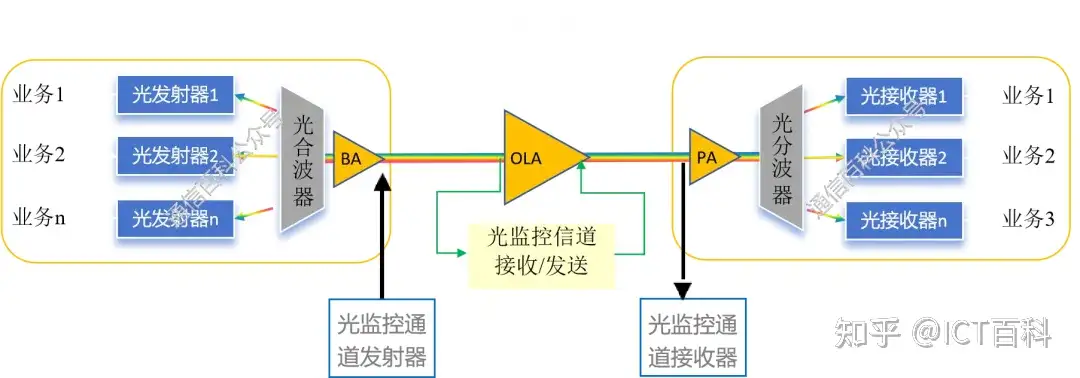
According to the spacing between channels, WDM is divided into coarse WDM (CWDM) and dense WDM (DWDM). Because CWDM has a short transmission distance and attenuation is not the main limiting factor, the signal light in a CWDM system spans multiple bands (1311-1611 nm). DWDM, due to transmission distance requirements, chooses the traditional C-band and L-band, the two transmission windows with the lowest attenuation.
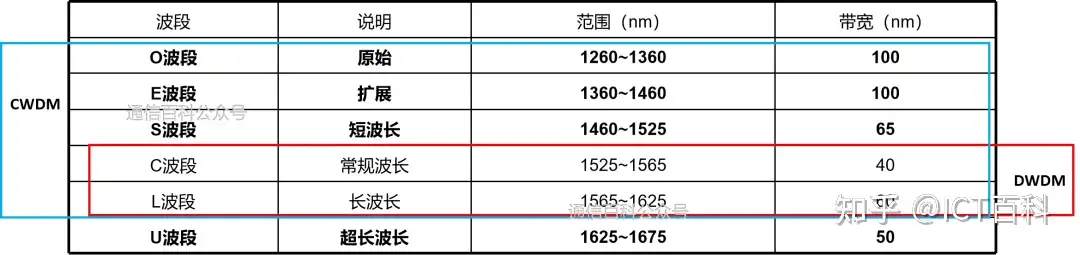
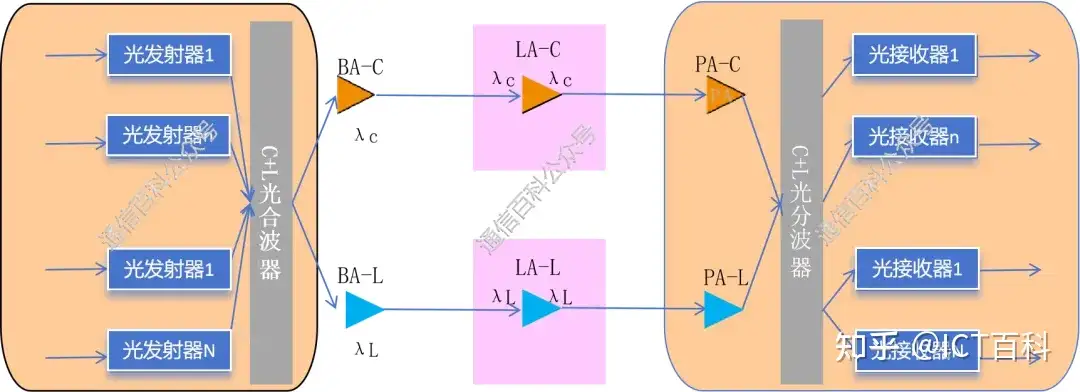
The traditional C-band refers to the band from 1529.16 nm to 1560.61 nm, from 195.9 THz to 191.6 THz in frequency, with a usable spectrum range of about 4 THz. At a 50 GHz spacing, this traditional C-band can support 80 wavelengths. Current WDM systems can already support the L-band from 1565 nm to 1625 nm, with a usable spectrum range of about 4.8 THz. The entire C+L band can achieve 192 wavelengths, with a spectrum bandwidth close to 9.6 THz.
From the proposal of the basic concept of WDM in the 1970s to now, nearly half a century has passed, and WDM technology has continued to evolve. By adopting high-order modulation formats such as 16QAM and 64QAM, as well as digital signal processing technology, it has not only improved signal quality and transmission distance but also effectively coped with nonlinear effects and dispersion problems in optical fibers.
Today, with the maturity of higher-performance devices, the 400G single-wavelength rate has been commercialized, and will soon reach 800G, 1.2T/1.6T. It can be said that WDM has basically solved the capacity “bottleneck” on transmission lines.
Looking back at SDH/MSTP now, in terms of system capacity, the difference is like heaven and earth. However, in network management and protection mechanisms, WDM is not as mature as SDH, especially in providing end-to-end management and rapid fault recovery, which requires more complex protocols and mechanisms to ensure service reliability and efficiency.
So how to solve this shortcoming? We will explain it in the next article!
Related Reading
- Document “Modular WDM Technology Scheme”
- Huawei WDM Training Material
- N×25Gbit/s WDM Passive Optical Network (WDM-PON) for 5G Fronthaul
Enjoy this article?
Subscribe to get new optical communication insights delivered to your inbox. Free, unsubscribe anytime.