NVIDIA: Interconnect Architecture and Technical Analysis of Integrated Silicon Photonics CPO
Alibaba Cloud: NPO Evolution Route and Deployment Strategy for AI Cluster Optical Interconnect
Baidu: Evolution and Response Strategy of AI Cluster Optical Interconnect
In the previous article “LightXcelerate: MicroVCSEL Optical Interconnect Solution and Evolution“, we discussed MicroVCSEL. Today let us look at MicroLED technology.
The higher the transmission rate of traditional copper interconnect, the shorter its effective transmission distance, which imposes great limitations in high-speed intra-data-center interconnect scenarios.
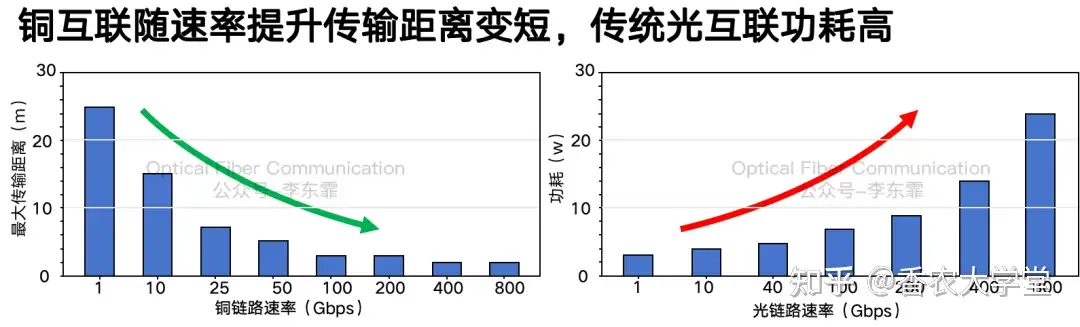
Although commercial traditional optical interconnect solutions solve the transmission distance problem, their energy consumption per bit is relatively high.
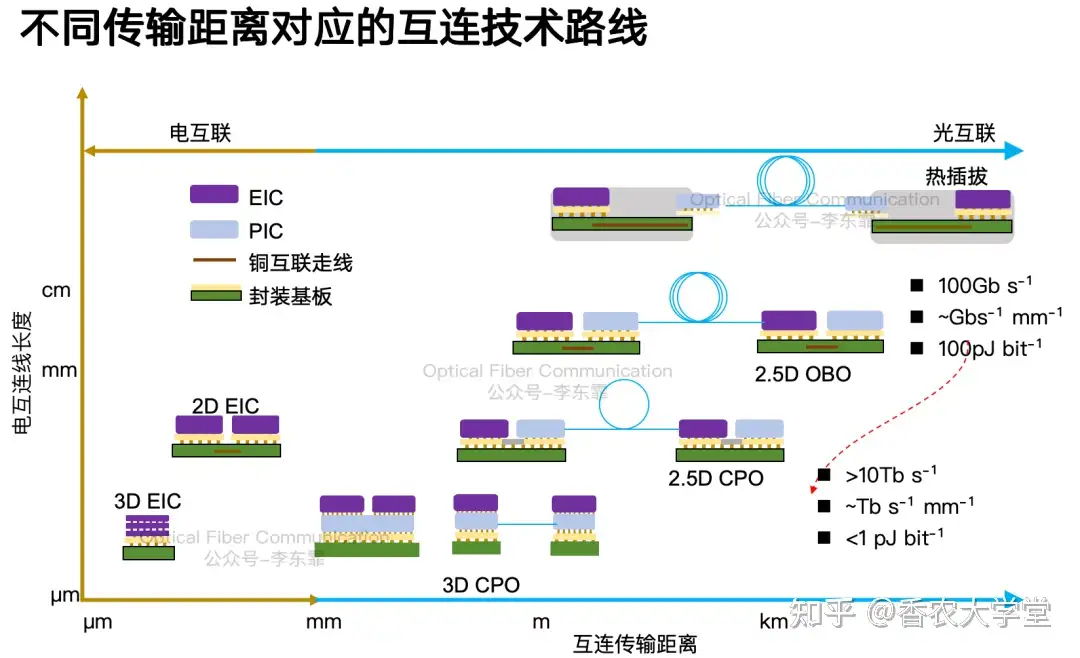
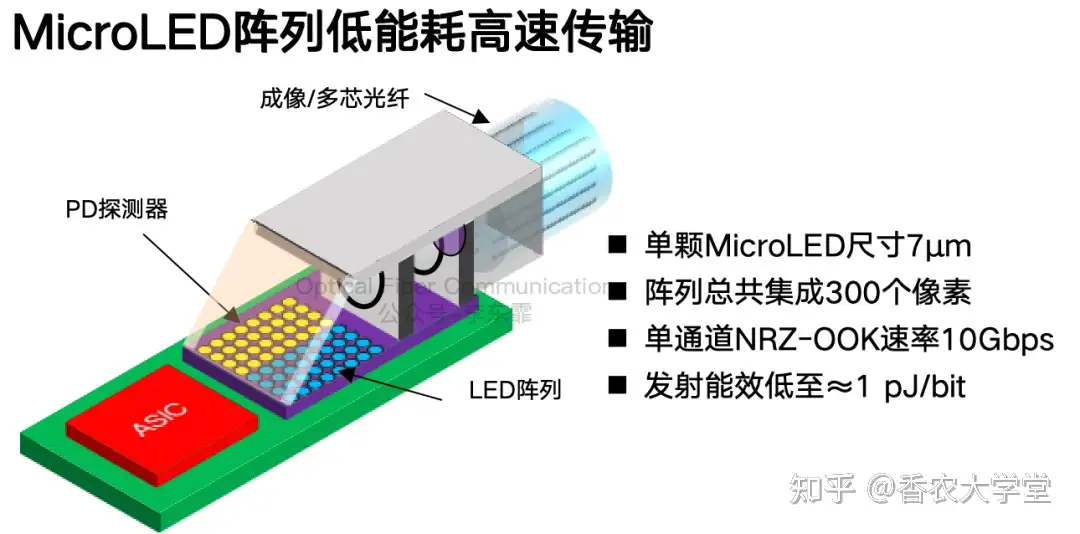
At present, an important evolution direction of the industry is toward 3D or 2.5D co-packaged architectures, with the goal of achieving ultra-low energy consumption below 1 pJ/bit and bandwidth density on the order of Tb.
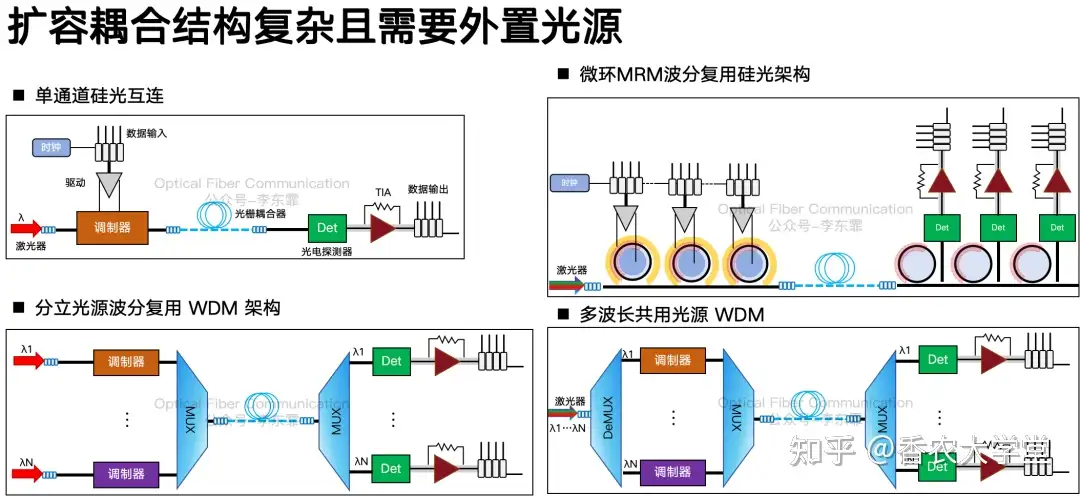
Compared with MicroLED-based solutions, traditional solutions, regardless of which architecture is adopted, usually cannot do without an external laser light source, and generally suffer from problems such as complex optical coupling processes and additional loss introduced into the system.
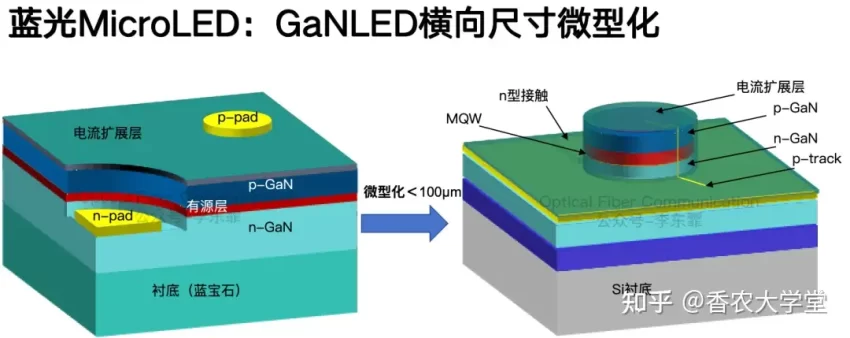
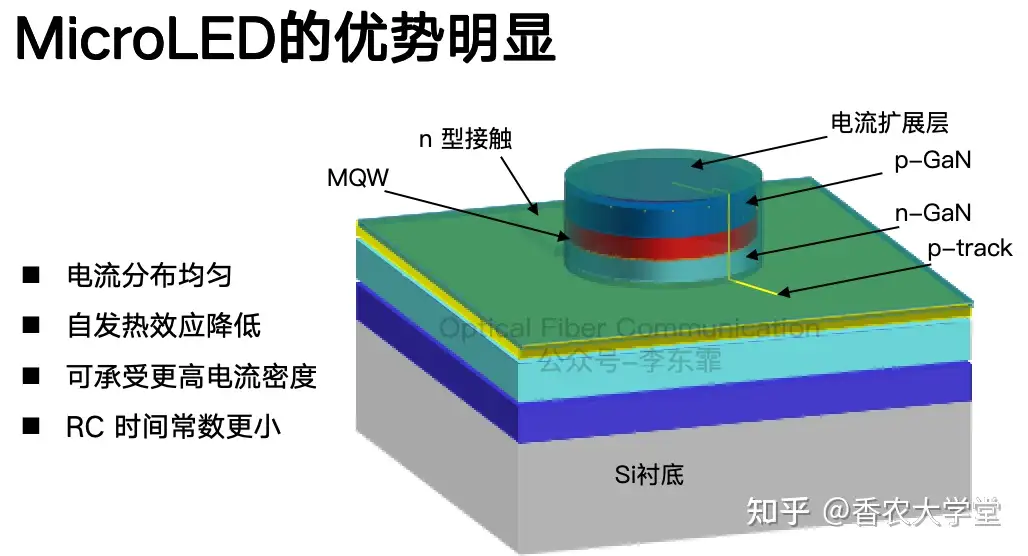
MicroLED can monolithically integrate light-emitting units, and its chip size is smaller, which can bring more uniform current distribution, effectively alleviate the self-heating problem of the device, and possess higher intrinsic modulation bandwidth.
At the current stage, the vast majority of MicroLED optical interconnect research focuses on blue-light chips. Under the same process conditions, blue-light MicroLEDs have better modulation bandwidth and transmission rate.
For example, the Avicena LightBundle solution and Microsoft’s MOSAIC solution we mentioned earlier both adopt GaN-based blue-light MicroLED direct modulation architectures.
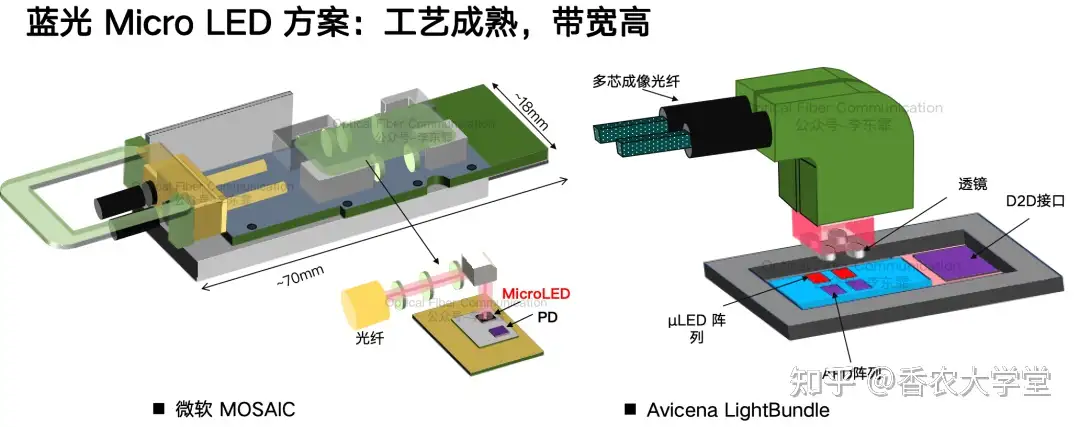
MicroLED and Was Architecture: Microsoft and Avicena MicroLED Solutions
The MicroLED device itself can be regarded as a traditional sapphire-substrate GaN-based LED whose lateral dimensions have been miniaturized to below 100 um through processing.
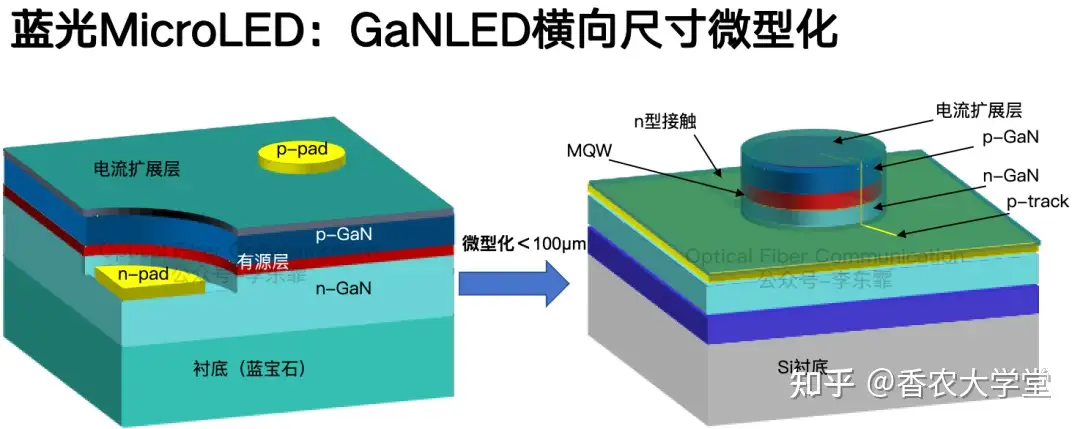
GaN material grown on silicon substrates, compared with sapphire-substrate MicroLEDs, is more convenient for subsequent monolithic integration with silicon-based CMOS driver circuits.
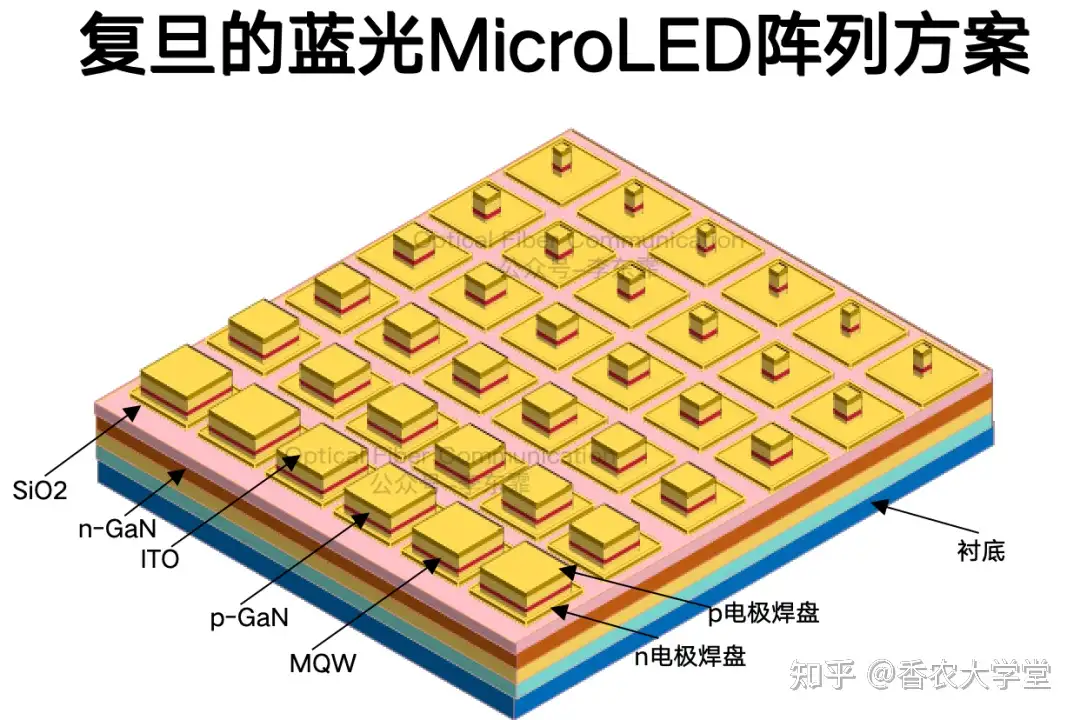
In terms of process, a SiO2 passivation layer is used for insulation isolation, separating the upper p-track metal traces from the bottom n-GaN layer to avoid device short-circuit and support large-scale array device fabrication.
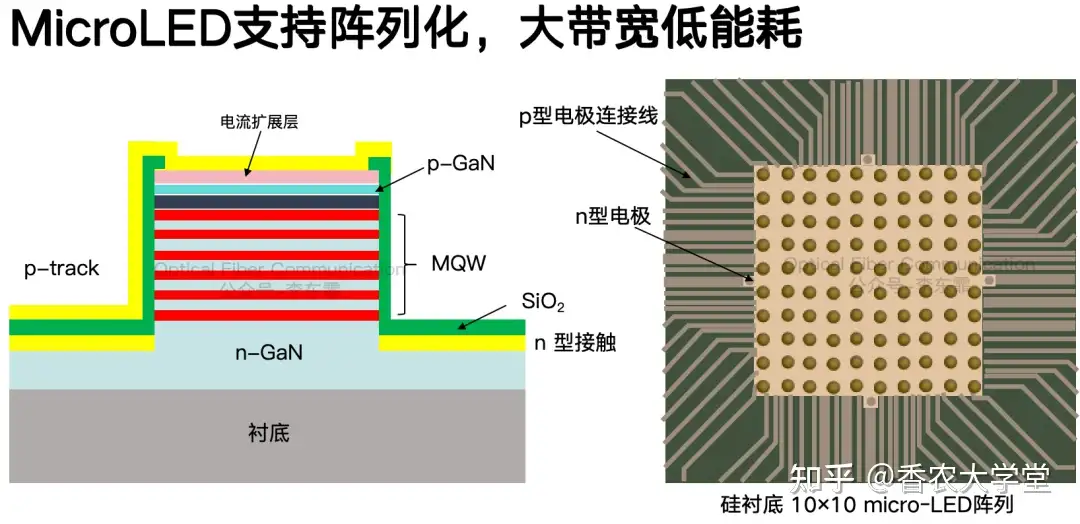
In this way, a parallel transmission architecture similar to a VCSEL array can be realized, that is, combining multiple low-rate channels into one high-speed link.
For example, using a 20×20 MicroLED array, if the rate of each channel is 2 Gbps, then the entire array can achieve a total bandwidth of 800 Gbps.
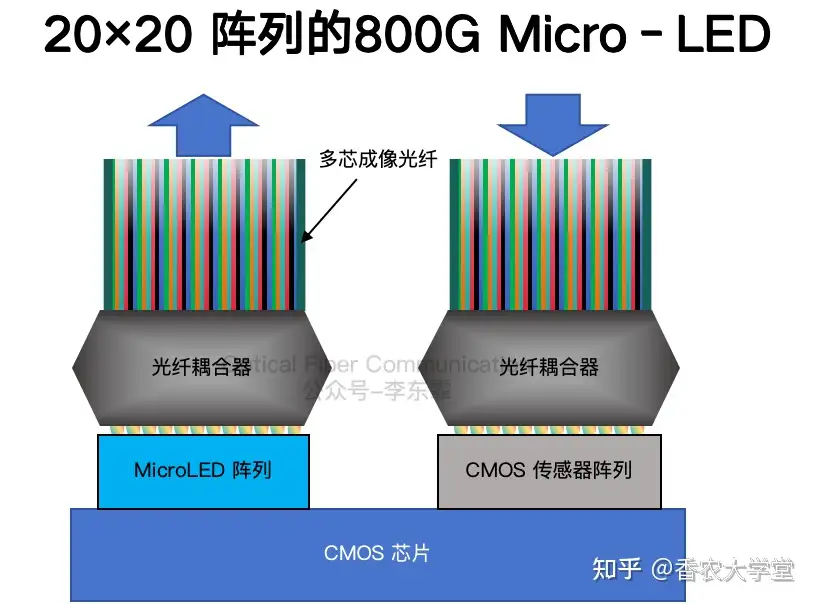
The core of this “wide and slow” parallel scheme lies in the improvement of intrinsic device performance brought about by chip miniaturization, thereby achieving high-speed and low-power optical interconnect as a whole.
Coherent: Wide and Slow VCSEL CPO Solution and Energy Efficiency Evaluation
At this year’s OFC 2026 conference, Fudan University presented their progress on MicroLED optical interconnect solutions.
Previously, Fudan’s blue-light MicroLED solution was based on the process-mature c-plane GaN material.
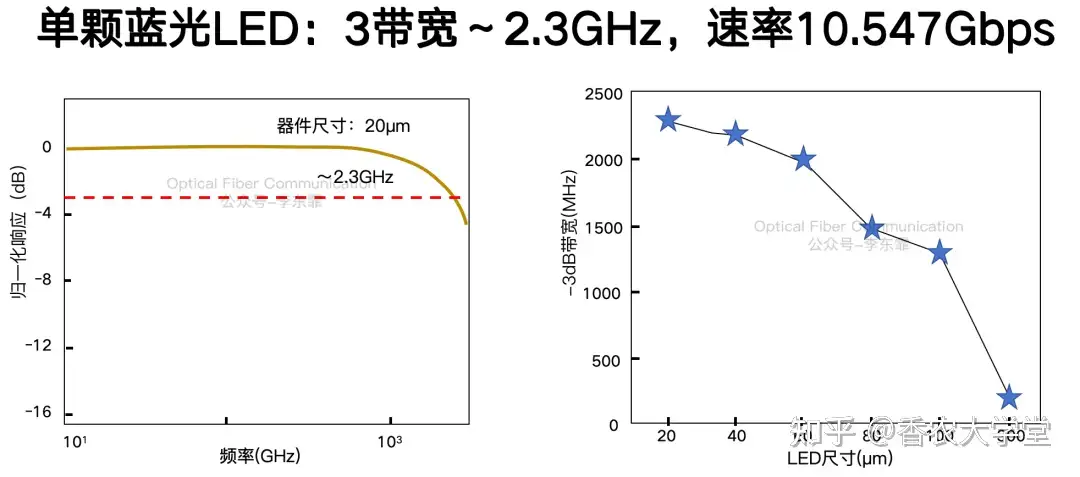
A single blue-light MicroLED achieved a -3 dB modulation bandwidth of 2.3 GHz, with a transmission rate reaching 10.55 Gbps.
The Fudan team has also conducted research on green-light MicroLEDs. The polarization electric field intensity in green-light InGaN multiple quantum wells is significantly higher than that of blue-light devices, which leads to a relatively low carrier recombination rate.
Therefore, under the same size and process conditions, the modulation bandwidth of green-light MicroLEDs is generally weaker than that of blue-light devices.
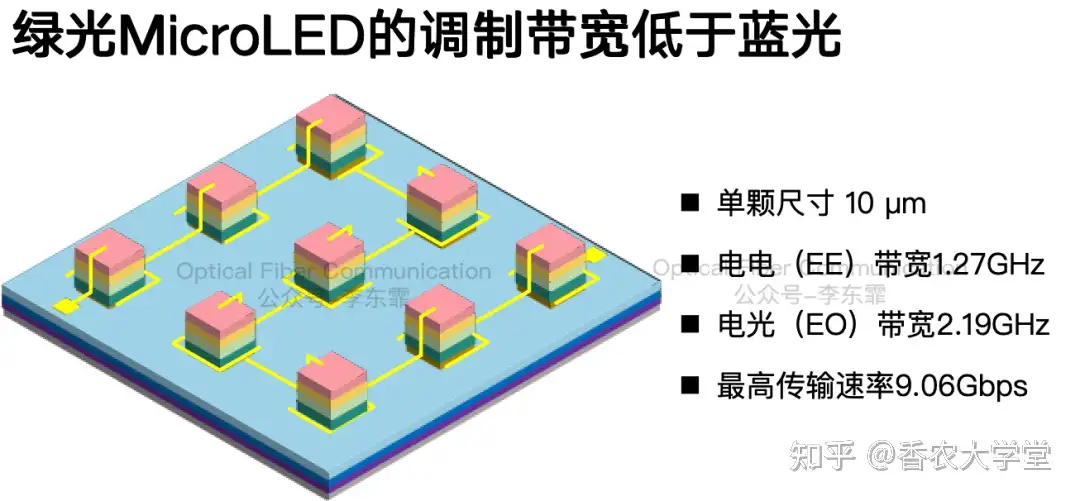
In addition to blue and green light, the research community is also exploring yellow-light and red-light MicroLED solutions, especially red light, whose bandwidth improvement difficulty is far higher than that of blue and green light devices.
At the OFC 2026 conference, Fudan University focused on their self-developed diamond-substrate InGaN red-light MicroLED solution.
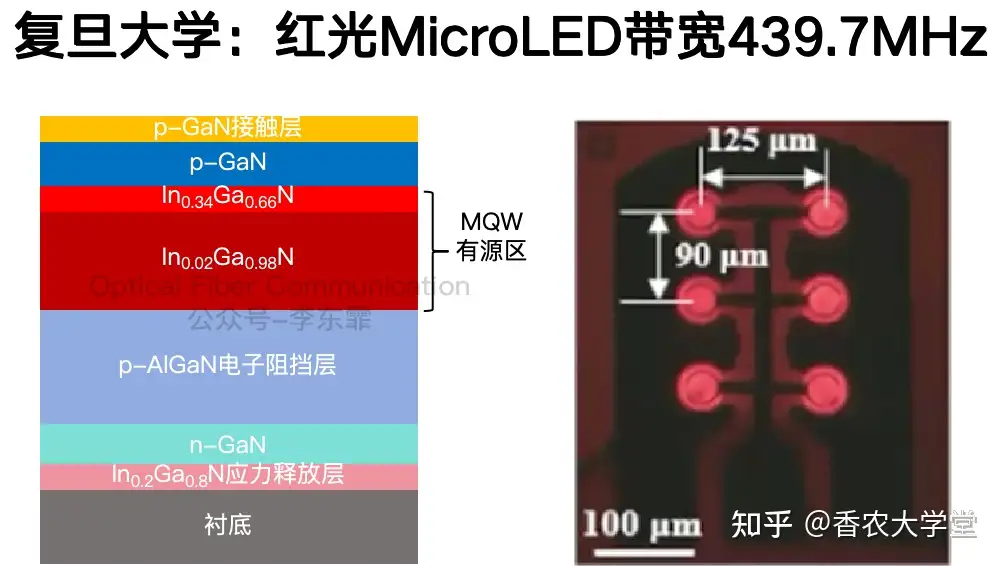
The use of InGaN-based red-light MicroLEDs is mainly to avoid the difficulty of the traditional AlGaInP material system in mass-transfer processes and its poor heat dissipation shortcomings.
Fabricating the device on a diamond substrate, one major consideration is to leverage diamond’s excellent thermal conductivity to improve heat dissipation capability.
At the same time, the series resistance of the device decreases as the size shrinks. Under the same forward voltage, for example a 20 um device, its operating current will be lower than that of a larger device.
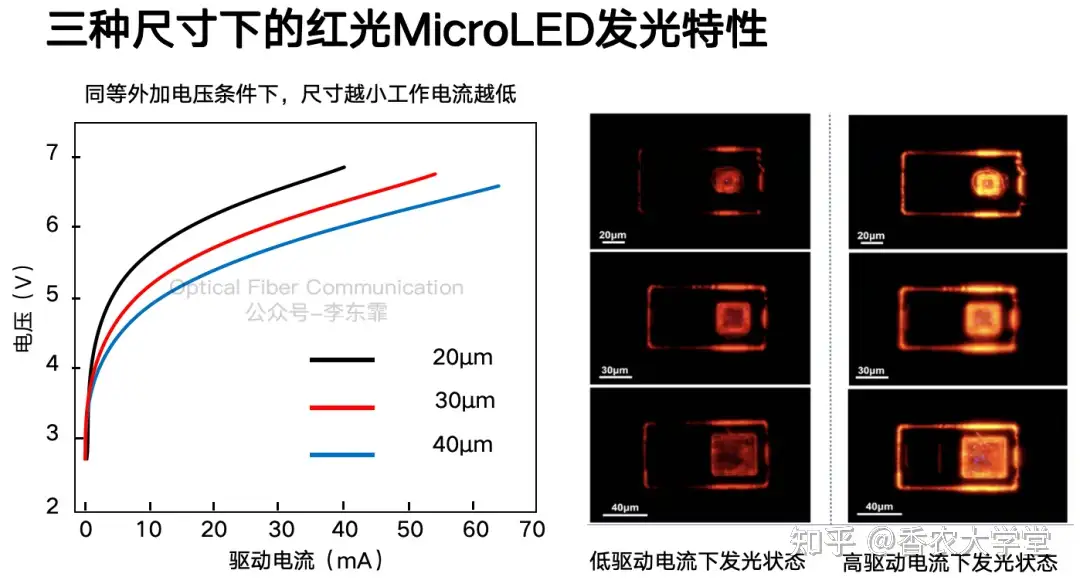
Miniaturizing the size can directly reduce RC parasitic parameters, that is, capacitance and series resistance, which is the most direct means of improving modulation bandwidth.
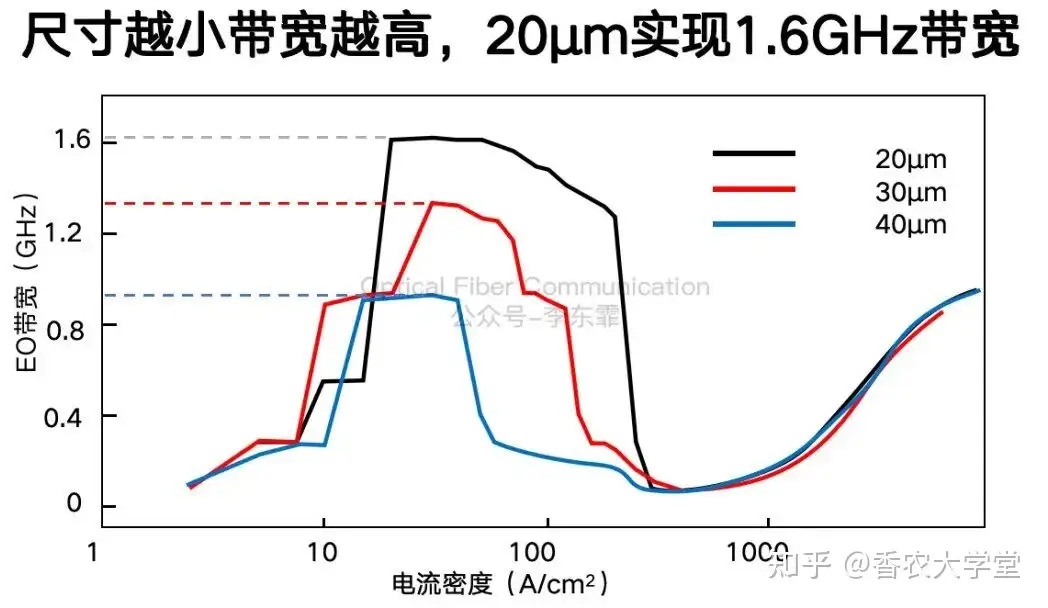
However, small-size devices will lead to higher current density and more severe heating, so the good heat dissipation provided by the diamond substrate becomes crucial, as it can effectively alleviate the thermal accumulation effect during high-current operation.
The Fudan team demonstrated experiments using red-light MicroLEDs for short-distance free-space optical wireless communication.
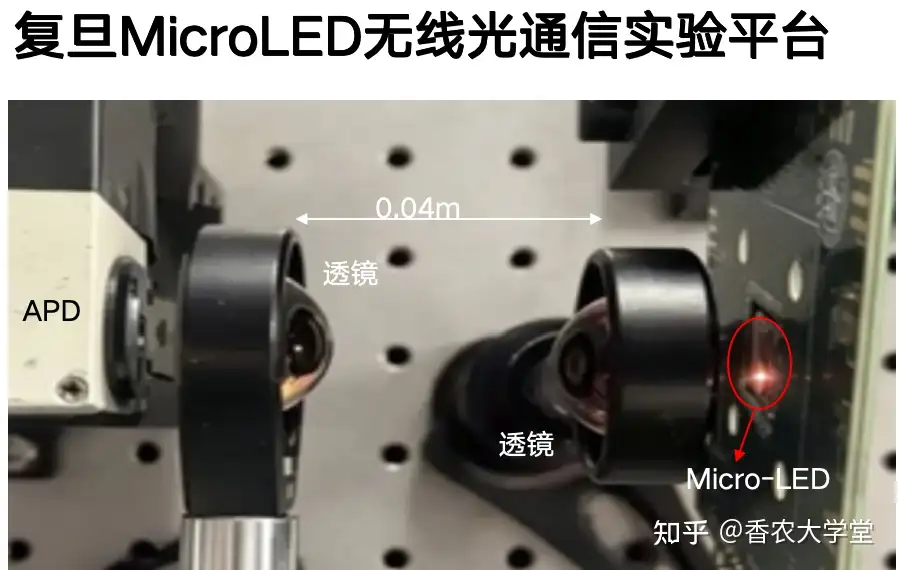
Using OFDM multi-carrier transmission technology, on each OFDM subcarrier, data is carried through QAM mapping.
Under low-current operating conditions, the communication rate of this device exceeded 1.5 Gbps, with energy consumption as low as 0.22 pJ/bit.
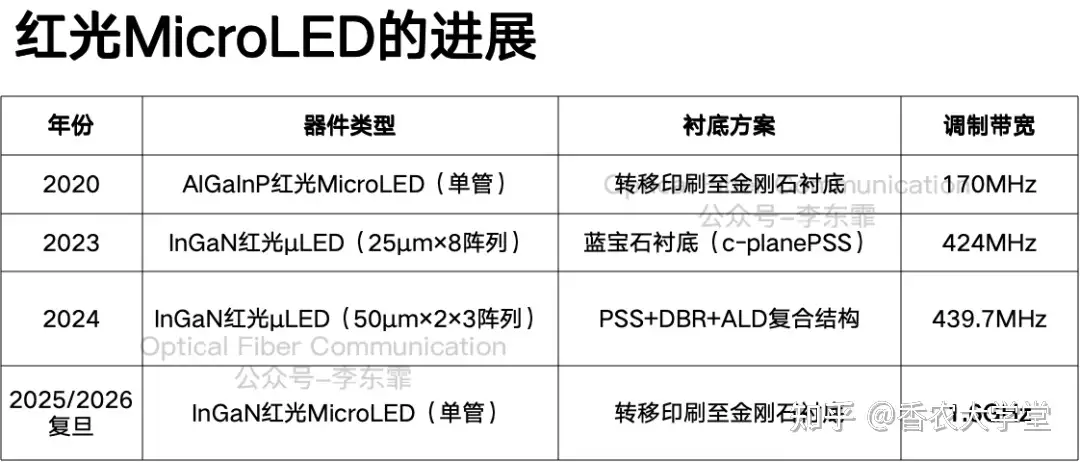
Finally, let us look at some representative research progress in the red-light MicroLED field in recent years.
Recommended Reading:
NVIDIA: Interconnect Architecture and Technical Analysis of Integrated Silicon Photonics CPO
Intel: CPO Solution Progress and Views for OCI
Enjoy this article?
Subscribe to get new optical communication insights delivered to your inbox. Free, unsubscribe anytime.