When we talk about high-speed cables in data centers, there are mainly three types: DAC, AEC, and AOC.
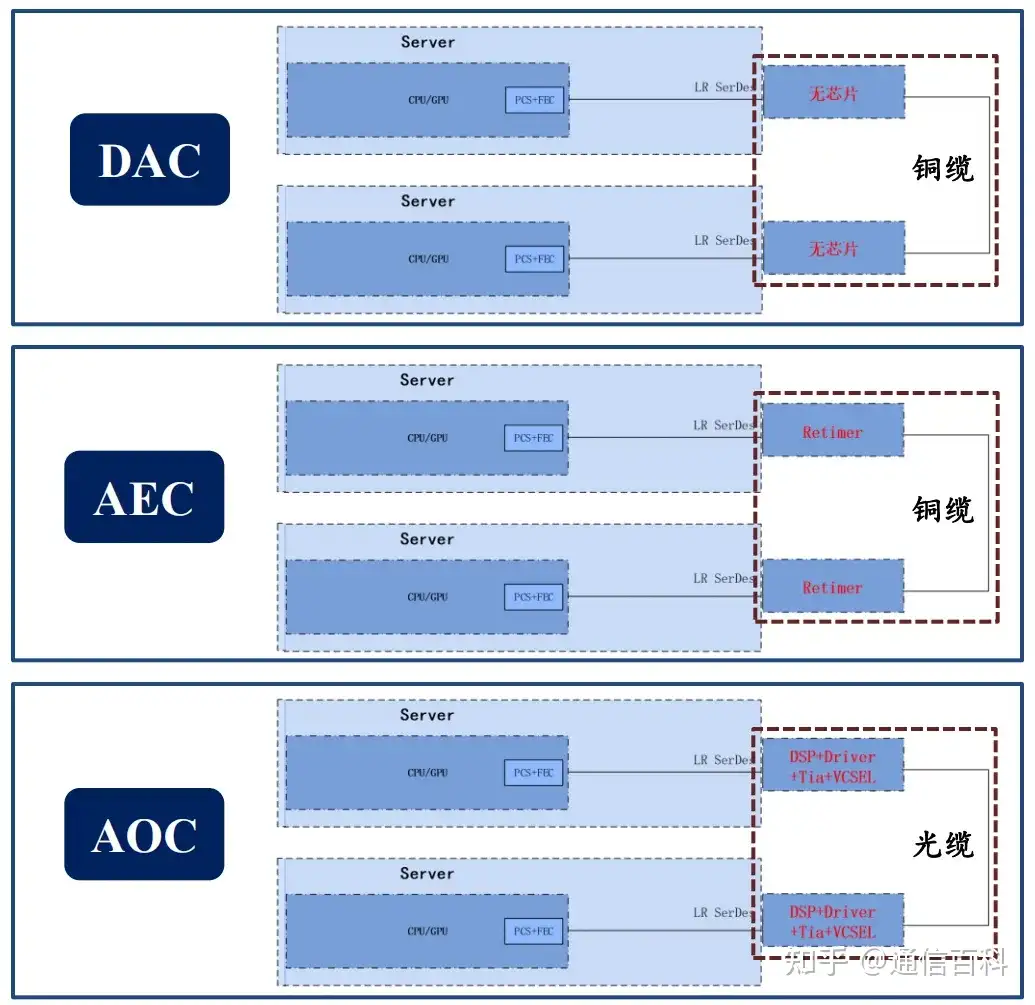
Simply put, DAC and AEC are copper cables, the former passive and the latter equipped with a signal processing chip; AOC is also active, but transmits optical signals through optical fiber.
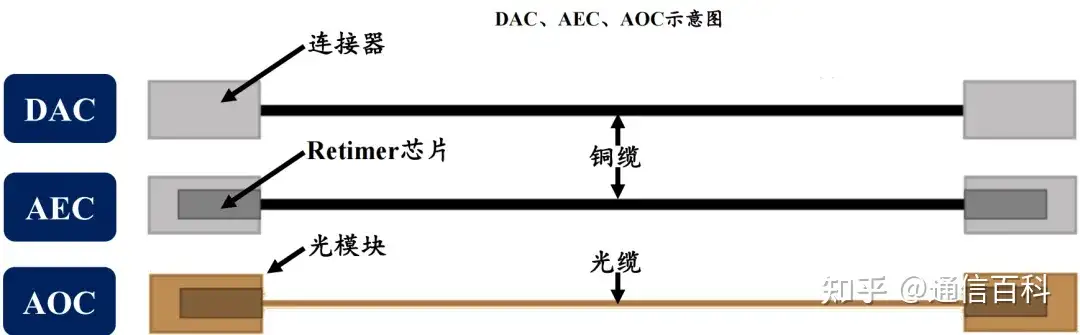
DAC is the most basic, directly transmitting electrical signals without a chip to process noise, so it has the shortest distance, lowest power consumption, and lowest cost.
AEC, because it has a built-in Retimer chip that can reshape the signal, transmits farther, but power consumption and cost also go up.
AOC is the most complex, requiring conversion between electrical and optical signals using a stack of chips such as DSPs and lasers. Although it has the longest distance, its power consumption and cost are also the highest.
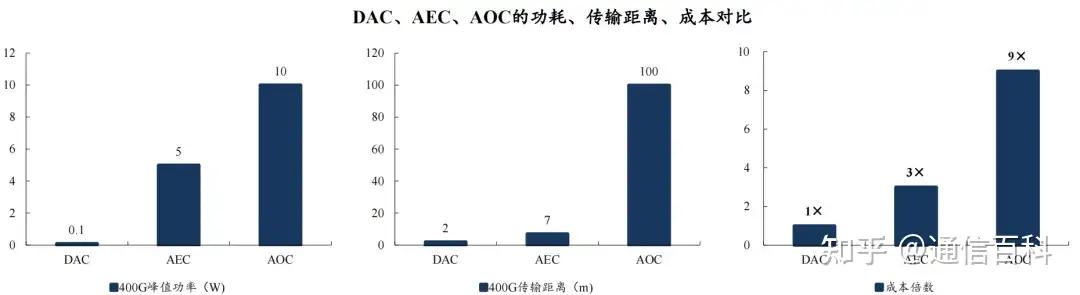
Taking the 400G rate as an example, DAC power consumption is about 0.1 W and transmits about 2 meters; AEC power consumption is about 5 W and can transmit 7 meters; while AOC power consumption reaches 10 W and the distance easily exceeds 100 meters. In terms of cost, AEC and AOC are roughly 3 times and 9 times that of DAC respectively.
As the rate gets higher and the distance requirement longer, optical connections have already become mainstream in Scale-Out network scenarios.
Scale-Out network port rates generally reach 400G and 800G, and even, with the launch of NVIDIA’s CX-8 network card and Quantum-X800 switch, 1.6T has also arrived.
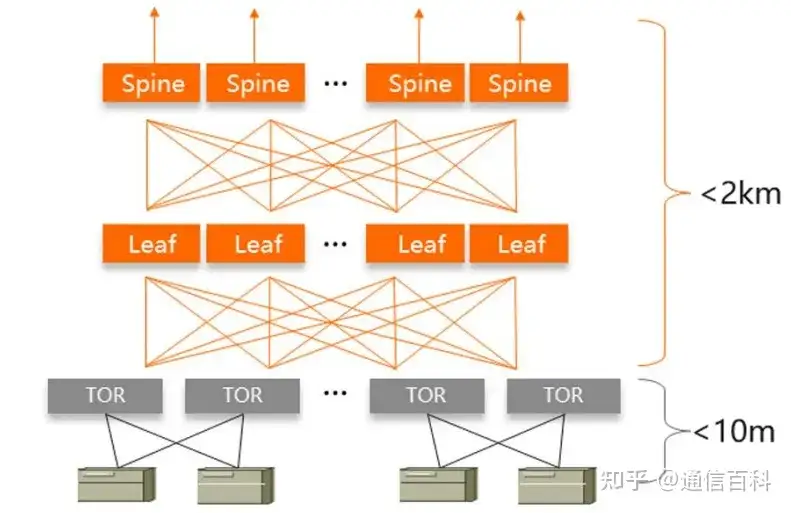
The Scale-Out network itself has a large distance span, from kilometers to meters, with the server to top-of-rack switch (ToR) usually within 10 meters.

Within this distance, copper cables still have a chance.
Especially in 800G connections below 10 meters, copper’s advantages in cost, power consumption, and stability still make it the first choice.
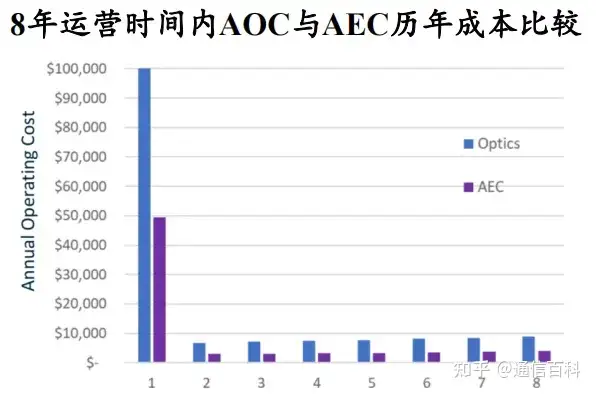
But the general trend is “optical in, copper out,” because the higher the rate, the shorter the effective distance of copper, and the greater the demand for optics. Not only between optical and copper, but also within copper cables there is competition, with the trend of “active in, passive out.” AEC is replacing DAC.
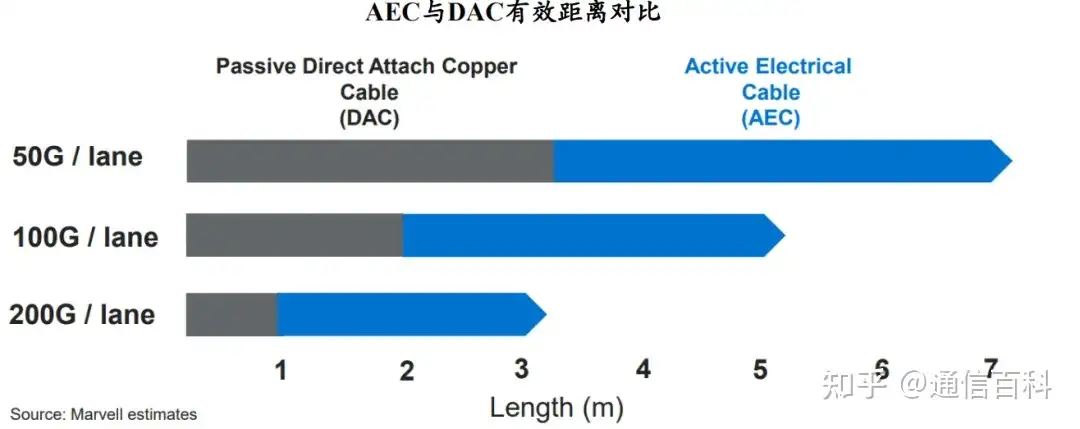
Similar to the logic of optical-in-copper-out, differences in distance, size, etc. lead to active (AEC) in and passive (DAC) out within copper cables. For example, at the 1.6T rate, DAC can only transmit 1-2 meters, while AEC can transmit more than 3 meters.
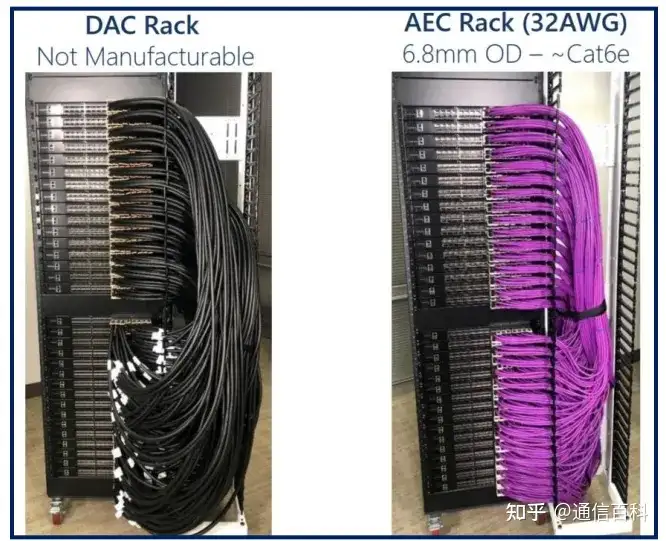
Another key point is the wire gauge. At high speeds, interference is large, and DAC needs thicker cables (such as 26 AWG) to resist interference, which are stiff and difficult to route.
AEC relies on chip compensation, so the cable can be much thinner (such as 32 AWG) and much more flexible, very suitable for high-density wiring.
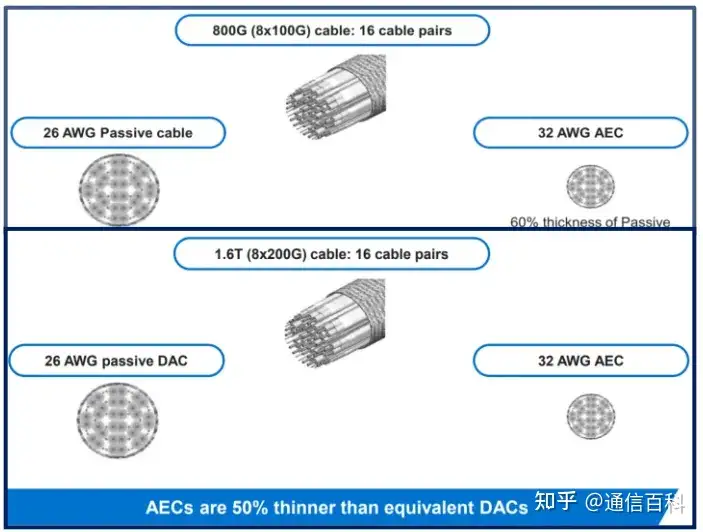
In addition, the thicker the cable, the harder it is to bend and route for high-density connections.
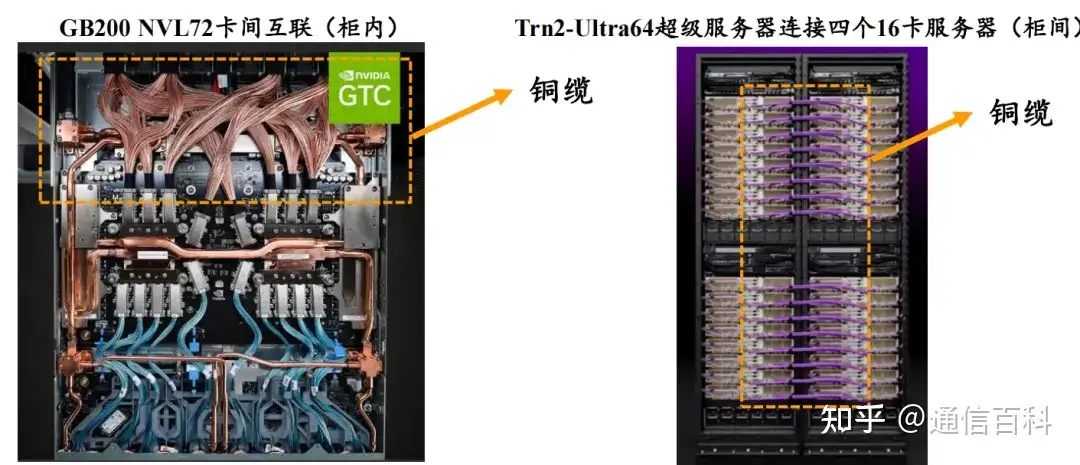
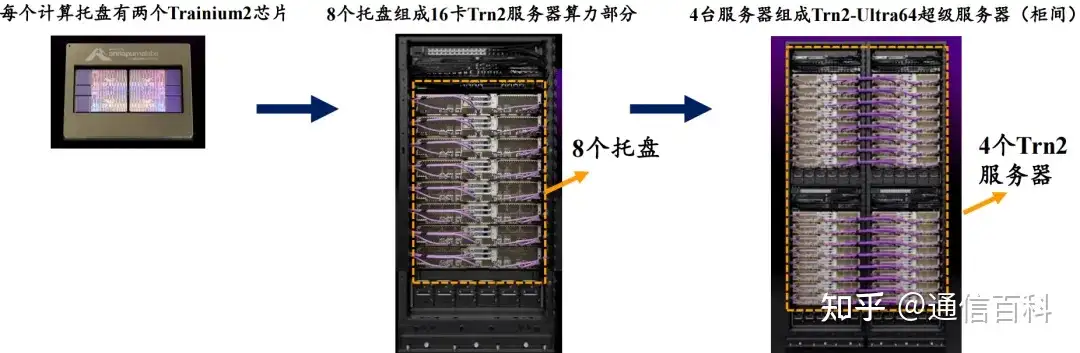
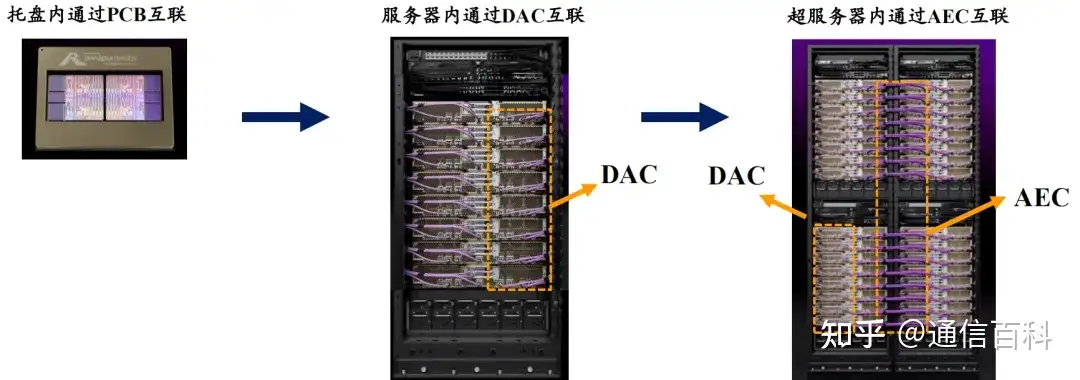
This is especially evident in supercomputing nodes. For example, Amazon Trn2-Ultra64 servers use DAC for intra-rack interconnect and AEC for inter-rack interconnect.
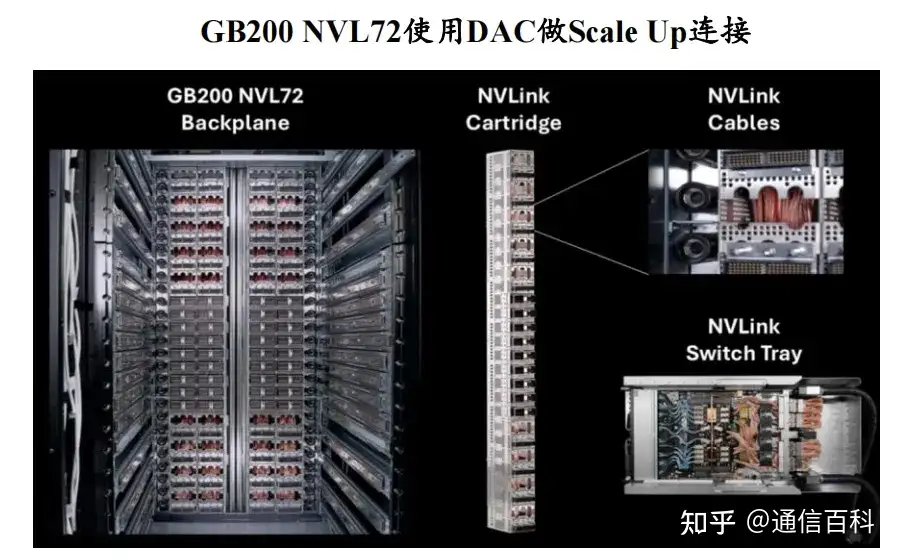
NVIDIA’s GB200 NVL72 also uses DAC for Scale-Up, while the larger GH200 NVL256 switches to optics. When cloud giants use self-developed chips, computing and communication are decoupled, allowing them to freely choose the most cost-effective solution, such as AEC.
In the future, AEC is likely to continue replacing DAC in short-distance scenarios such as within racks. As for how many AEC cables a card needs, it depends on its bandwidth and network architecture.
The above content is based on a Soochow Securities industry research report “Analyzing Scale Out and Scale Up: The What, Why, and How of AEC Squeezing Out a Market in the Gap Between Optical and Copper Interconnect.”
Recommended Reading:
Laser MPD Solution: How to Implement Backlight Monitoring?
Sumitomo: A Low Polarization Mode Dispersion Multi-Core Fiber
Enjoy this article?
Subscribe to get new optical communication insights delivered to your inbox. Free, unsubscribe anytime.