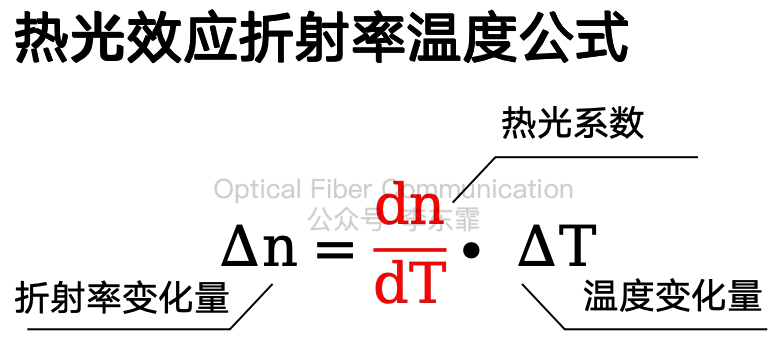
The phenomenon where the refractive index of a transparent optical material changes with temperature is called the thermo-optic effect. We use the following formula to quantify its magnitude.
Here, the refractive index of the medium equals the speed of light in vacuum divided by the speed of light in the medium, that is:

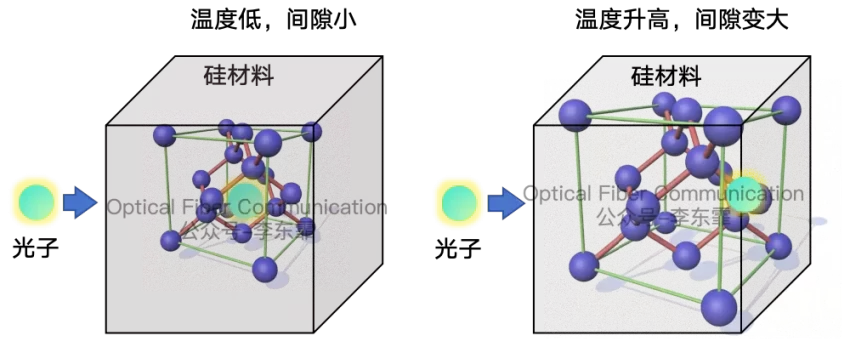
When the temperature rises, the material undergoes slight thermal expansion, and the spacing between molecules or atoms becomes larger. After the spacing widens, the number of electrons per unit volume that can be driven by the light wave’s electric field decreases, the interaction between light and the material weakens, and the slowing effect on light decreases, so the refractive index usually decreases.
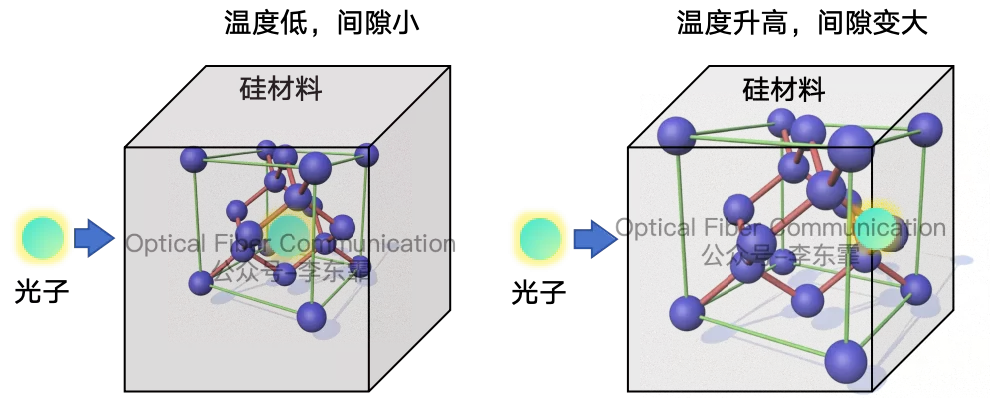
But at the same time, the temperature rise also intensifies the thermal vibration of atoms and molecules inside the material. Taking silicon as an example, when the temperature rises, the amplitude of internal atomic thermal vibration increases, and the activity of valence electrons and free electrons clearly increases.
The fundamental cause of the thermo-optic effect is that the temperature rise intensifies the thermal vibration of atoms and molecules.
So for silicon, although thermal expansion does exist, the impact of changes in electron activity on optical performance is far stronger than the carrier dilution effect caused by thermal expansion.
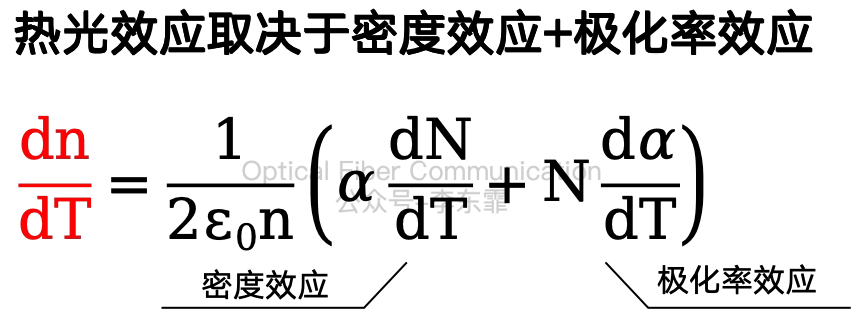
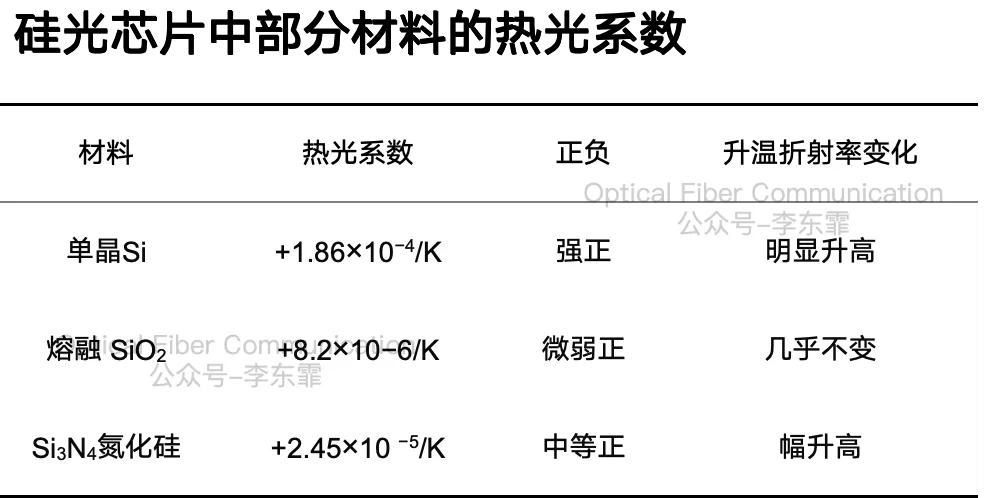
So materials like silicon and silicon dioxide have a larger refractive index at higher temperatures, making them positive thermo-optic coefficient materials. This result may differ from our everyday intuition.
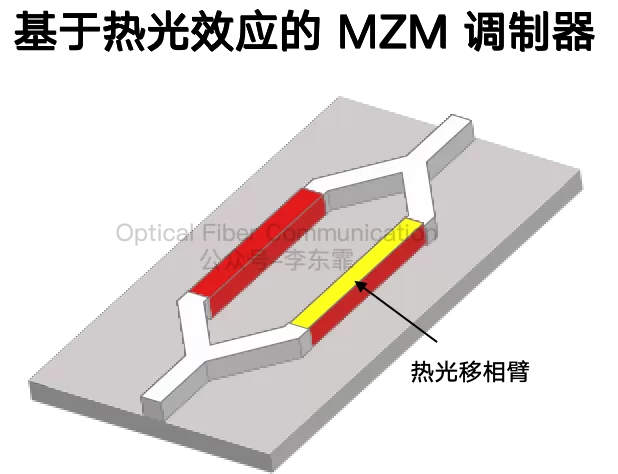
The thermo-optic effect has many applications in practice. For example, the Mach-Zehnder interferometer uses the thermo-optic effect to adjust the phase difference between the two arms, achieving optical switching or optical attenuation.
Coherent: Single-Channel 400G PAM4 Pure Silicon MZM Modulation Solution
Hisense Ligent: 400G/lane LDO Solution Verification Based on TFLN MZM
GlobalFoundries: 60GHz Silicon Photonics MZM Modulator Solution for 200G per Wavelength
A beam of light is split into two paths that enter two parallel interference arms respectively. One is the reference arm, which has no heating structure, so its temperature is constant and its refractive index is fixed. The other is the thermo-optic phase-shifting arm, with a metal heating resistor above the waveguide.
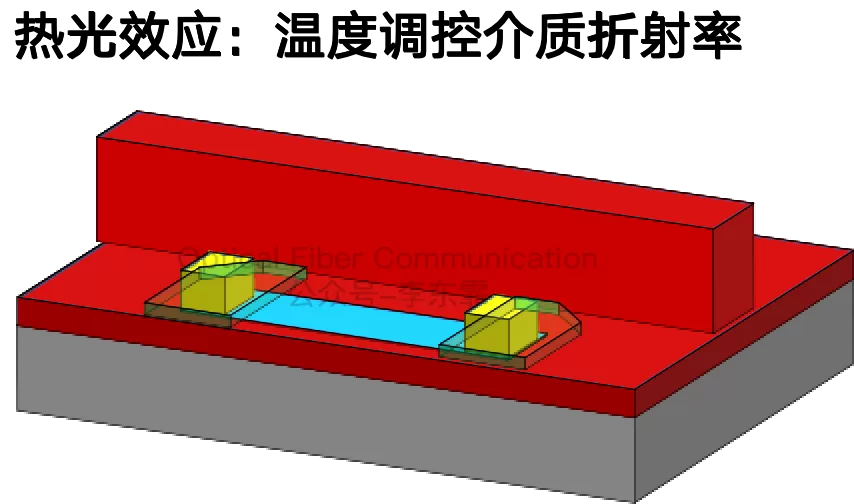
When heated, the refractive index of this arm increases, the speed of light slows, and the phase delay increases. A phase difference is generated between the two arms, thereby achieving switching or attenuation control of the optical path.

However, the response speed of the thermo-optic effect is relatively slow, making it suitable for static optical path switching, such as optical switches, but it cannot be used for high-speed modulation of transmitted data. True high-speed modulation relies on the electro-optic effect, not the thermo-optic effect.
In addition, the thermo-optic effect can also be used for compensation. For example, a silicon thermo-optic phase compensator can solve the common DC bias drift problem of lithium niobate modulators.
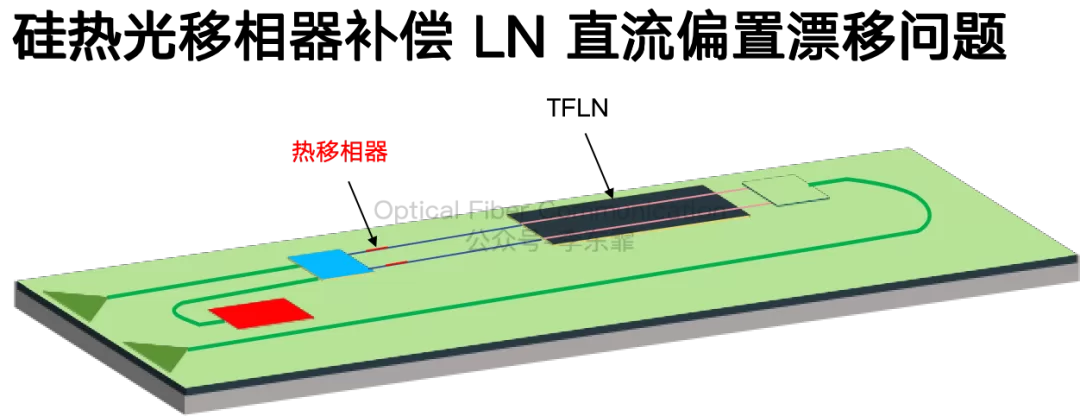
Thin-Film Lithium Niobate Basics & Huawei HiSilicon’s 540Gbps SiN-SOI-TFLN
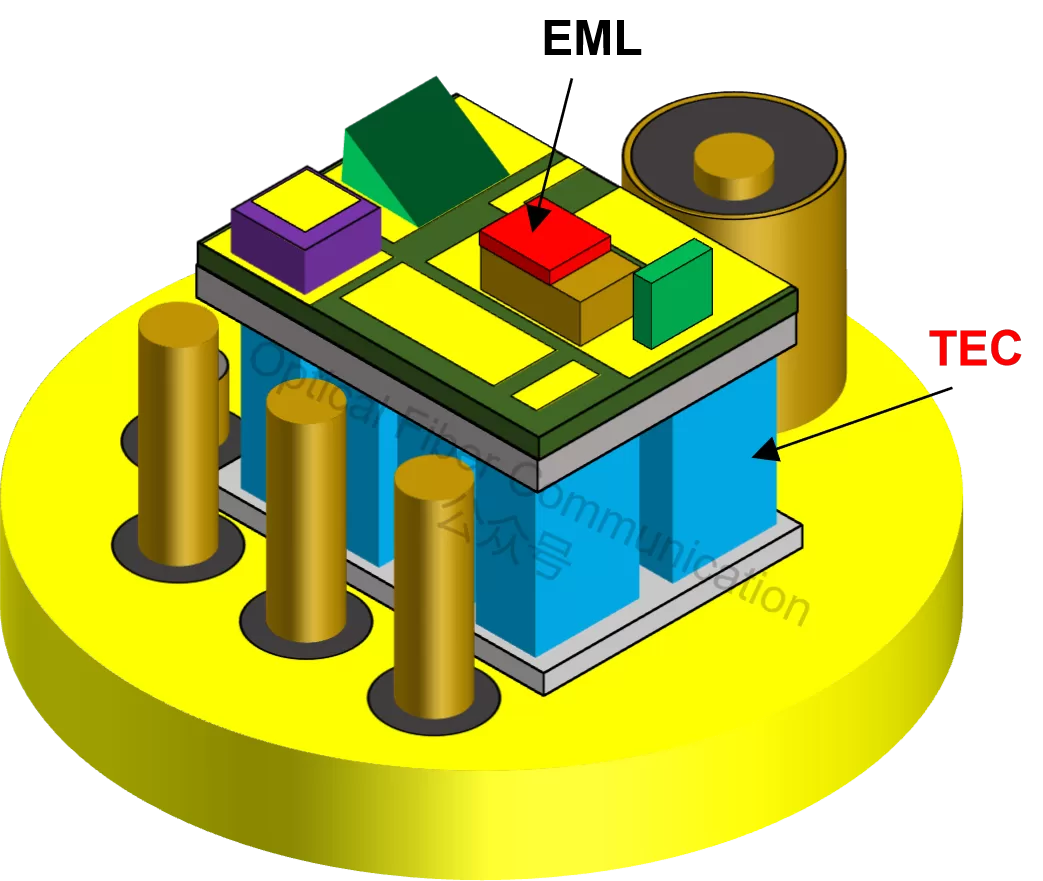
For another example, the wavelength drift of EML and DFB lasers also originates from the thermo-optic effect: the temperature rise increases the waveguide refractive index and stretches the grating period, moving the resonant wavelength toward longer wavelengths.
Why Can’t an EML Work Without a TEC?
In long-distance and DWDM scenarios, DFB lasers are extremely sensitive to temperature. The optical module is equipped with a TEC semiconductor cooler and a thermistor to stabilize the wavelength through closed-loop temperature control.
Please point out any inaccuracies.
Welcome to join our community and access high-value technical documents, trend research reports, and various supply-demand business opportunities in the fields of semiconductor chips, optical components, and optical modules.

If you are interested in semiconductors / optical components / optical modules / optical fiber communications
Welcome to follow us!
Related Reading
Enjoy this article?
Subscribe to get new optical communication insights delivered to your inbox. Free, unsubscribe anytime.