Marvell: Technology Evolution and Product Roadmap of 1.6T Coherent Optics
Acacia/Cisco: DTCO and STCO Co-Optimization Solution for High-Speed Optical Modules
Eoptolink: TFLN 1.6T/3.2T Solution for Single-Channel 400G
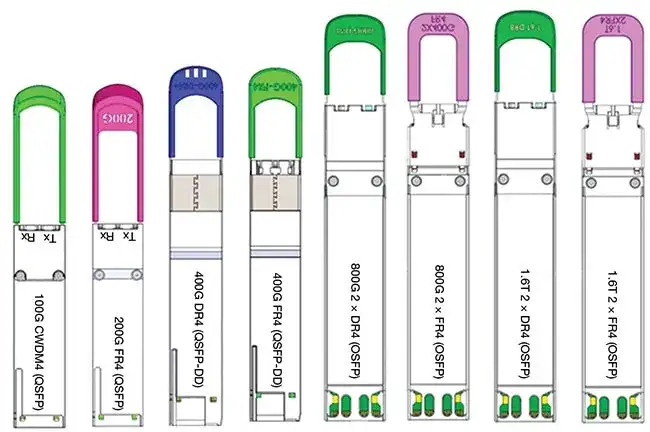
The shell or pull tab of an optical module usually has strings such as OSFP 800G SR8, QSFP-DD 400G DR4, and OSFP224 1.6T 2xFR4 printed on it.
Intel’s 1.6T / 3.2T Optical Module Path
Looked at individually, most of these words are recognizable. For example, OSFP refers to a package form factor, 800G is the transmission rate, and SR stands for the short-reach standard. But when combined together, the complete definition and the parameters behind them may become somewhat confusing.
In fact, these strings describe nothing more than the key dimensions of package, rate, transmission distance, electrical interface, and light source, which together reflect the performance and cost of an optical module.
The package, that is, the Form Factor, determines the mechanical shape of the module, the number of electrical channels it can carry, and directly limits its heat dissipation capability. At the same time, the hardware expansion space cannot be changed at a later stage.
The same 800G module can use either the OSFP package or the QSFP-DD800 package, both equipped with 8 electrical channels. The difference is that OSFP is larger in size and dissipates heat better.
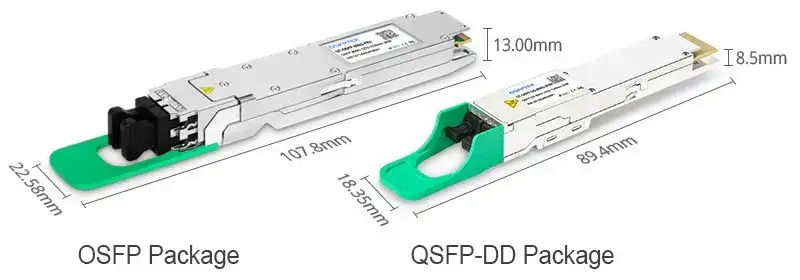
At present, the power consumption of high-speed modules is often 15 W to 18 W or more, and the quality of heat dissipation directly affects long-term operating stability. This is also one of the reasons why NVIDIA’s switches prefer the OSFP package.
The benefit of QSFP-DD is that it is backward compatible with older QSFP slots, suitable for scenarios that still need to use legacy equipment.
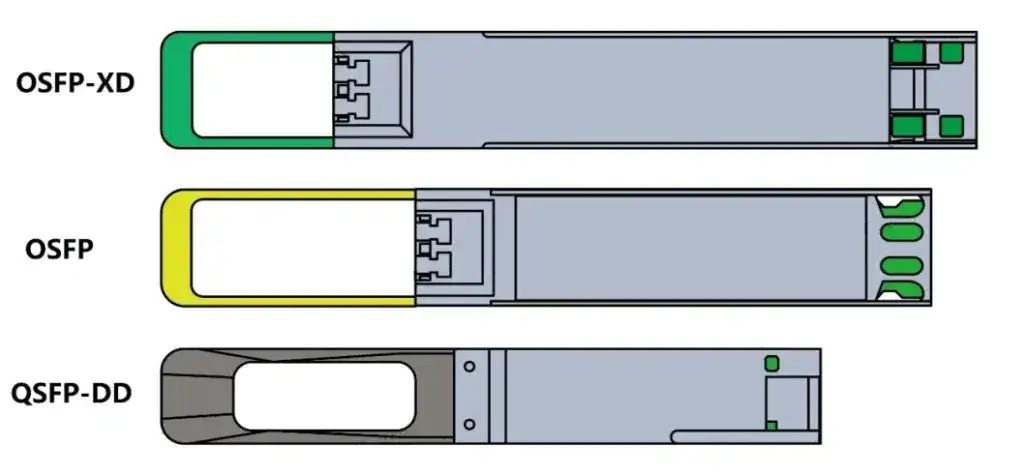
When the rate reaches 1.6T, the package form factors further diverge, with OSFP, OSFP-XD, and QSFP-DD1600 being the three mainstream types on the market.
HG Genuine: 1.6T 2FR4 Silicon Photonics Multiplexing/Demultiplexing Solution
POET: 1.6T (4x400G) 2FR4 Optical Module Based on Interposer
OSFP224, also called OSFP1600, continues to maintain 8 electrical channels, with the single-channel rate increased to 200G, and the slot is backward compatible with the original OSFP.
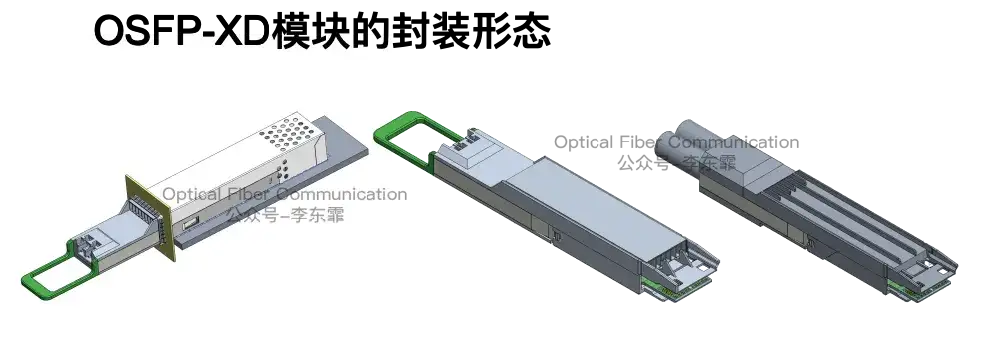
OSFP-XD expands the electrical channels to 16, with the single channel still at 100G, targeting high-density scenarios and able to extend all the way to 3.2T.
In terms of the module’s nominal rate, it refers to the number of electrical channels multiplied by the single-channel electrical rate, which is also equal to the number of optical channels multiplied by the single-channel optical rate. Taking OSFP 800G SR8 as an example, the electrical side has 8 channels of 100G, and the optical side also has 8 channels of 100G, both amounting to 800G.
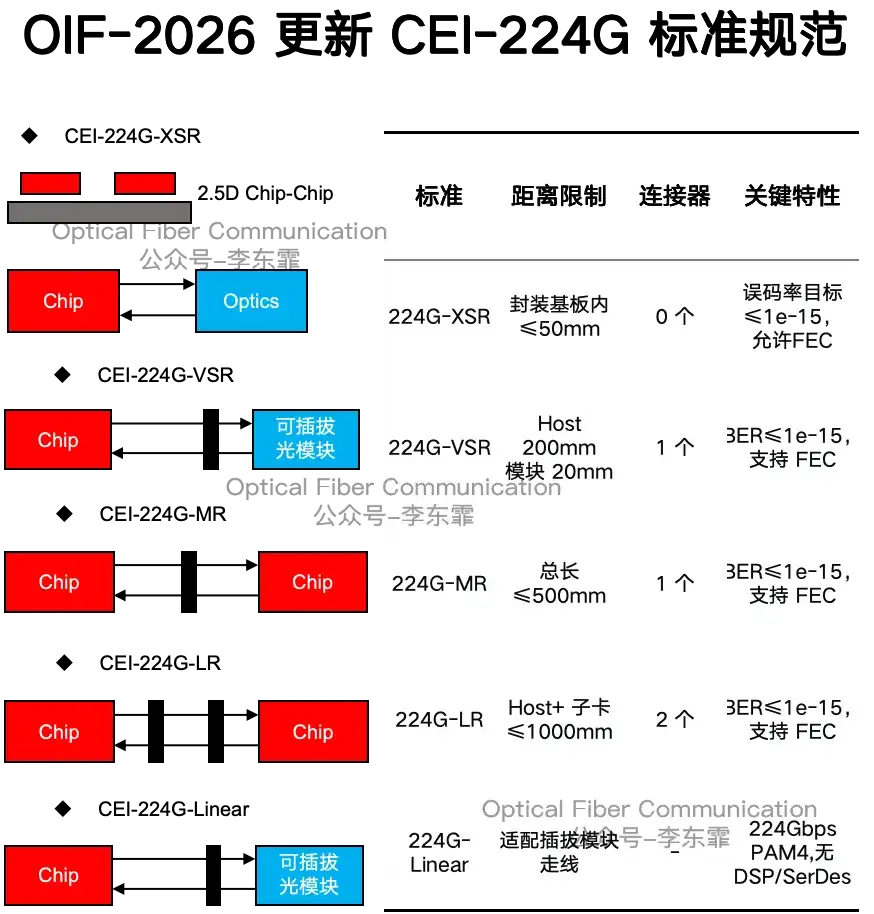
The electrical interface parameters follow the OIF-CEI specification, and the subdivision standard corresponding to pluggable modules is called CEI-VSR, which specifically refers to the extremely short-distance transmission on the circuit board between the chip and the module.
TE: IO Connector Process and Analysis in 448G
Ciena: Current Status and Some Views on the 448G Technology Ecosystem
OSFP224 and QSFP-DD1600 both follow the 8x200G route, uniformly complying with the OIF CEI-224G-VSR standard; OSFP-XD adopts the 16x100G route, corresponding to the CEI-112G-VSR standard.
The electrical specifications for the interaction between the module gold fingers and the chip belong to OIF-CEI, and are independent of the IEEE standards that define optical transmission indicators.
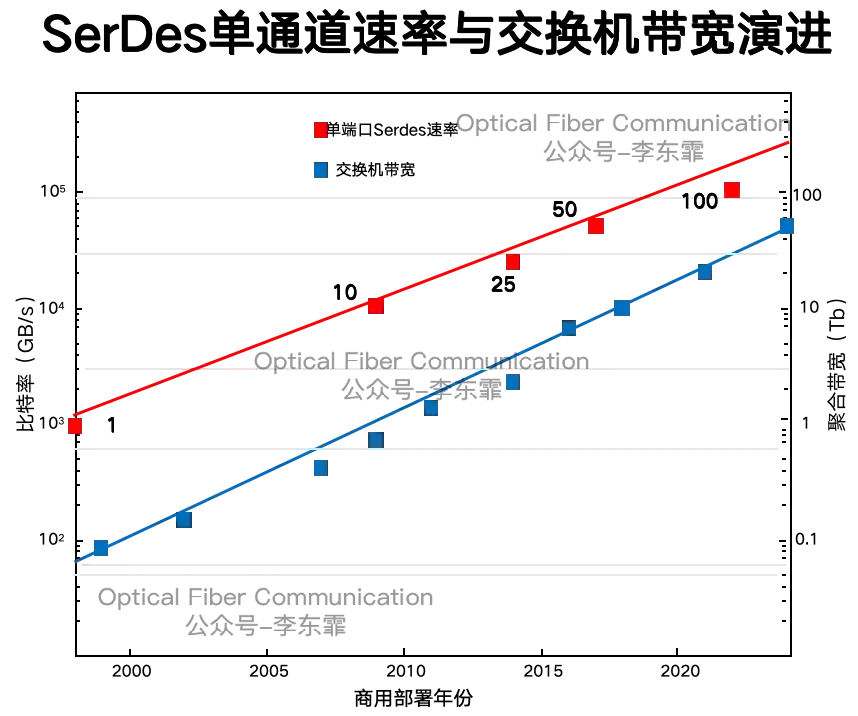
The SerDes technology behind the electrical channel rate has been improved over the past decade or so from 10G, 25G, 50G to the now mainstream 100G PAM4, and the next step is 200G PAM4.
Fraunhofer IZM: Process Evolution and Analysis of CPO Technical Route
The two 1.6T paths mentioned earlier: OSFP224 uses 8 electrical channels, with the single-channel rate raised to 200G, based on 200G SerDes; OSFP-XD doubles the number of channels to 16, with the single channel still using 100G SerDes.
The transmission distance is represented by letter combinations such as SR, DR, FR, LR, ER, and ZR, corresponding respectively to the maximum transmission distance and the type of optical fiber to be used.
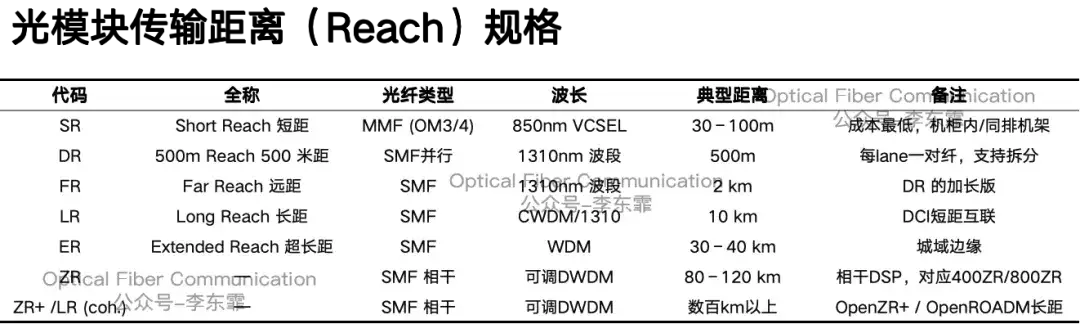
The number after the letter also has a clear meaning. For example, the “8” at the end of DR8 and SR8 refers to eight pairs of independent optical fibers working in parallel; while the “4” in FR4 and LR4 means four groups of wavelengths sharing one pair of optical fibers through wavelength division multiplexing.
The number is the same, but the optical path structure is completely different. Labels such as 2xFR4 and 2xLR4 may also be seen on the market, but these belong to the vendors’ own naming conventions and are not the official IEEE 802.3 designations. The corresponding standards are actually FR8 and LR8.
In addition, the coherent transmission standard represented by ZR is not governed by IEEE, but is formulated by the OIF organization, currently mainly 400ZR and 800ZR.
Different Reach transmission standards correspond to fixed light source types, and the light source device directly determines the overall cost and power consumption level of the module.
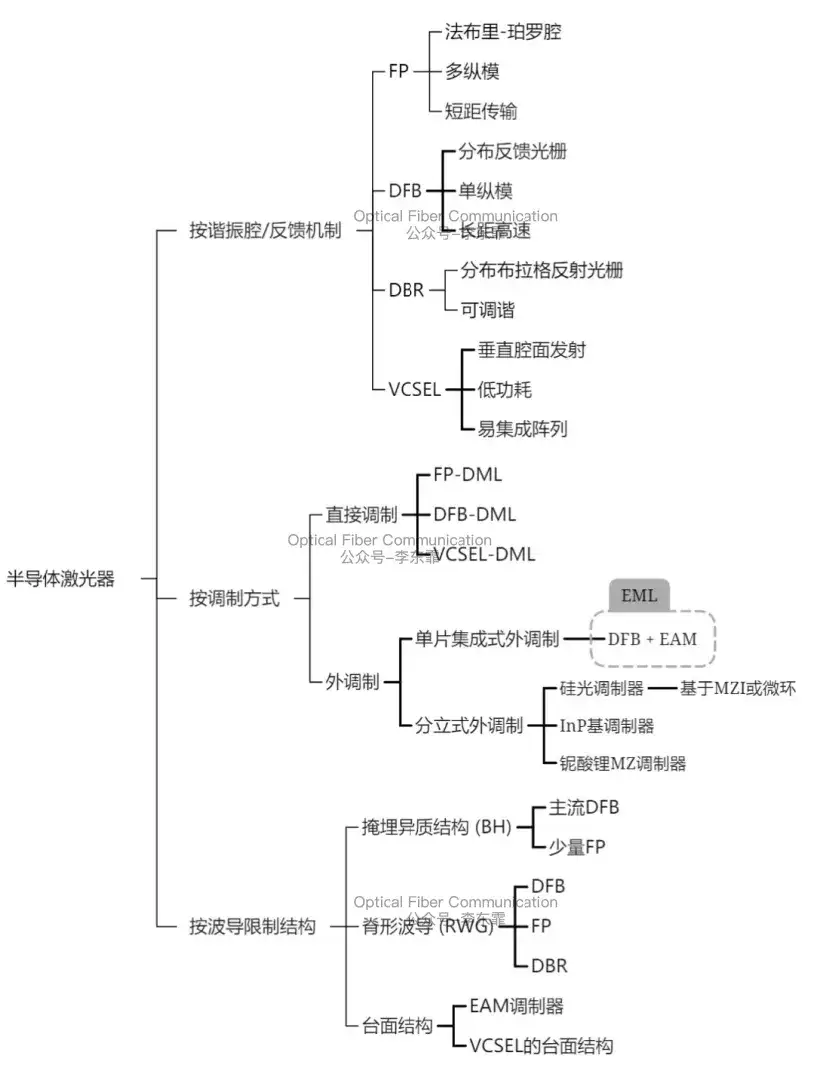
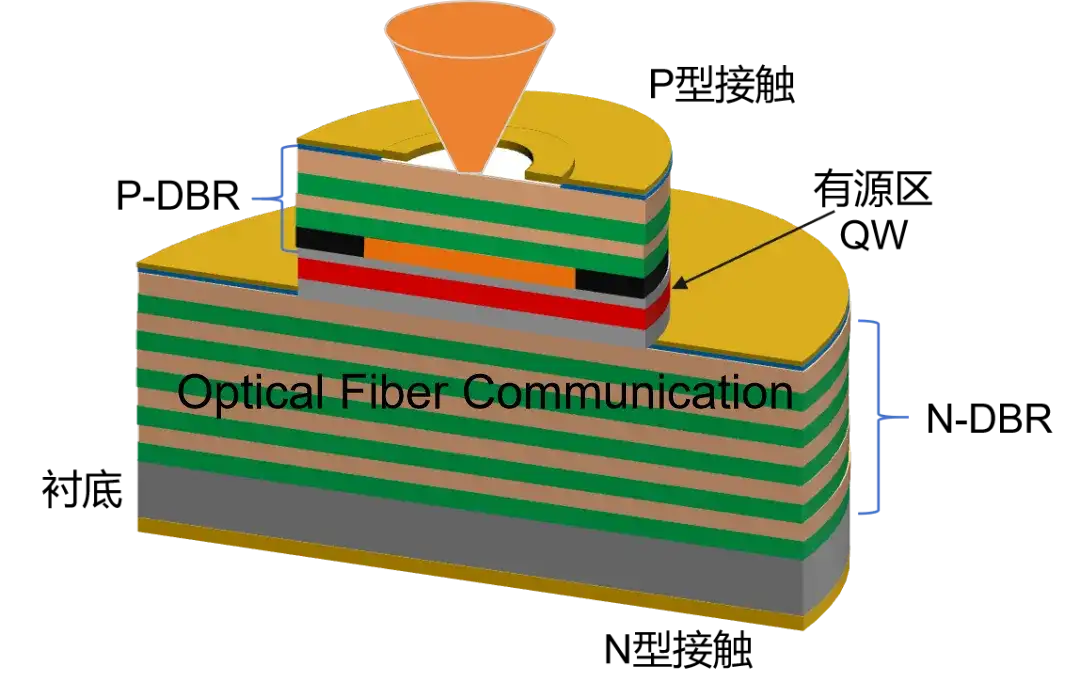
Multi-mode short-reach SR scenarios use VCSELs, operating at 850 nm wavelength, directly modulated, with the simplest production and coupling, the lowest cost, and the lowest power consumption, but they can only run short distances. The OSFP 800G SR8 mentioned earlier belongs to this category.
Coherent: Wide and Slow VCSEL CPO Solution and Energy Efficiency Evaluation
Sony: Full-Temperature-Range 200G Multi-Mode VCSEL Solution
Bosheng: Back-Emitting Multi-Mode VCSEL 1.6T Array Solution for CPO/NPO
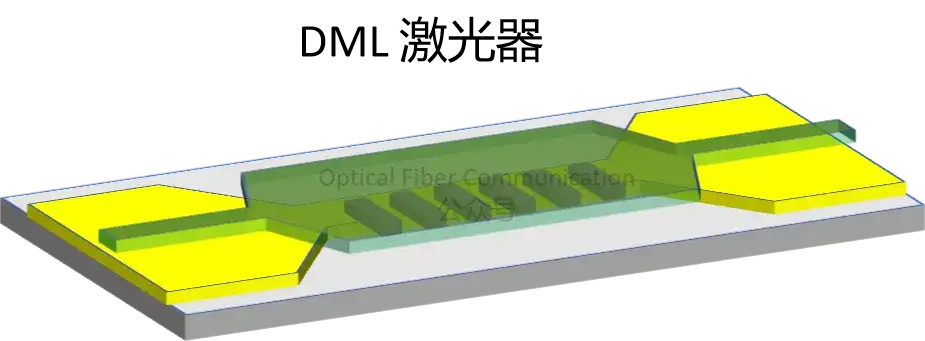
DML, the directly modulated laser, operates at 1310 nm and is cheaper than electro-absorption modulated devices, but limited by chirp effect and bandwidth, it is mainly used in access scenarios such as 2 km CWDM4 400G.
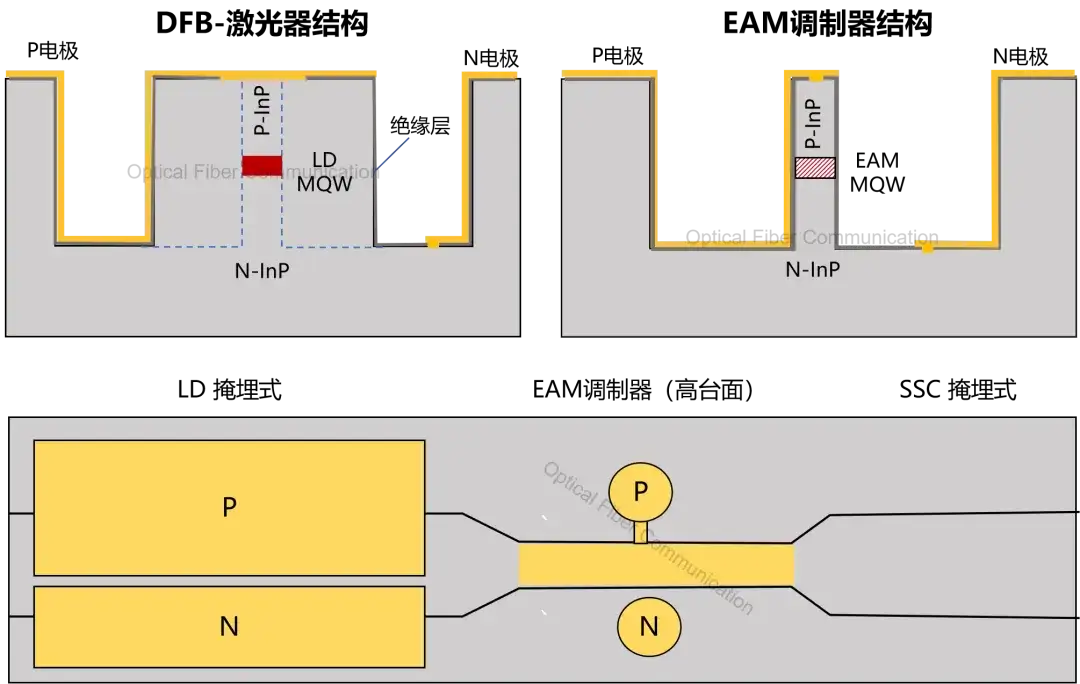
EML, the electro-absorption modulated laser, that is, DFB+EAM, is the mainstay of single-mode IMDD solutions, covering the 500 m to 40 km range from DR to ER. The device has sufficient bandwidth, and single-channel 200 G has also entered mass production, but the price is higher and the power consumption is greater.
Mitsubishi: Differential EML Solution with Series Dual Modulators
Lumentum: Progress on 4x200G Differential-Drive EML
Broadcom: 400G EML Evolution Route and Differential-Drive Solution
The external CW-DFB laser combined with a silicon photonics (SiPh) chip solution uses the laser only as a light source, with signal modulation completed on the silicon photonics chip. The strength of this solution lies in multi-channel integration capability, with a single silicon photonics chip able to integrate eight optical paths, suitable for DR4 and DR8.
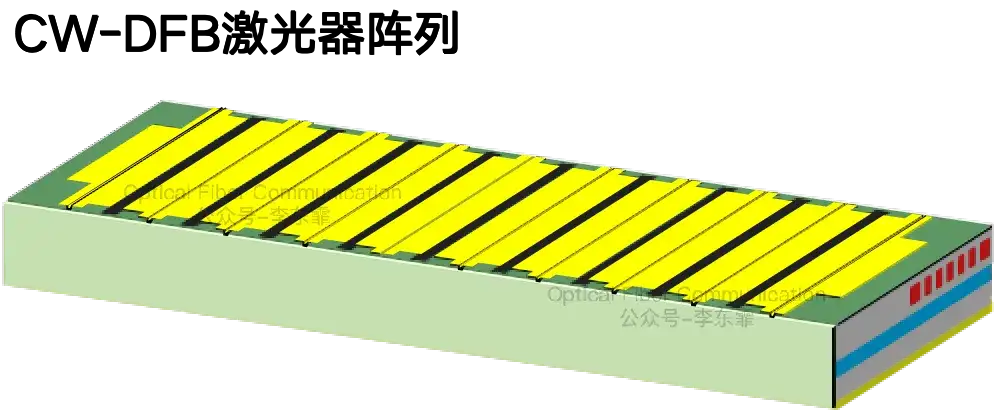
Data Center Optical Interconnect: Several Multi-Wavelength Light Source Solutions
At the same time, it adapts to the long-term expansion needs of CPO co-packaged optics and is also the basic technology route for ZR coherent modules.
NVIDIA: Interconnect Architecture and Technical Analysis of Integrated Silicon Photonics CPO
Intel: CPO Solution Progress and Views for OCI
Lightmatter: 16-Wavelength 800G BiDi Microring Silicon Photonics CPO Solution
Thank you for reading. If there is any inaccuracy, please feel free to point it out!
Related Reading
- Coherent Traveling-Wave Electrode High-Speed EML Solution (Including 100G/200G/400G Rate Evolution)
- Coherent FY2026 Performance Review
Enjoy this article?
Subscribe to get new optical communication insights delivered to your inbox. Free, unsubscribe anytime.