In daily life, we often hear that communication has been interrupted somewhere…


These things all feel quite serious.
With the recent Yibin earthquake, operators were surely sweating. Fortunately, the entire communication network was not interrupted on a large scale. So what supports our network to still operate normally in emergencies?
Today let’s briefly talk about optical-layer protection in WDM systems.
To talk about optical-layer protection in WDM, we must first understand the hierarchical structure of the WDM optical layer. Here is a diagram that very clearly illustrates the optical-layer structure.
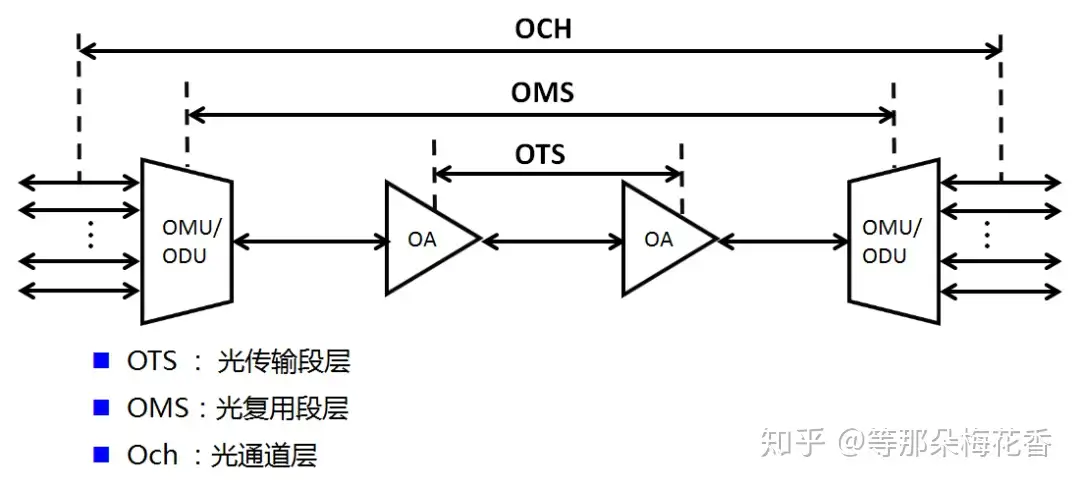
As can be seen:
The OCH (optical channel) layer is a single wavelength channel, the part between service boards;
The OMS (optical multiplex section) is composed of multiple OCH optical channels, the part between the OMU/ODU;
The OTS (optical transmission section) layer is composed of OMS light + monitoring light (if there is optical monitoring), the part between amplifiers OA;
Therefore, for the above optical-layer structure, there are the following three types of protection:
Optical channel layer protection, optical multiplex section protection, and optical transmission section protection.
Optical transmission section protection (also called OLP protection)
Protection principle:
Uses 1+1 dual-transmit selective-receive, or 1:1 selective-transmit selective-receive to protect the working fiber.
Among them, 1+1 dual-transmit selective-receive uses single-ended switching, and 1:1 selective-transmit selective-receive uses dual-ended switching (the principles of 1+1 and 1:1 described later are similar).
In the OLP protection scenario, no switching protocol is needed, so its switching speed is very fast, generally less than 50 ms.
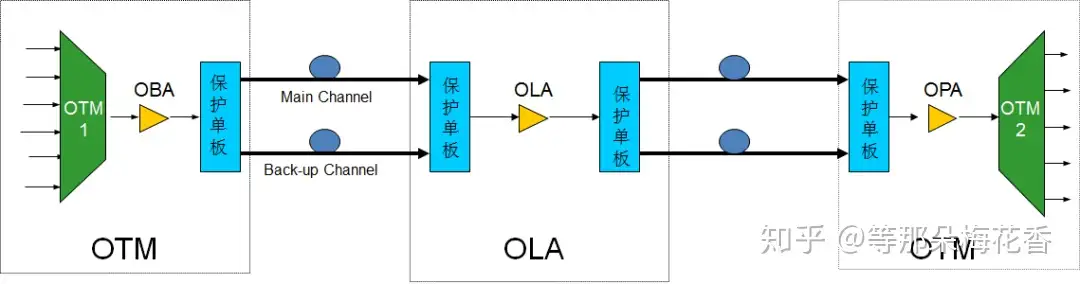
OLP protection is generally used to protect a section of working optical cable that is prone to damage using a backup optical cable.
At the same time, when the OLP board does not need to couple monitoring light, the OLP protection board can basically be independent of the main equipment, so many small equipment vendors work in this area, hanging directly on the line. In this case, the main equipment’s network management cannot manage and monitor the OLP protection process.
Optical multiplex section protection
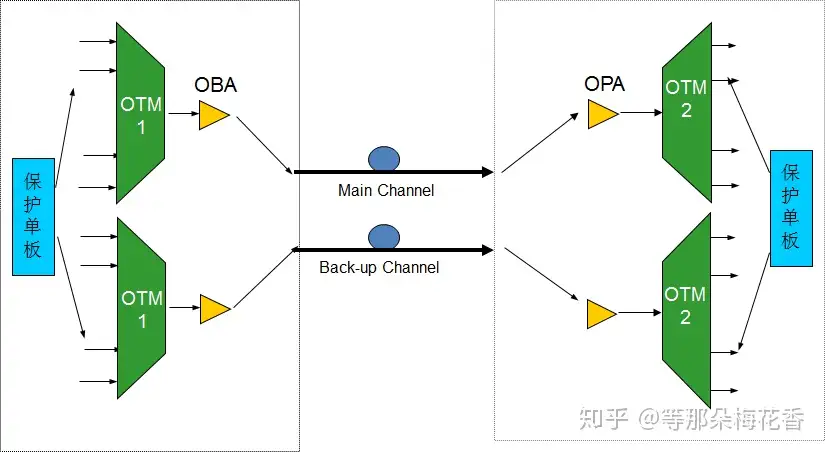
Protection principle: generally only the 1+1 form, where the transmitter sends the OMS light to two, and the receiver selectively receives.
No protection switching protocol is needed, but due to the complexity of network networking, the switching time is not necessarily less than 50 ms.
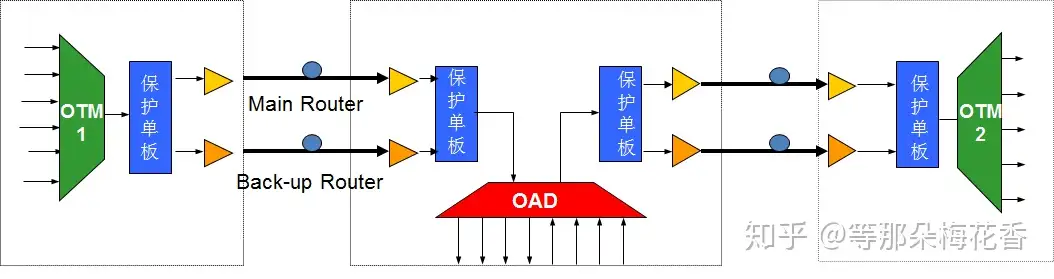
OMS optical multiplex section protection is generally used to protect the route between OTM/OADM sites. Since it protects the section between multiplexing and demultiplexing, the backup route also needs corresponding amplifiers and other optical-layer devices, so this protection consumes a lot of fiber and equipment resources.
Optical channel protection
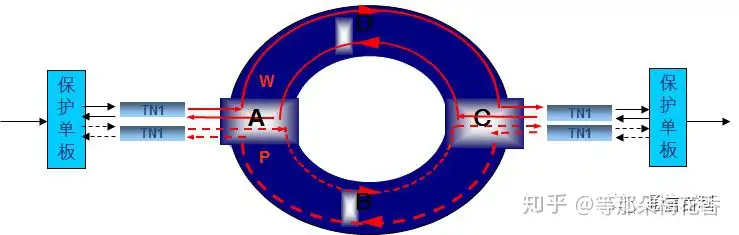
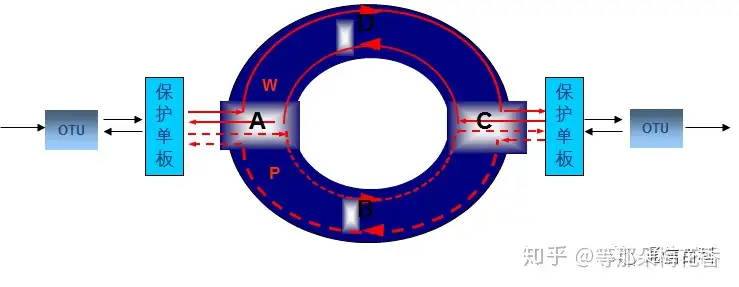
Protection principle: use the optical splitter on the protection board to split the service into two, and at the receiving end use a selection switch for selective reception.
1+1 and 1:N protection can be implemented at the channel layer.
According to the position of the protection board, there are two types of optical channel protection:
One is when the protection board is on the client service access side, splitting the client service gray light into two:
The other is when the protection board is behind the line board of the WDM equipment, splitting the colored light into two:
The above are the three common methods of optical-layer protection.
Finally, let’s discuss a few questions:
- What is 1+1 protection
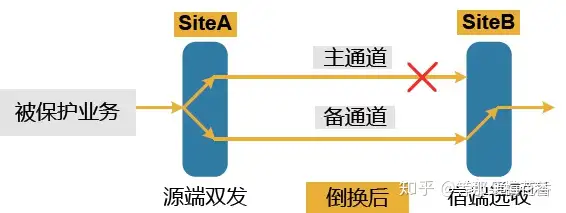
1+1 protection means that each working channel has a dedicated backup channel for protection. The transmitter sends data simultaneously on the working and backup channels; under normal circumstances, the receiver selectively receives the service on the working channel.
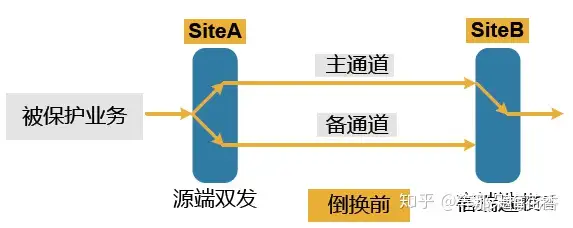
When the working channel is abnormal, the receiver selects the data of the backup channel according to the channel status and external commands, so that the service is restored.
- What is 1:1 protection
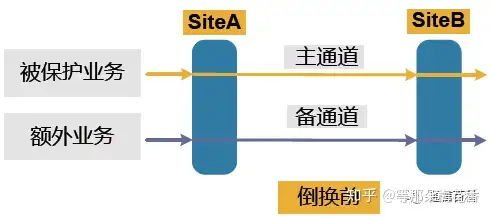
1:1 protection means the working and backup channels correspond one-to-one and protect each other, but the service is not transmitted simultaneously on the working and backup channels. The transmitter sends the working service on the working channel and additional service (low-priority service) on the backup channel, and the receiver receives the working service from the working channel and additional service from the backup channel. (M:N protection: M backup channels provide protection for N channels, generally M<=N.)
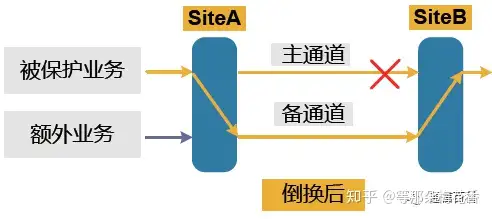
When the working channel fails, the transmitter sends the working service to the backup channel, and the receiver selects the working service from the backup channel. At this time, the additional service is terminated, and the working service transmission is restored.
- What is single-ended switching
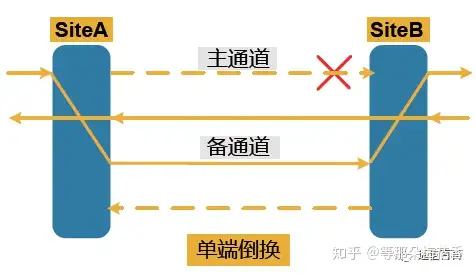
Single-ended switching means that when a channel in one direction fails, only the affected direction is switched, while the other direction remains unchanged and continues to receive service from the original channel. Each direction switches independently without affecting each other. Its advantages are:
Single-ended switching has a simple execution mechanism; no protocol is needed; and the switching speed is fast.
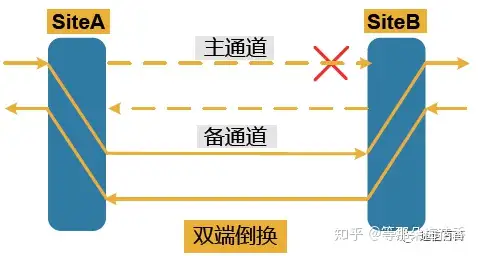
- What is dual-ended switching
Dual-ended switching means that when a channel in one direction fails, regardless of whether the other direction has failed, both directions are switched. Its advantage is that because both transmit and receive are switched, no service is transmitted in the failed area of the network, and the corresponding fault can be repaired without triggering more protection switching.
Well, that’s all for today. If you gained a little, follow Communication Encyclopedia to discuss and learn together.

Related Reading
- What Is Chromatic Dispersion (CD) in WDM Systems?
- Huawei WDM Training Materials
- N x 25Gbit/s WDM-PON for 5G Fronthaul
Enjoy this article?
Subscribe to get new optical communication insights delivered to your inbox. Free, unsubscribe anytime.