In the previous article, we talked about the invention of the telegraph (invented in 1837), which achieved the transition from communication within sight to true long-distance communication. The telegraph transmitted the information people wanted to convey to distant places at a speed of 300,000 km per second, and is considered the beginning of human wireless communication.
But over time, people became a little unsatisfied. Because sending a telegram required first drafting the telegram text, then translating it into code, and handing it to the operator to send; the receiving operator, after receiving the message, first translated the code into text and then delivered it to the recipient. This was not only cumbersome but also could not achieve timely two-way information exchange; getting a reply from the other party required a long wait.
Because of people’s dissatisfaction with the various drawbacks of the telegraph, scientists were prompted to explore other communication technologies. The telephone we will talk about next (invented in 1876) effectively solved these problems at the time, and is also considered the beginning of human wired communication.
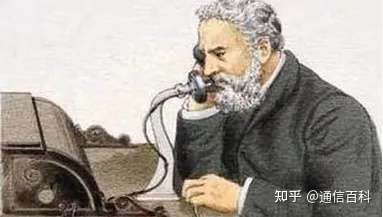
Of course, I wonder if everyone here has seen a wired telephone; those born in the 90s/00s basically only know mobile smartphones. Here, the communication principle of the telephone is first to convert the sound signal into an electrical signal, transmit it to the switch through the line, and then the switch directly transmits the electrical signal to another phone through the line for answering. The line transmitting this call process is our cable, i.e., voice –> current (telephone line) –> voice.
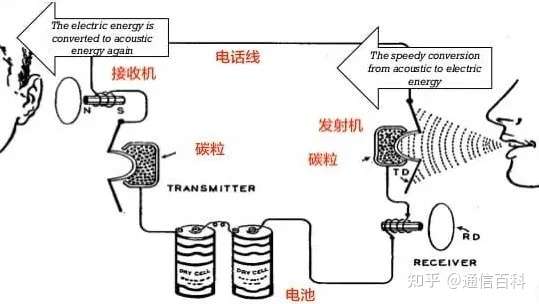
Early transmission media here, telephone lines, were all cables. The current signal imitated our speaking voice, continuously changing with the change of the sound, and was transmitted in the cable in the form of an AC signal. For a hundred years after the invention of the telephone, the transmission of electrical signals dominated.
But the transmission of cable signals has significant problems:
Resistance problem: In transmitting AC signals, as the frequency increases, due to the skin effect and dielectric loss, especially the skin effect causing signal energy to concentrate on the conductor surface, the effective cross-sectional area is greatly reduced, and the attenuation of signals in coaxial cables will multiply. Before the invention of the telephone, the first submarine cable of the Atlantic had already been laid, but it was used to transmit very low-frequency telegraph signals, so the transmission distance was still usable. If used to transmit telephone current information, the frequency is higher and the loss is very large.
Capacity problem: Initially, one pair of telephone lines could only carry one call. If one person occupied the line, others had to wait, otherwise they would interfere with each other and no one could hear clearly. Although carrier communication technology was later used to carry dozens or hundreds of telephone signals, with the increase of users, this was still far from enough.
Cost problem: You may not know that a 100-kilometer cable requires dozens of tons of copper and lead. On such expensive lines, if each pair of cables only carried dozens or hundreds of telephone calls, it would be very wasteful. This also explains why the installation and communication fees of wired telephones were so expensive decades ago.
Security problem: From Faraday’s law of electromagnetic induction, we know that electrical signals transmitted in cables generate magnetic fields. Can we analyze the magnetic field to reverse-engineer the data transmitted in the network? This problem may be relatively serious before the development of shielded twisted pairs with better anti-interference and data-leak-prevention capabilities.
Video account shares a story: It is said that in the early years, the internal network of Chengdu Aircraft Industry Group (CAC) was transmitted through network cables (unshielded twisted pairs), and Americans drove around CAC twice, using electromagnetic principles, and stole all the drawings and performance materials of China’s new-generation fighter jet (this case is unknown whether it is true, please judge for yourself).
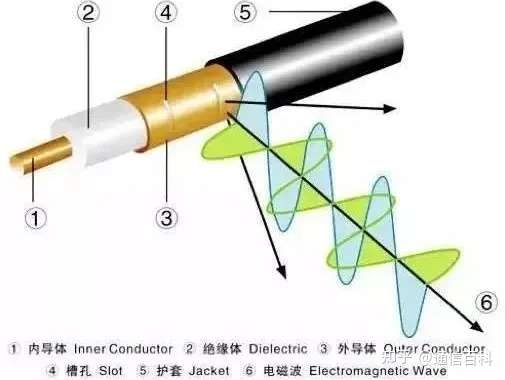
Therefore, since the communication method of electrical signals has these shortcomings, people tried every means to solve them. This is also the continuous demand-driven aspect of communication:
- How to transmit farther,
- How to transmit more,
- How to transmit information more securely.
The easiest thing to think of is to find a better medium to replace the cable. Using light for data transmission has always been what people pursue.
Here we must mention Bell’s photophone (invented in 1880), which can be said to be the ancestor of modern optical communication, but it has little to do with the three problems above.
The photophone used sunlight as the light source, projecting the constant light beam of an arc lamp onto the diaphragm of the microphone, and with the vibration of the sound, a reflected light beam with varying intensity was obtained. This process is modulation. Then, using the atmosphere as the transmission medium and selenium crystal as the optical receiving device, the modulated optical signal received at the receiving end was demodulated to restore the original signal. However, this was far from enough, with a transmission distance of only 213 meters. It might be even worse in rainy days.
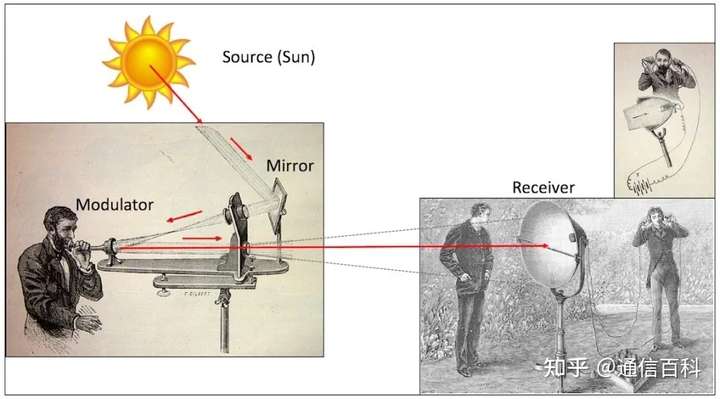
Therefore, the communication method using sunlight as the light source and air as the transmission medium was not reliable. However, the pioneers at least knew where the problem lay and sought solutions from there:
- One is to have a better and more precise light source. In 1960, Maiman in the United States invented the first ruby laser, preliminarily solving the light source problem in optical modules;
- The second is to find a medium with better transmission performance. Chinese-American scientist Charles Kao proposed optical fiber as the transmission medium, and by 1970 Corning in the United States drew the first low-loss silica fiber with 20 dB/km attenuation, preliminarily solving the medium problem.
The breakthroughs in the above technologies also indicated the arrival of the optical fiber communication era, and since then it has developed rapidly.

Enjoy this article?
Subscribe to get new optical communication insights delivered to your inbox. Free, unsubscribe anytime.