According to Intel’s silicon photonics industry development plan, the silicon photonics module industry has entered a period of rapid development. By 2022, silicon photonics technology will comprehensively surpass traditional optical modules in terms of peak speed per second, energy consumption, and cost. This sounds trendy and cool enough; perhaps it will be a KPI highlight for 2022. But many people still hold a skeptical attitude: can silicon photonics modules be used? Is the current market promotion of silicon photonics modules treating me as a guinea pig?
In fact, since 2016, the advance teams of two major North American industry giants have already used several million silicon photonics modules internally. According to the market research firm Yole, by 2025, silicon photonics modules will reach $3.67 billion, accounting for 35% of the entire optical module market. The supply share is bound to increase significantly, and the corresponding market size is promising.
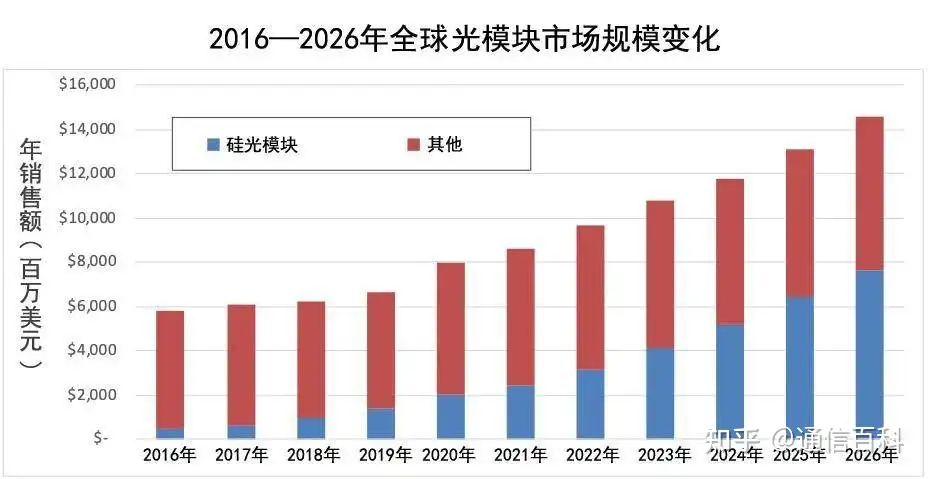
Data source: LightCounting
What is a silicon photonics module?
Traditional optical modules are mainly packaged from high-speed circuit silicon chips, optical components, III-V semiconductor chips, and other devices, essentially belonging to “electrical interconnect.” However, as transistor processing dimensions gradually shrink, electrical interconnect will gradually face transmission bottlenecks, and silicon photonics technology emerged. Silicon photonics technology is a new-generation technology based on silicon and silicon-based substrate materials (such as SiGe/Si, SOI, etc.), using existing CMOS processes for the development and integration of optical devices. The core idea of silicon photonics technology is “replacing electricity with light,” that is, using laser beams instead of electronic signals to transmit data, integrating optical devices and electronic components into a single microchip.
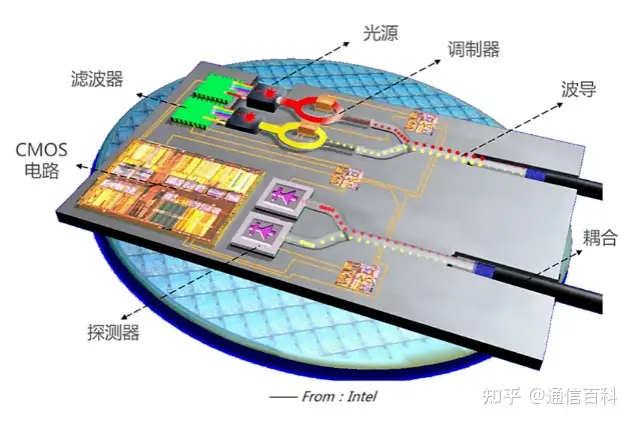
Conceptual diagram of a silicon-based optoelectronic integrated chip. Compared with traditional optical modules, silicon photonics modules have advantages such as improved integration, greatly reduced size, reduced cost and power consumption, reduced optical attenuation, enhanced anti-interference capability, and improved transmission efficiency, making them a key technology choice in the post-Moore era.
How are silicon photonics modules used?
Currently, the most important application of silicon photonics products is still data centers. The 100G data-center silicon photonics module solution has matured and entered a steady shipping stage, and 400G has moved from small batches in 2020 to large batches in 2021; silicon photonics modules have promising elasticity. So how should silicon photonics modules be specifically selected and used? Take Gigalight’s 100G silicon photonics modules as an example:
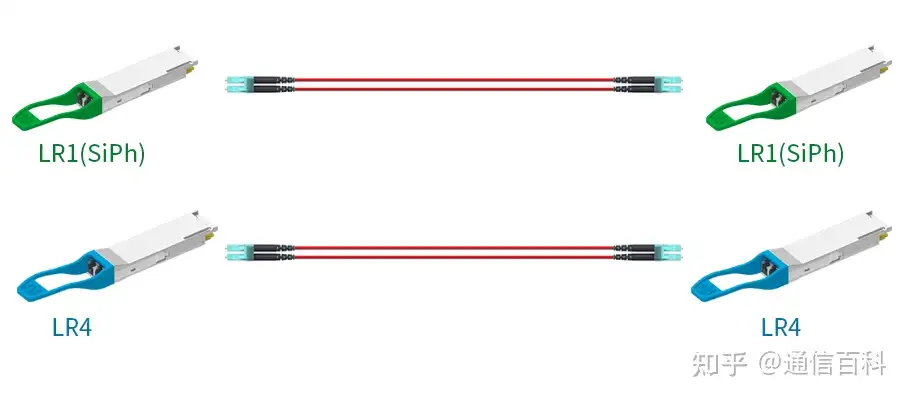
100G QSFP28 LR1 (SiPh) can directly replace 100G QSFP28 LR4. In the 100GE 10 km and 20 km applications, they correspond to LR1-10 and LR1-20 respectively.
100G QSFP28 FR1 (SiPh) can directly replace 100G QSFP28 CWDM4 in the 100GE 2 km application.
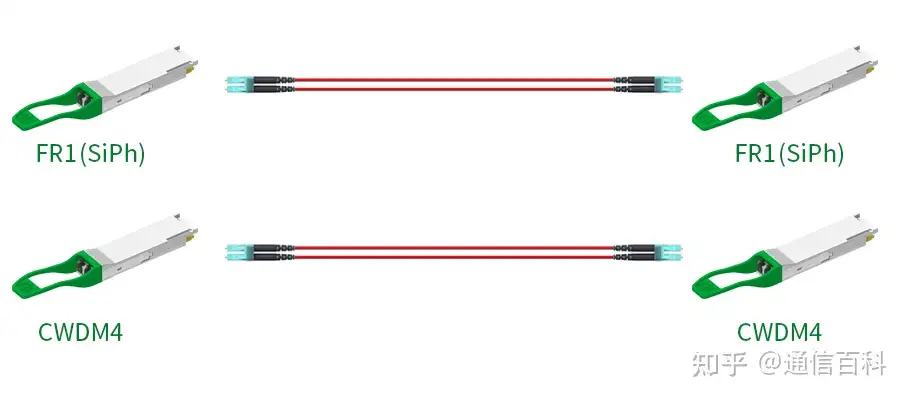
For the above two types, the fiber optic cabling does not need to change; the most commonly used dual-core single-mode fiber is continued. Only the equipment needs to be upgraded to SERDES supporting 100G PAM4, and both ends of the link use the same solution. The 100G QSFP28 DR1 (SiPh) has three applications:
Replacing 100G QSFP28 PSM4 500m, with cabling optimized from PSM4’s MPO 8-core patch cord to dual-core LC fiber for cost reduction.
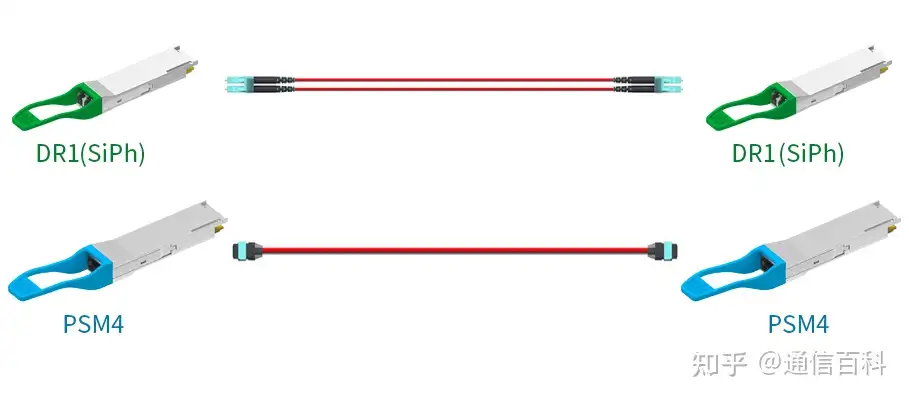
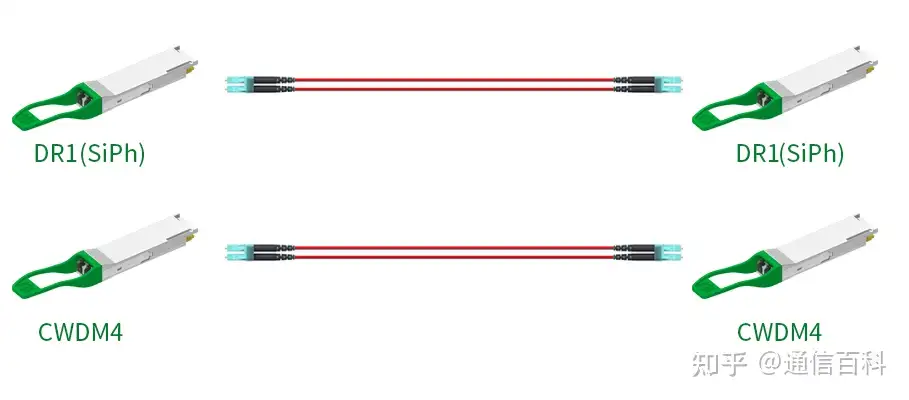
Replacing 100G QSFP28 CWDM4 500m (OCP), with fiber optic cable unchanged.
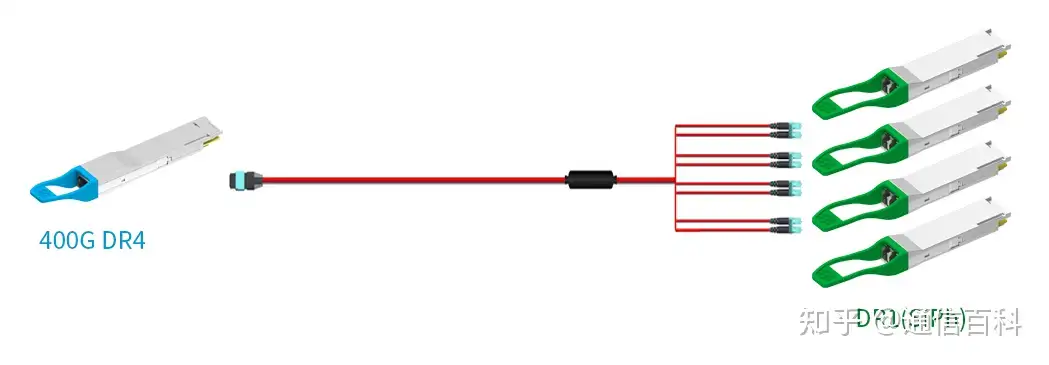
In the 400G architecture, it corresponds to the one-to-four breakout application of 400G QSFP-DD DR4, such as a TOR switch connecting to servers.
All use the new-generation 100G PAM4 for newly built networks, selected by rate and distance, with planned cabling. Therefore, using silicon photonics modules first is definitely not being a guinea pig. Moreover, as early as the “China Optoelectronic Device Industry Technology Development Roadmap 2018-2022” issued by the Ministry of Industry and Information Technology, “strengthening the design and manufacturing process platform construction and process talent cultivation of core active lasers, silicon-based optoelectronic chips, and upstream materials” was listed as an important technological innovation goal, and specific development goals were given for silicon-based coherent optical transceiver chips, silicon-based 100G PAM-4 modulation chips, silicon-based waveguide optical switches, variable optical attenuator array chips, and other directions. Overall, the silicon photonics market has just begun, and the future market landscape is highly variable, with certain opportunities for new entrants; the silicon photonics industry has broad market space for development.
Related Reading
- Innolight’s Stress Solution for Flip-Chip Bonded Silicon Photonics Modules
- Eoptolink’s 6.4T Silicon Photonics Engine Packaging Solution for xPO Optical Modules
- A*STAR: CPO Process and Progress of the 1.6T 2.5D Silicon Photonics Engine
Enjoy this article?
Subscribe to get new optical communication insights delivered to your inbox. Free, unsubscribe anytime.