
Optical fiber transmission capacity is approaching its transmission limit, and a new track is needed to continue expanding capacity.
Among the six signal dimensions, or degrees of freedom (time, wavelength, amplitude, phase, polarization, and space) that affect fiber transmission capacity, currently only space-division multiplexing can better drive fiber transmission capacity.
Space-division multiplexing aims to accommodate more transmission channels on a specified spatial transverse cross-section. Because a single transmission channel is gradually approaching the Shannon limit, using a space-division multiplexing scheme can achieve n-fold capacity expansion.
Space-division multiplexing has multiple approaches, which can perhaps be divided into two major categories.
The first category is to reduce the cross-sectional area occupied by a single single-mode fiber.
This category also has many schemes. One is to reduce the fiber diameter, such as reducing the fiber diameter from 250um to 125um, which can increase unit space by 1.5 times. Another is to use weakly coupled multi-core fiber.
Reducing the spatial area is very helpful for applications. For a large number of fiber channels, such as thousands or tens of thousands of fibers, reducing the space by more than 30% will be very significant.
For data centers, the massive amount of cabling has always been a very challenging problem. Space-division multiplexing will be an effective solution.
For the fiber itself, this type of scheme has no essential change in design, and is not essentially different from traditional fiber, still using several degrees of freedom such as wavelength, amplitude, and phase.
The second category is that the fiber itself changes to support space-division multiplexing. This includes strongly coupled multi-core fiber and few-mode fiber, and there are also multi-core multi-mode fibers in the laboratory. Relatively speaking, strongly coupled multi-core fiber has better prospects. However, given that a new track may be needed to break through the Shannon limit, there may be better schemes in the future. As the rate continues to increase, the system also becomes more dependent on complexity. Although the cost per bit and power per bit are gradually decreasing, simplified schemes are still very much needed to avoid relying on huge computational complexity.
Multi-core fiber is divided into weakly coupled multi-core fiber and strongly coupled multi-core fiber. Strongly coupled multi-core fiber is further divided into random coupling and deterministic coupling types. The difference between weakly coupled and strongly coupled multi-core fiber lies in the spacing between cores. The spacing between cores affects the coupling between core modes. For weakly coupled multi-core fiber, the goal is actually to have no crosstalk at all, keeping each core independent with no influence on each other. However, in practice, for the modes in the core, the light propagating in the cladding can extend to the coating, and it is very difficult to have no crosstalk at all. But with a certain spacing, the crosstalk power can be below 60dB/km, sufficient to reduce the noise caused by crosstalk to an acceptable level.
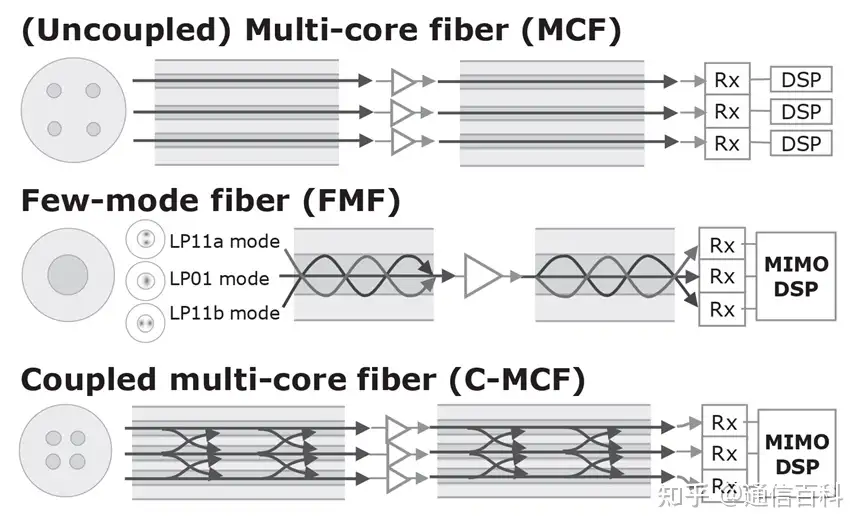
Three typical types of fiber are shown in the figure below.
The approximate relationship of crosstalk in multi-core fiber is
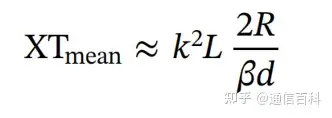
K is the coupling coefficient, L is the propagation length, R is the bending radius, and d is the core spacing.
The crosstalk of the fiber is affected by the fiber’s own defects, bending, twisting, etc. Bending has a relatively large influence, because in a bent fiber, the modes in the core drift to the bending side, and the mode field is also squeezed, thereby increasing crosstalk.
The coupling coefficient, simply understood, is the degree of overlap between two mode fields.
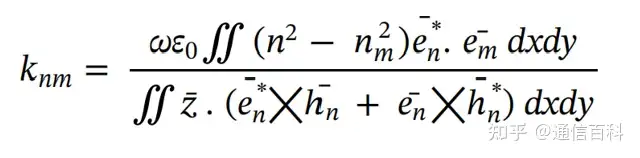
In an ideal fiber, the modes formed in the fiber are mutually orthogonal, and naturally there is no coupling. This is the foundation of fiber communication. In actual scenarios, the fiber always deviates from the ideal geometric shape, and its internal density and doping concentration are not ideally uniform. The actual refractive index deviates from the ideal refractive index. This deviation brings coupling between two mode fields, or coupling between two modes.
Strongly coupled multi-core fiber, because the spacing between cores is relatively small, even if the fiber has no perturbation, the mode field coupling between cores is inevitable. For weakly coupled multi-core fiber, coupling is crosstalk, forming an additional noise source while increasing loss. If the perturbation is large, weakly coupled multi-core fiber may, after long-distance transmission, also transform into strongly coupled multi-core fiber, causing system failure. For strongly coupled multi-core fiber, the coupling between cores is the basis for its operation, while what needs attention is the coupling between supermodes, and the coupling between supermodes forms crosstalk. Crosstalk and coupling are mutually variable.
For a two-core fiber, if optical power is injected from one core, due to coupling, the optical power forms an overlapping change in the two cores.
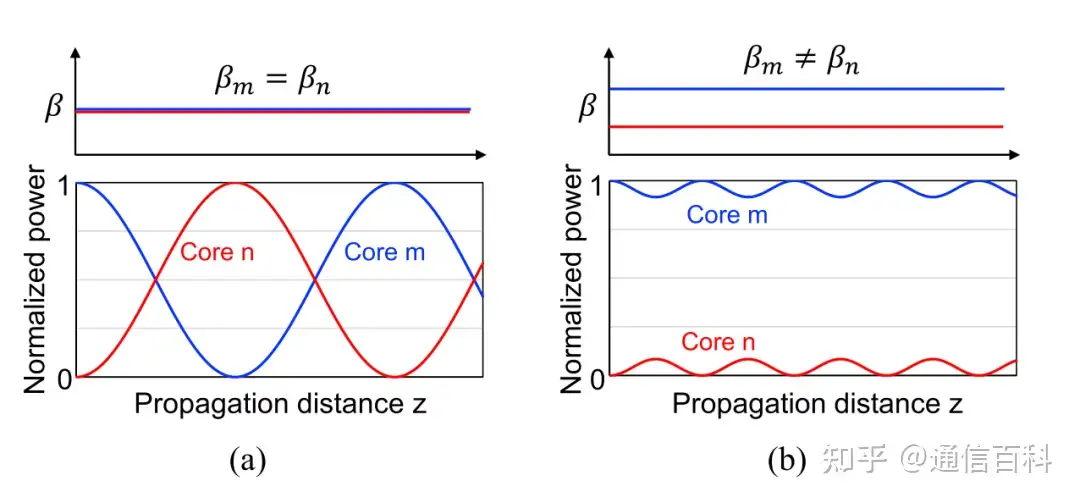
If the two cores are identical, that is, homogeneous fiber, a complete amplitude overlapping change is formed. If the propagation constant difference between the two is large, the coupled power is small. The propagation constant difference affects the degree of coupling.
The coupling of strongly coupled multi-core fiber can be described by coupling theory, but numerical computation simulation is required.
In coupling theory, the mode field of a fiber with n cores is the linear superposition of the independent modes in all cores:

For strongly coupled multi-core fiber, the several modes formed by this superposition are different from the fundamental mode within the fiber core, and also different from the higher-order modes within the fiber core. These new modes formed by superposition are generally called supermodes.
This can further evolve into the relationship between the core mode field and the propagation constant of the supermode, and this relationship is relatively concise.

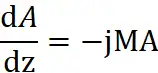
M is the coupling matrix
For a homogeneous four-core fiber, the coupling matrix is
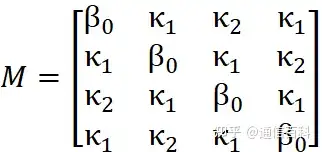
Four supermodes are formed, and their propagation constants are respectively, where the second includes two degenerate modes.
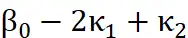
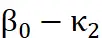
Three-core fiber coupling matrix
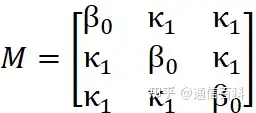
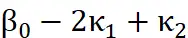
Three supermodes are formed, and their propagation constants are respectively, where the first includes two degenerate modes.
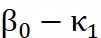
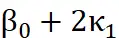
Two-core fiber coupling matrix
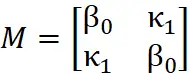
Propagation constants of the two supermodes:
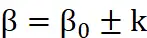
Ideal supermodes are orthogonal to each other and do not couple to each other. This forms the basis for information transmission. Strongly coupled multi-core fiber, as the carrier of space-division multiplexing, is actually mode-division multiplexing. n cores have n supermodes, and there can be n multiplexed channels. Compared with weakly coupled multi-core fiber, strongly coupled multi-core fiber has many advantages. Strongly coupled multi-core fiber does not mind the coupling between core modes, and the coupling is necessary. Using the supermodes formed as transmission channels, the corresponding mode field is relatively larger, resulting in better loss performance and nonlinear performance. To form strong coupling, the core spacing becomes smaller, and the space efficiency of strongly coupled multi-core fiber becomes larger.
Related Reading
- What Types of SDM Space-Division Multiplexing Fiber Are There?
- Progress of Various MCF Multi-Core Fibers and Their Practical Applications
- Sumitomo: A Multi-Core Fiber with Low Polarization Mode Dispersion
Enjoy this article?
Subscribe to get new optical communication insights delivered to your inbox. Free, unsubscribe anytime.