With the rapid development of technology, the hybrid optical-electrical cable, as an innovative cable integrating optical fiber and power-carrying copper wire, has many advantages but also some disadvantages.
Today, let us talk about the disadvantages of hybrid optical-electrical cables.
Before discussing the disadvantages, let me briefly summarize what a hybrid optical-electrical cable is, why it exists, and its advantages.
What is a hybrid optical-electrical cable?
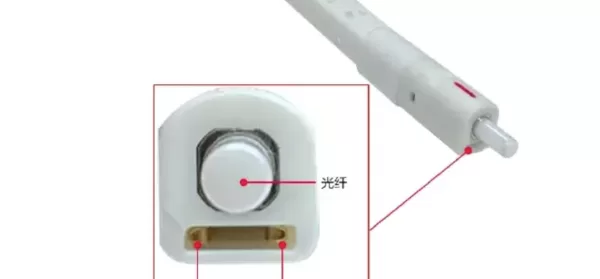
A hybrid optical-electrical cable is a composite cable integrating optical fiber and power-transmitting copper wire. The internal structure is wrapped with special insulation and protective materials to ensure stable transmission of signals and power.
- Optical fiber uses high-quality optical materials and is responsible for high-speed data transmission. The outer layer of the fiber has a coating that protects it from the external environment.
- Power-transmitting copper wire is used to transmit electrical energy. Its conductor material is generally copper, because copper has good conductivity. The specifications of the copper wire depend on different application scenarios and power requirements, with copper wires of different diameters being common.

Hybrid optical-electrical cable used in the access layer
Why use hybrid optical-electrical cables?
So why do hybrid optical-electrical cables exist?
The emergence of hybrid optical-electrical cables is mainly to meet the demand for multifunctionality, high efficiency, space savings, and cost savings in modern communication and power transmission.
This leads to the advantages of hybrid optical-electrical cables.
1. Multifunctionality
Hybrid optical-electrical cables can transmit optical signals and electrical energy simultaneously, meeting various application needs. For example, in FTTR (Fiber to the Room) solutions, hybrid optical-electrical cables can provide optical signals and power input to FTTR devices, simplifying wiring and management.
2. Space and wiring cost savings
Because hybrid optical-electrical cables integrate optical fiber and copper wire, they reduce the need to lay fiber and cable separately, thereby saving wiring space and installation costs. This is especially important for environments that require efficient space utilization (such as data centers and enterprise networks).
3. Adaptability to special environments
Hybrid optical-electrical cables have good flame-retardant, moisture-proof, and anti-interference properties, allowing them to work stably even in harsh environments. For example, in flammable and explosive environments such as petrochemical and mining industries, hybrid optical-electrical cables can provide safe and reliable communication and power-supply solutions.
So do hybrid optical-electrical cables have no disadvantages?
Everything has two sides, and hybrid optical-electrical cables are no exception.
So next, let us look at their disadvantages.
What are the disadvantages of hybrid optical-electrical cables?
We mainly summarize the disadvantages of hybrid optical-electrical cables from two aspects: cost and performance.
First, let us look at cost.
1. High initial investment cost
The production process of hybrid optical-electrical cables is relatively complex, requiring the integration of optical fiber and power-transmitting copper wire, which involves special manufacturing equipment and process flows. During production, the requirements for raw-material quality control and the composite precision of fiber and copper wire are high, resulting in higher production costs.

Compared with separate optical fiber or copper cable, the price of hybrid optical-electrical cables is usually higher. In large-scale infrastructure construction, such as long-distance power-transmission lines that also require communication functions, adopting hybrid optical-electrical cables significantly increases initial equipment-procurement costs.
2. Increased maintenance cost
Due to the complexity of their structure, hybrid optical-electrical cables require maintenance personnel with more knowledge and skills.
For example, when a hybrid optical-electrical cable fails, it may be necessary to detect both fiber-transmission problems and copper-wire power-supply problems simultaneously, which requires maintenance personnel to be familiar with both fiber-optic communication technology and power-transmission knowledge.
Special detection equipment and tools may also be necessary, such as a comprehensive tester that can detect both fiber loss and copper-wire resistance and insulation performance, which further increases maintenance costs.
Now let us look at performance.
1. Limited bending performance
Optical fiber itself is sensitive to bending. Although the design of hybrid optical-electrical cables considers the protection of the fiber, when the entire cable bends, the fiber portion may still be affected by excessive bending. Compared with pure optical fiber, the bending-radius requirement of hybrid optical-electrical cables may be more stringent.
In scenarios requiring frequent bending, such as wiring at robot joints or complex wiring in tight spaces, hybrid optical-electrical cables may not meet the requirements and are prone to fiber damage or signal interruption.
2. Temperature-characteristic influence
The optical fiber and copper wire in a hybrid optical-electrical cable have different sensitivities to temperature. The transmission performance of the fiber changes to a certain extent with temperature, and the resistance of the copper wire also changes with temperature.
When a hybrid optical-electrical cable is in an extreme-temperature environment, such as a high-temperature industrial workshop or a cold outdoor environment, the performance changes of the fiber and copper wire may affect each other, causing the overall performance of the cable to degrade.
For example, at high temperatures, the increased resistance of the copper wire may cause the supply voltage to drop, while the transmission loss of the fiber may also increase, affecting communication quality.
Published with the permission of Focus Optical Communication!
Enjoy this article?
Subscribe to get new optical communication insights delivered to your inbox. Free, unsubscribe anytime.