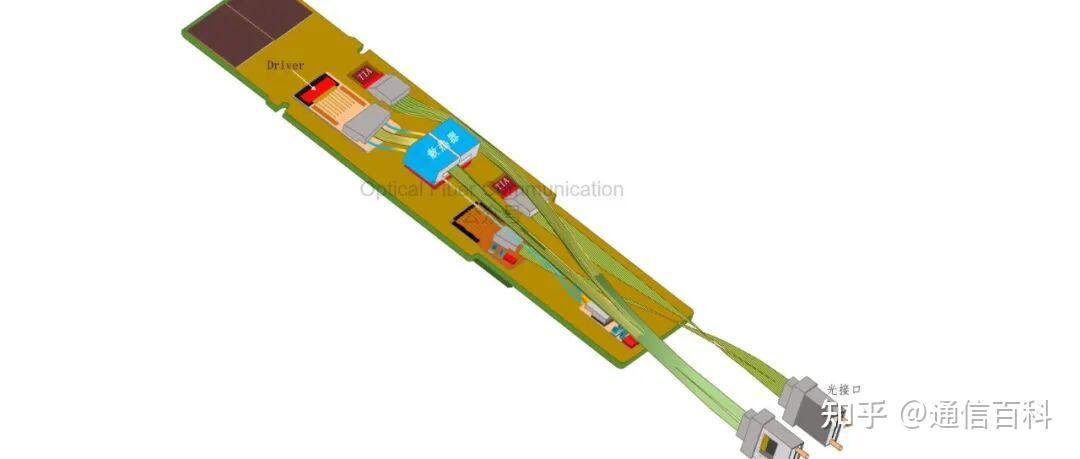
ECOC 2025 has been over for nearly a month. Today, let us briefly review and summarize some of the technical highlights and market analysis of this year’s ECOC.
From our impression, the core of the discussions throughout the venue was inseparable from AI. Almost all experts, such as those from Omia, Cignal AI, PhotoniX AI, and Source Photonics, were talking about the same thing: the massive AI investment and large-scale GPU cluster construction are driving explosive growth in the optical module market.
So, to support such huge demand, some technical thresholds must be crossed. The most critical at present are the single-channel 400G rate, 448G electrical interface, energy efficiency, and heat dissipation.
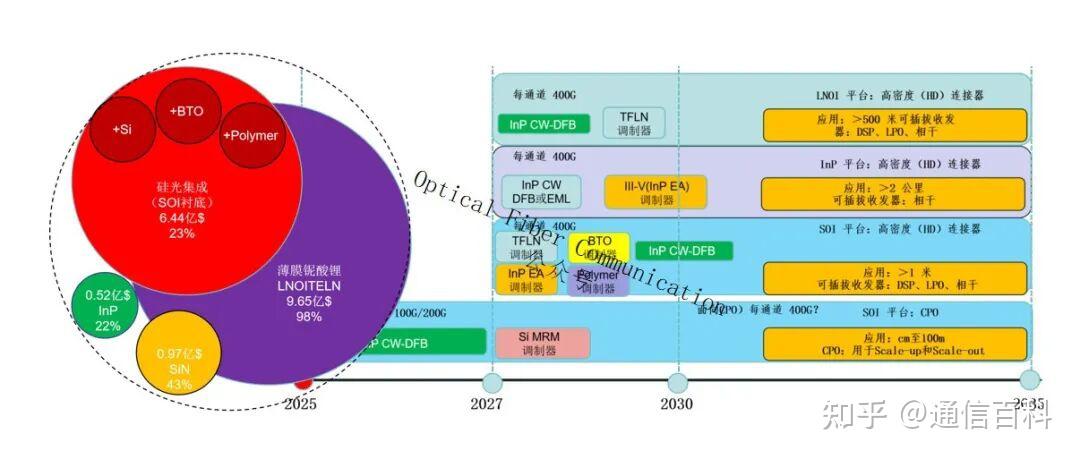
CAICT’s Views on Silicon Photonics CPO and the Evolution of 400G-per-Channel Technology
Synopsys and IEEE pointed out that, in terms of forward error correction and the choice of modulation format, whether to continue using PAM4 or upgrade to PAM6 or PAM8 will directly affect the latency and power consumption of the entire system.
Huawei, Synopsys, and Source Photonics all mentioned that to achieve 1.6T or even 3.2T, the modulation and reception bandwidth of the optoelectronic devices themselves must exceed 100 GHz, which is no small challenge.
As we clearly know, the optical module itself is also at a crossroads of technical routes. Looking ahead, the next few years will see the coexistence of multiple form factors. Traditional pluggable modules, as Eoptolink, Cisco, and Meta said, will remain the market mainstay because they are convenient to replace and maintain.
The LPO architecture, according to real-world tests by Meta and Cisco, can improve energy efficiency by 20% to 30% compared with traditional pluggable solutions because it removes the power-hungry DSP.
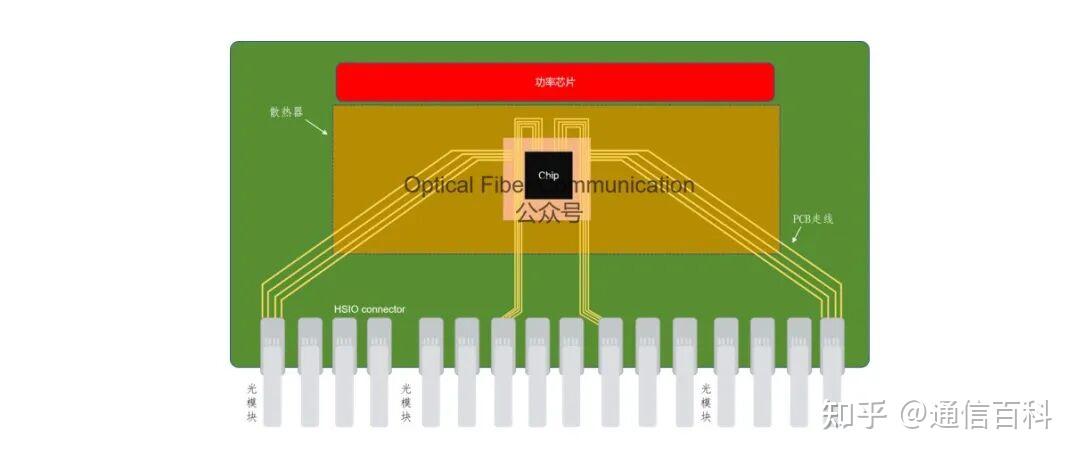
ByteDance & Xihe: 1.6T LPO Views and Implementation Path
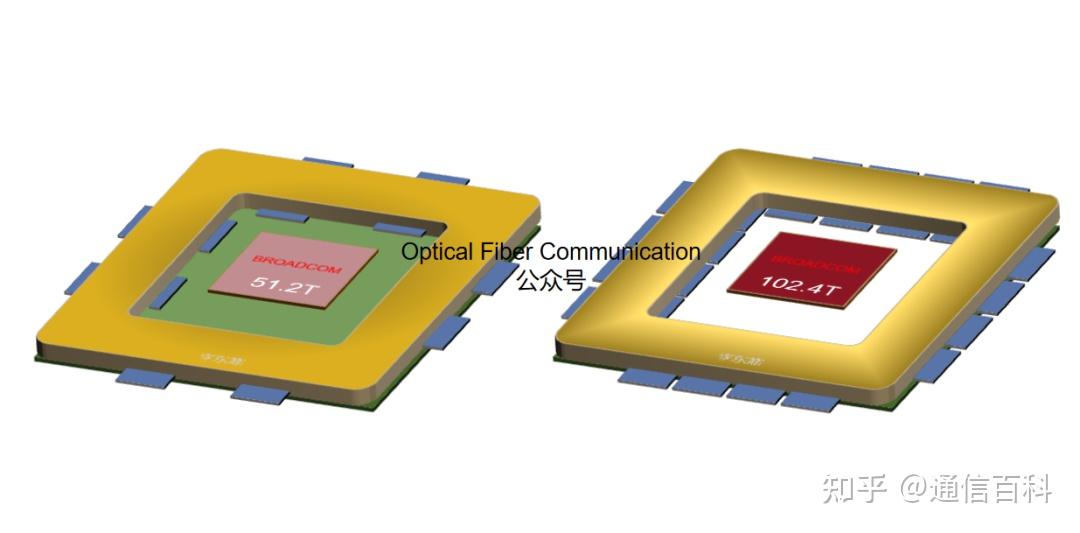
The CPO solution places the optical engine closer to the switch chip, and Meta, Broadcom, and Corning believe it can save about 65% of power compared with pluggable solutions. But it also has troubles, namely heat dissipation, reliability, and how to maintain it when problems occur.
This issue was introduced in more detail in our article yesterday, “Broadcom: 51.2T CPO Reliability Data and 102.4T CPO Switch“, based on Broadcom/Meta data.
So, the general consensus, including predictions by Omia and Cisco, is that the future will be a mixed coexistence of pluggable, LPO, and CPO depending on the scenario.
Then why is everyone so concerned about energy efficiency and reliability? Because AI data centers are too power-hungry. OIF and Meta gave data showing that the energy consumption of the optical interconnect portion can account for 20% to 30% of the entire AI factory. If not controlled, it will squeeze out the power consumption of GPUs.
So, hyperscale data centers have now set hard targets: energy efficiency below 4 pJ/bit, and port density greater than 2 Tbps/mm.
At the same time, OIF and Meta also emphasized that GPU cluster training is extremely sensitive to network latency and bit error rate. Once an error triggers retransmission, it will directly slow down the training task. So, the reliability of the optical link must match or even exceed that of ASIC chips.
At the network architecture level, everyone is also exploring different directions.
There is the pragmatic faction, such as PhotoniX AI, Huawei, and Coherent, who advocate evolving step by step through Chiplet, silicon photonics hybrid integration of EML or MRM. There is also the disruptive faction, like Oriole Networks, with even more forward-looking ideas, wanting to directly build a purely photonic AI network and remove electrical packet switching.
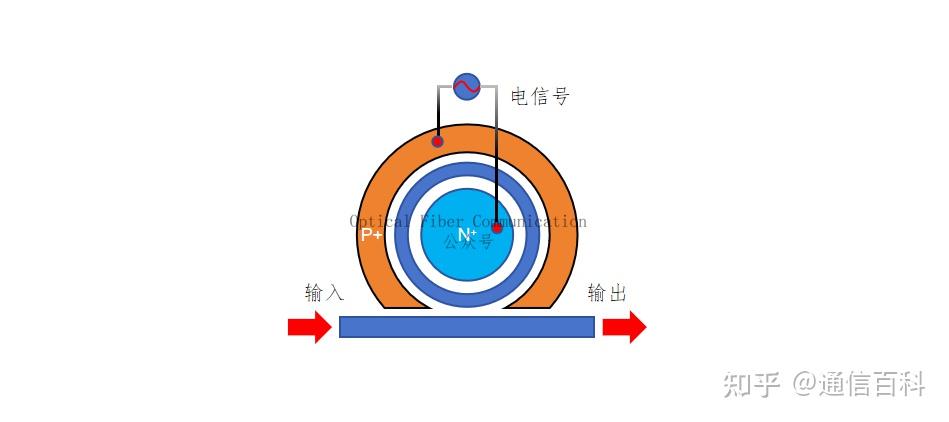
Microring Resonator MRM: Coupling, Modulation and WDM
Of course, this is also inseparable from the promotion of standards organizations. IEEE and OIF, together with vendors such as Marvell, are working to advance Ethernet and coherent technology standards to ensure interoperability between equipment from different manufacturers, which is the prerequisite for the technology to truly land.
Let us look at the specific market data again. Data center optical modules are the absolute main battlefield.
Omia’s data shows that from 2023 to 2024, the industry grew by as much as 43% annually; in the first quarter of 2025, data communication optical module revenue accounted for 63% of the entire industry, rising to 65% in the second quarter; rolling annual revenue doubled from 6 billion US dollars to 12 billion US dollars within two years, an astonishing growth rate.
At the same time, Cignal AI’s data shows that high-speed optical module shipments will grow from about 22.5 million units in 2024 to about 39 million units in 2025.
Among them, 1.6T modules are the current hot spot. According to discussions by Cisco, China Telecom, Broadcom, and Terahop, about 20,000 units have been shipped in the first half of this year, and the full-year estimate can reach 500,000 units.

1.6T/3.2T Optical Modules: Half-DSP, Half-LPO Hybrid Architecture
As for the overall market size, Cignal AI predicts it will grow from about 15 billion US dollars in 2025 to about 24 billion US dollars in 2029. At the same time, the price of high-speed modules is also falling rapidly, targeting 0.5 US dollars per Gbps, and two rounds of price negotiation have already been conducted this year.
As for the next-generation 3.2T, both Cignal AI and Huawei believe it will not truly enter large-scale mass production until 2029, succeeding 1.6T.
The telecom and coherent optical module market is smaller but very stable. Cignal AI predicts growth from about 5 billion US dollars in 2025 to about 8 billion US dollars in 2029.
In terms of technology deployment, OIF confirmed that 400ZR is already commercially available. OIF and Marvell believe that 800ZR is becoming the mainstay from 2024 to 2025. The goal for 1600ZR is to complete the standard in 2026 and begin deployment from 2027 to 2028.
In terms of OCS, Cignal AI conservatively estimates that OCS can reach a scale of 1.6 billion US dollars by 2029, while Coherent is more optimistic, expecting it to reach 2 billion US dollars by 2030.
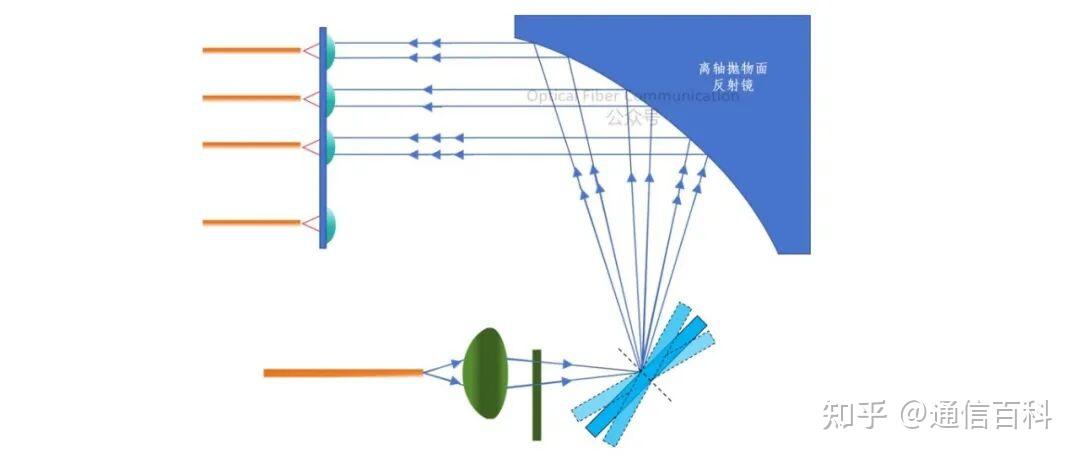
Accelink and Google: MEMS-Based OCS Array Optical Switch
So, why is OCS valued? The root cause lies in the bottleneck of traditional electrical switching.
OIF and Google pointed out that multi-layer O-E-O conversion brings high power consumption, high latency, and high cost, and the queueing delay of electrical switching is unstable, which is very unfavorable to AI training tasks that require a high degree of synchronization.
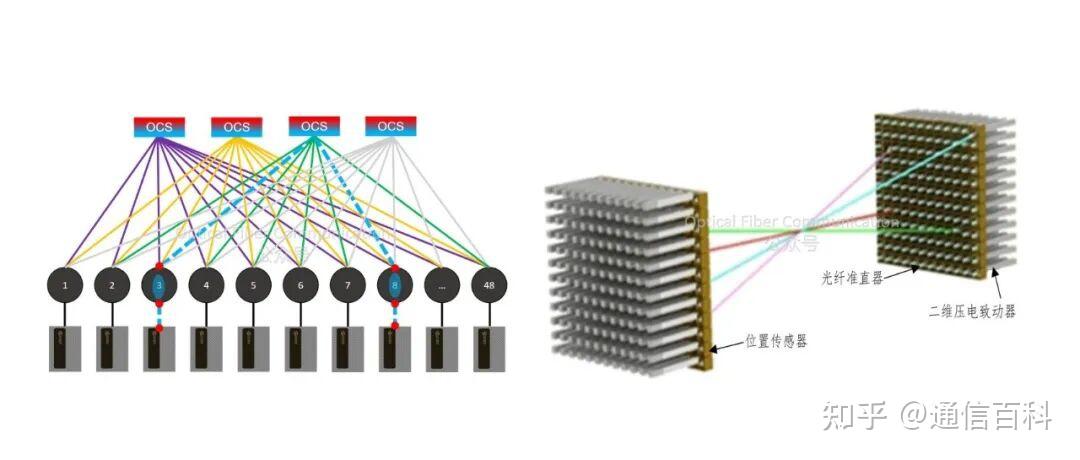
Google/Coherent etc.: Pluggable vs. CPO vs. OCS
Google introduced that their OCS achieved a 40% reduction in power consumption, a 30% reduction in cost, and a 30% increase in throughput.
At present, Google’s OCS has been deployed at scale, but the network reconfiguration time is relatively long, measured in hours or days; while startups like Oriole Networks are trying nanosecond-level optical switching, though this still requires matching software and cost optimization.
Let us discuss by application scenario. There are mainly two major parts:
One is Scale-Out, that is, connections across cabinets and across data centers. Cignal AI and Omia pointed out that at present it is mainly 800G pluggable, transitioning to 1.6T pluggable from 2026 to 2028; for distances over 10 kilometers, coherent technologies like ZR/ZR+ mentioned by Marvell and OIF fill the gap.
The other is Scale-Up, specifically referring to extremely short-distance connections within cabinets, such as GPU-to-GPU. Synopsys and OIF indicated that at present it is still mainly copper cables, but as the rate increases, the effective transmission distance of copper cables has shrunk to 1 to 2 meters.
So, starting from 2026 to 2027, it will shift to optical solutions, such as LPO, CPO, Chiplet Optics, or new technologies like the 1060nm single-mode VCSEL combined with multi-core fiber that Meta, PhotoniX AI, Furukawa, and the Tokyo Institute of Science are researching.
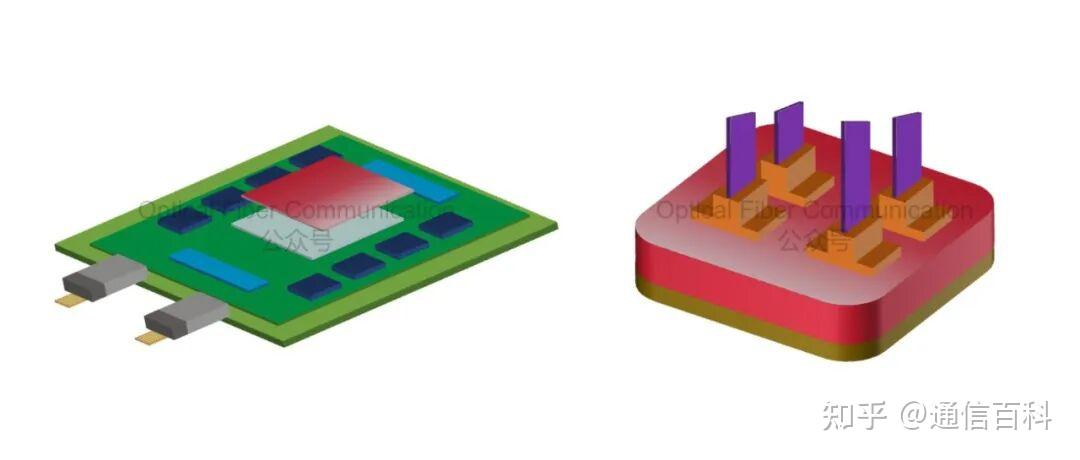
Broadcom & HiSilicon: VCSEL NPO/CPO and Silicon Photonics CPO
VCSEL is mainly advantageous in short-distance interconnect scenarios within cabinets. The traditional 850nm multi-mode VCSEL cannot transmit far, but new technologies such as the 1060nm single-mode VCSEL plus multi-core fiber demonstrated by the Tokyo Institute of Science can achieve 2.88Tbps over 500 meters; Furukawa has also made a CPO solution with energy efficiency as high as 3.95fJ/bit, transmitting 2 kilometers.
Of course, Furukawa and the Tokyo Institute of Science also pointed out that to reach 400G per channel, further breakthroughs in bandwidth and long-term reliability are still needed.
In terms of the most fundamental modulator technology, various modulator technologies each have their strengths and are suitable for different scenarios. For example:
- SiPh MZM is mature and stable but has high power consumption and large size;
- MRM is small in size and low in power consumption but sensitive to heat;
- EML has high bandwidth and is suitable for medium and long distances but has high cost;
- VCSEL has advantages in cost and energy efficiency but limited bandwidth and distance;
- TFLN has huge bandwidth potential but cost and integration are challenges;
- InP holds a stable position in the telecom long-distance field.
These technologies will coexist for a long time, and there will not be a situation where one dominates.
In terms of energy efficiency, in addition to the architectural evolution mentioned above, the power consumption breakdown of components is also important. The main power-consuming parts include DSP, laser and pump, Driver and TIA, TEC cooling, etc.
Specific energy-saving measures include:
At the component level, Lumentum and Source Photonics mentioned technologies such as four-in-one pump sharing TEC, and EML using low-voltage differential drive of about 1V.
In terms of modulation and FEC selection, IEEE and Synopsys believe that IMDD is more power-saving for short distances, while high-order PAM4/6/8 can save bandwidth but increase the power consumption of DSP and FEC, requiring a trade-off.
Thermal management is a topic closely related to energy efficiency. As CPO and other technologies develop, heat dissipation pressure is increasing. Broadcom and Corning clearly stated that CPO must use liquid cooling or immersion cooling. Cisco, Meta, and Google also agree that air cooling is approaching its limit, direct-to-chip liquid cooling is becoming mainstream, and immersion cooling is also under evaluation.
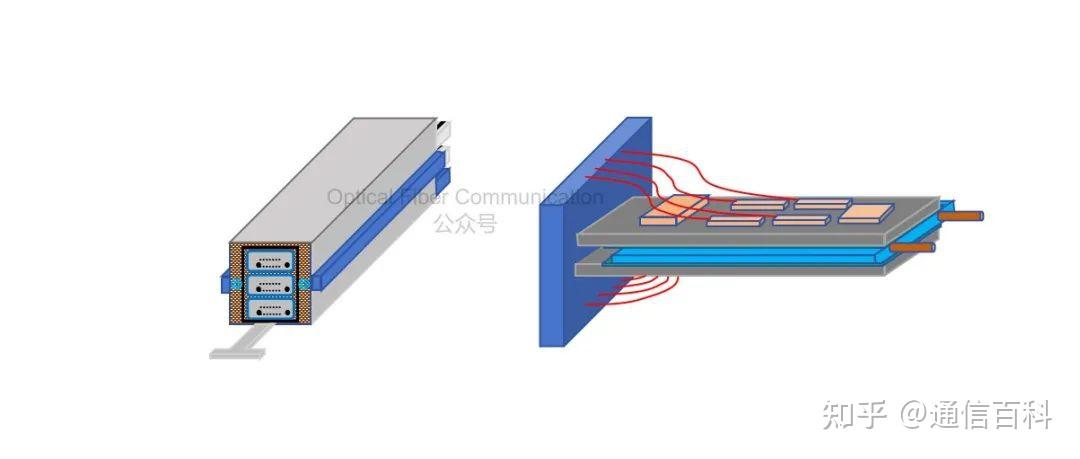
ZTE: A Liquid-Cooled Optical Module Structure Supporting CPO
In general, ECOC 2025 painted a clear picture for us: optical communication in the AI era is no longer just about desperately pursuing speed, but about finding the best balance point across multiple dimensions such as rate, power consumption, latency, reliability, and cost.
Later, I will provide detailed interpretations of some of the key content above:
100-Article Compilation on Silicon Photonics Chips + Optical Devices and Modules Technical Analysis
Enjoy this article?
Subscribe to get new optical communication insights delivered to your inbox. Free, unsubscribe anytime.