If you are interested in semiconductors/chips/optical device modules/optical fiber communication
Welcome to follow us!
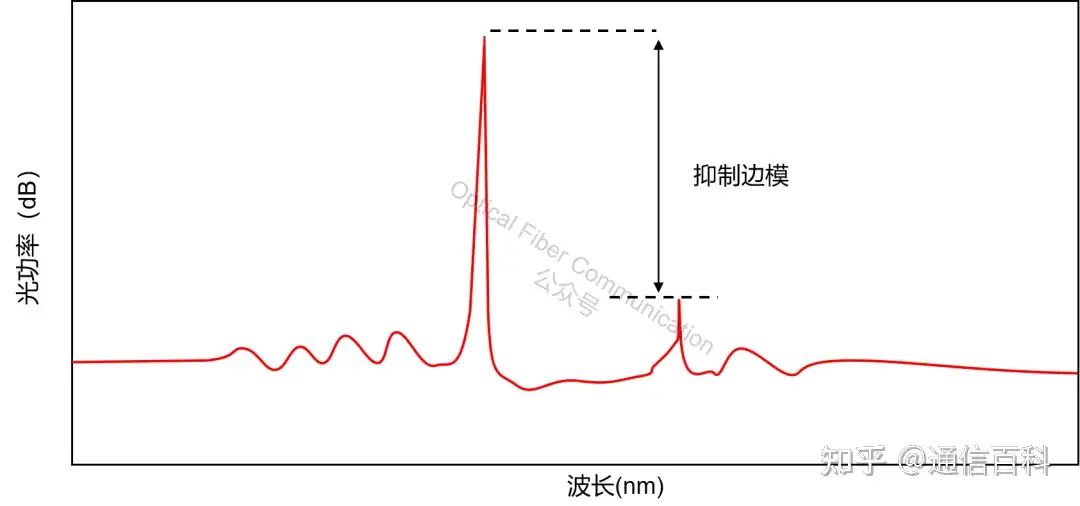
For single-mode lasers, such as DFB, we hope it emits only a single, stable wavelength, called the “main mode.”
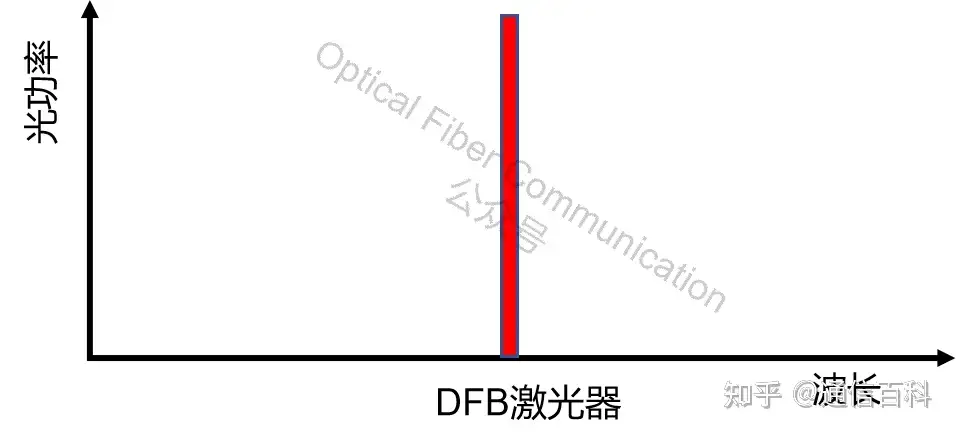
But ideals are full, while reality is bony. In actual work, besides producing this main mode, a laser always brings out some other unwanted wavelengths, which we call “side modes.”
So how do we measure the strength of these side modes? We use an indicator called the “side-mode suppression ratio,” in units of dB.
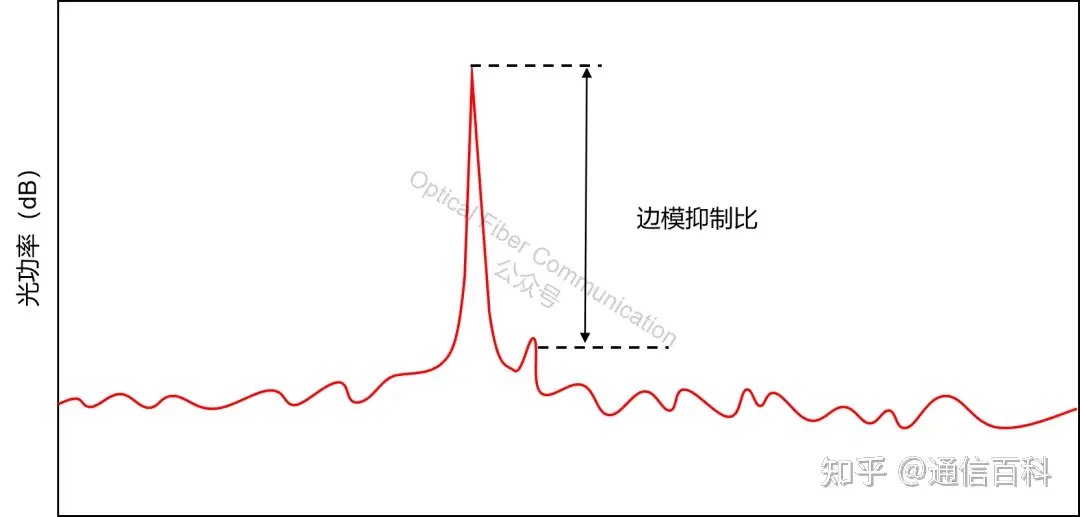
The larger this value, the harder the side modes are suppressed, and the better the single-mode performance of the laser.
Generally speaking, for a qualified single longitudinal mode laser, its side-mode suppression ratio should reach at least 30 dB, and the power of the main mode should be 1000 times greater than the strongest side mode.
The reason our DFB lasers can achieve single longitudinal mode operation relies on the grating inside them. As a wavelength-selective element, the gratings periodically distributed along the waveguide act together to produce a distributed optical feedback.
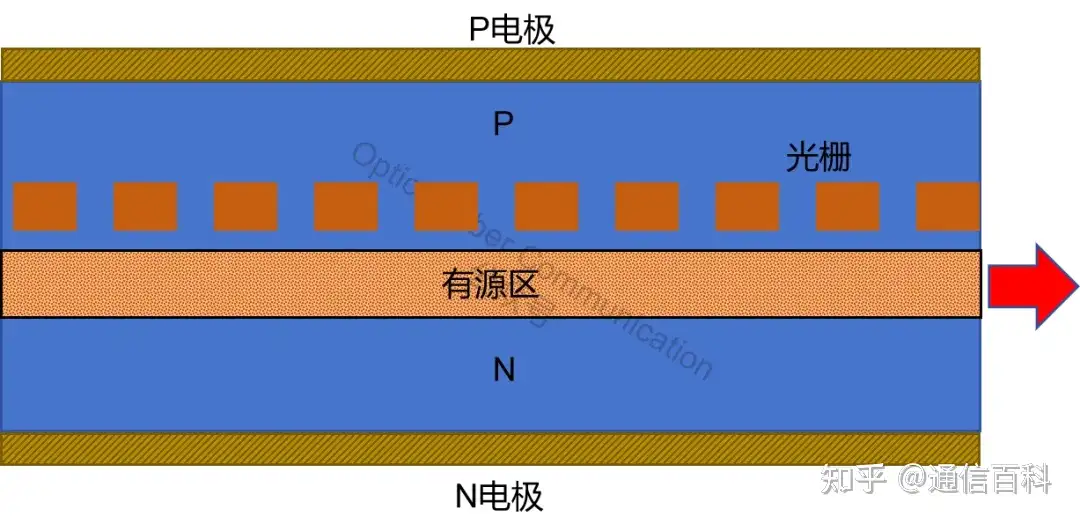
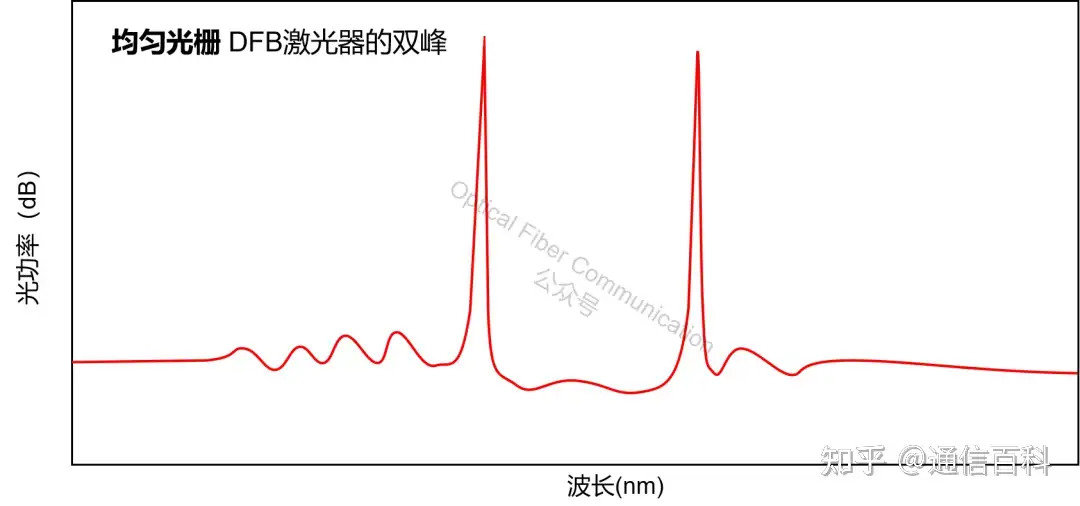
But for such a grating whose period, depth, and duty cycle remain constant over the entire length, due to the perfect symmetry of its structure, it forms a stopband at positions symmetric on both sides of the Bragg wavelength.
As a result, the laser does not lase at the center wavelength, but instead symmetrically lases two peaks of similar intensity on both sides of it. This is what we often call the “dual-mode” phenomenon.

Once dual-mode occurs, its side-mode suppression ratio is naturally very poor.
However, there are also DFB lasers based on uniform gratings, such as Huawei’s dual-waveguide laser.
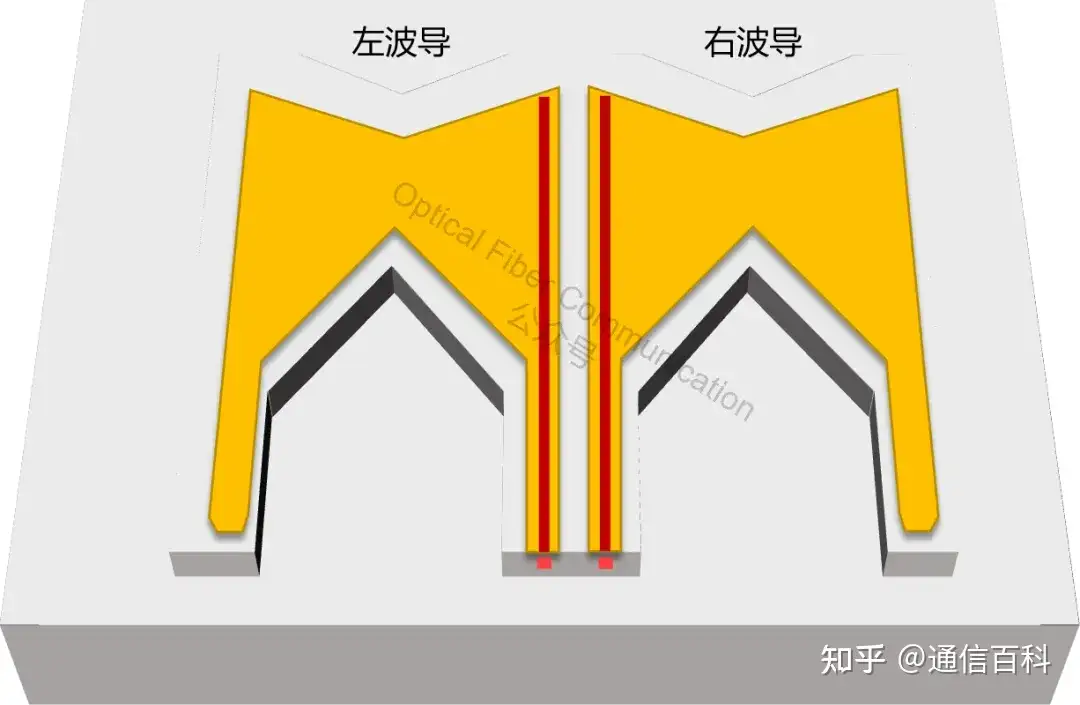
Although it is based on a uniform grating, it uses the inherent π phase difference of the two laser units in the dual-waveguide design for mode selection. It can always guarantee that one of the units achieves a stable single longitudinal mode, changing the single-mode output from random to deterministic.
So how to solve this problem? A very common and effective method is to introduce a 1/4-wavelength physical phase shift at the exact center (or a specific position) of the uniform grating.
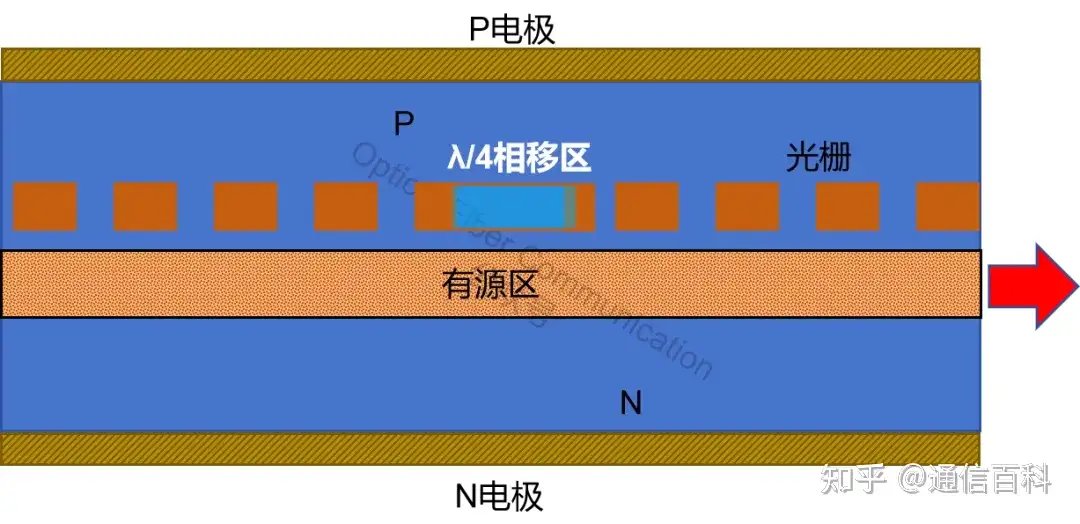
Another way is to coat thin films of different reflectivity on the two end faces of the DFB laser chip.
- One end coated with a high-reflection film: close to 100% reflection;
- The other end coated with an anti-reflection film (single-layer λ/4 anti-reflection film): extremely low reflectivity.
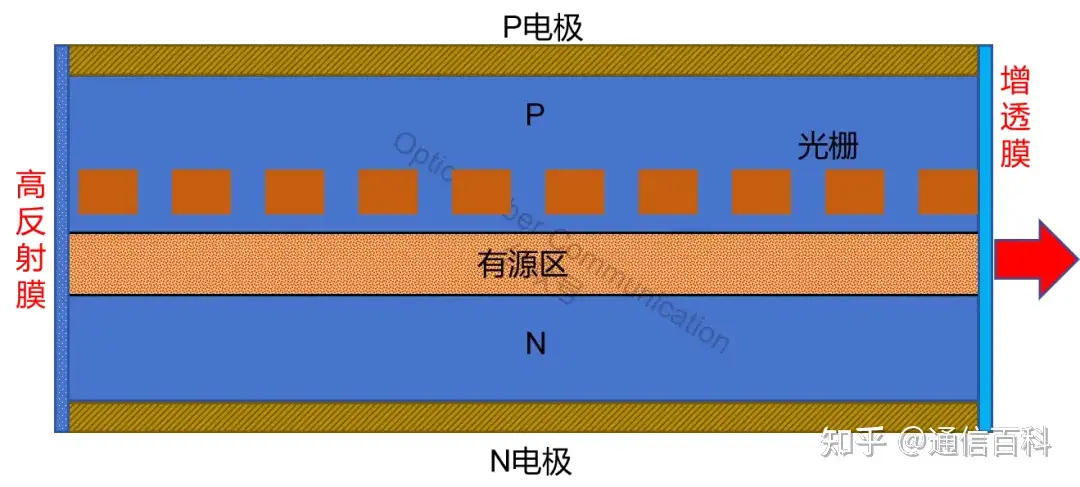
This asymmetric boundary condition destroys the symmetric feedback to the dual modes and suppresses the other mode. One of the modes therefore obtains a lower threshold gain and wins in the competition.
Of course, the most common and classic scheme is: using a λ/4 phase-shift grating + asymmetric end-face coating.
Recommended reading:
Photosensitive Surface: From Principle to 200G/lane Back-Illuminated and Flip-Chip
Huawei: Some Views and Judgments on High-Speed VCSEL and Silicon Photonics SiPh
Mitsubishi: From High-Mesa Structure to Hybrid Glass Substrate and FC+WB High-Speed EML
Enjoy this article?
Subscribe to get new optical communication insights delivered to your inbox. Free, unsubscribe anytime.