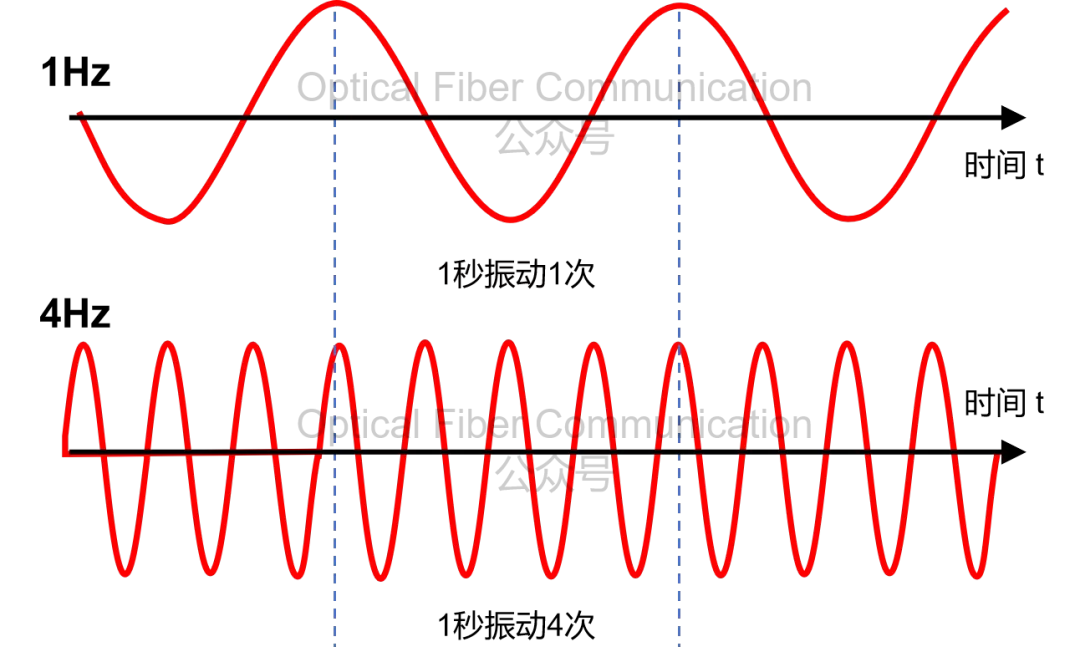
Frequency, simply put, is how many times a wave oscillates in one second. Its unit is called “Hertz,” with the symbol Hz, in commemoration of the German scientist Hertz.
For example, 1 Hz means oscillating once in 1 second. 1 GHz means oscillating 10^9 times in 1 second, that is, one billion times. 1 THz is higher, at 10^12 times/second, that is, one trillion times.
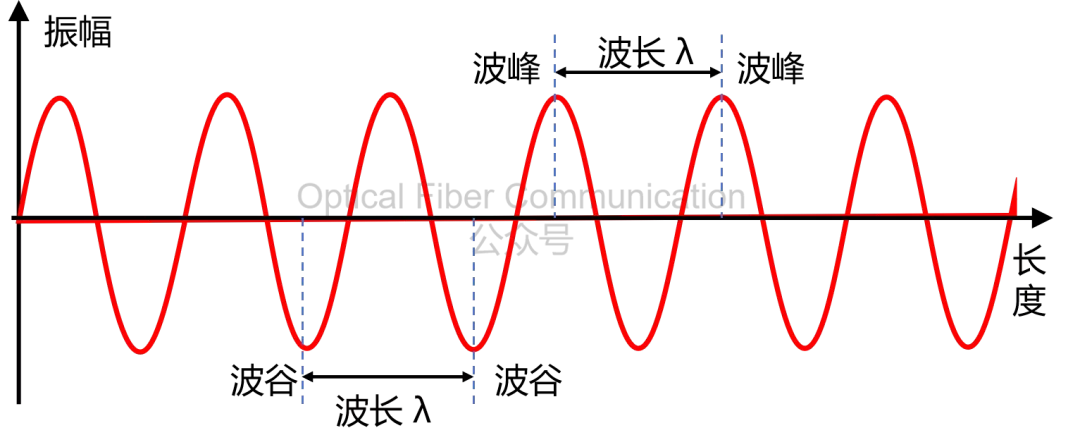
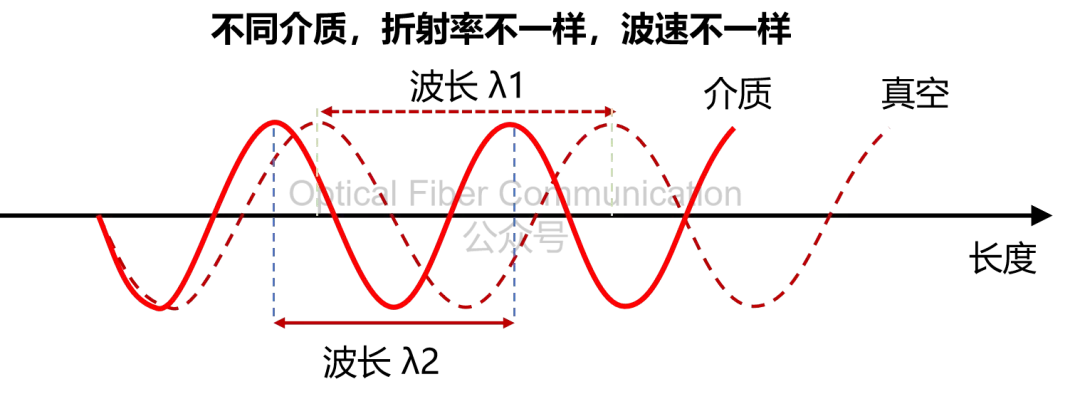
What is wavelength? It refers to the length of one complete waveform in space. Specifically, you can regard it as the distance between two adjacent wave crests (or two wave troughs).
The speed at which a wave travels in space is professionally called the phase velocity. It can be calculated with a simple formula: speed = wavelength x frequency.
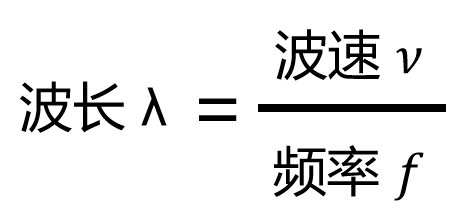
For example, the 1310 nm light commonly used in our optical fiber communication has a frequency of about 228.8 THz; while 1550 nm light has a frequency of about 193.4 THz.
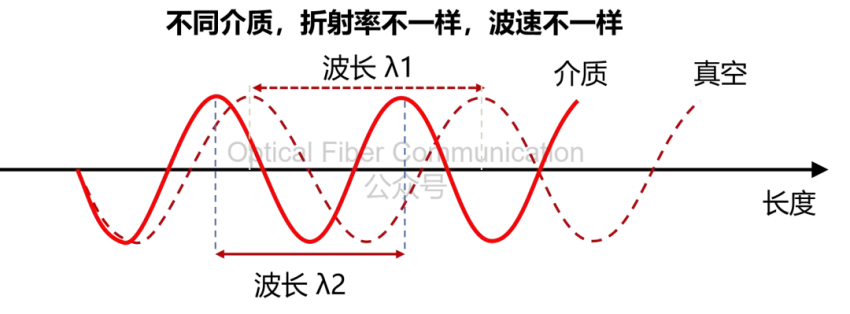
Note here: the wavelength numbers we usually refer to, such as 1310 nm and 1550 nm, all refer to the wavelength of light in vacuum (or approximately air). Therefore, even if the frequency is the same, the wavelength of light in different materials may differ, because the refractive index of the material is different.
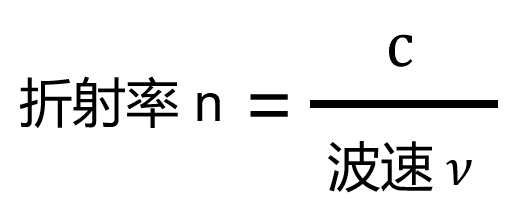
In other words, the larger the refractive index, the slower light travels in it, and the shorter the wavelength.
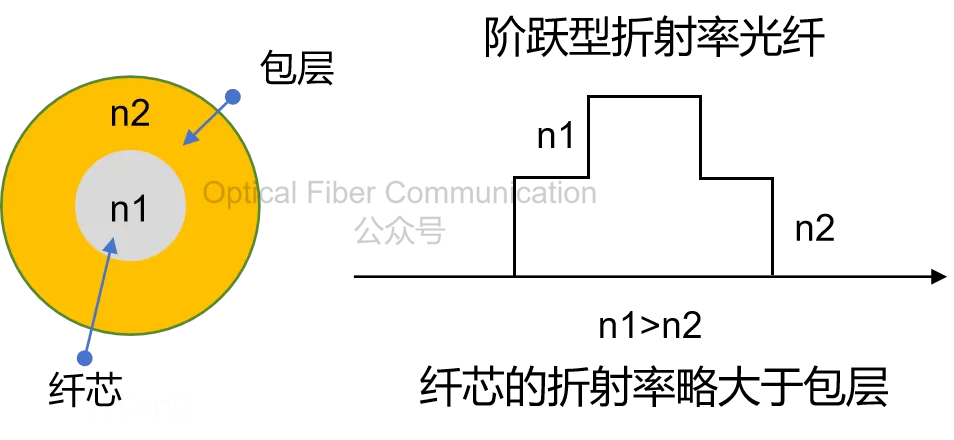
In optical fiber communication, to ensure that light can propagate forward in the fiber by total reflection, the refractive index of the fiber core must be larger than that of the outer cladding.
The cladding is generally silicon dioxide, with a refractive index of about 1.46, so we dope a little germanium oxide or phosphorus pentoxide into the core to slightly increase its refractive index.
In addition to wavelength and frequency, we also use the concept of “period.” The period refers to the time required for a wave to complete one full oscillation, generally measured in seconds. Frequency and period are actually reciprocals of each other:
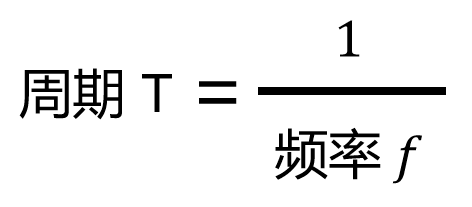
You can understand it this way: wavelength is the length of one repetition in space, while period is the time of one repetition in time.
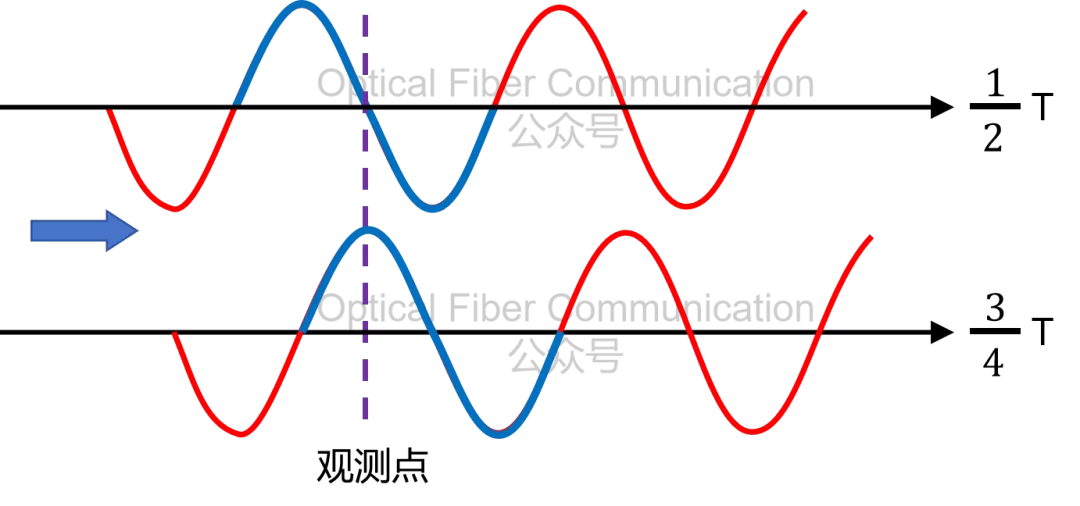
If we stand at a fixed point in space and watch the wave pass by, we often say things like “1/4 period has passed” or “1/2 period has passed” to describe which stage the wave state has changed to.
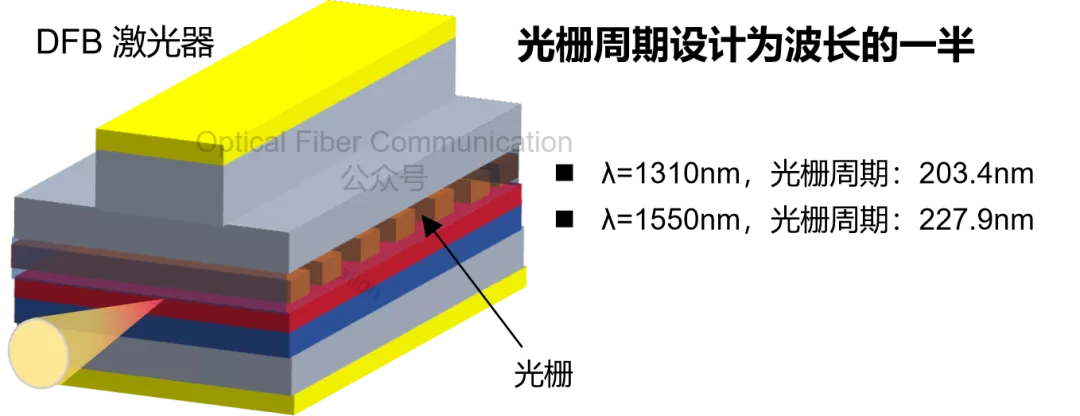
In grating design, we also often talk about “period,” such as the grating period Lambda. However, here it refers to the minimum distance at which the grating notches or refractive index changes repeat in space, which is a spatial length concept, and is different from the time period mentioned above.
For example, the grating inside a DFB laser, “Lumentum’s differential-drive EML chip“. Its period Lambda is usually designed to be about half of the wavelength of light in the laser waveguide material, so that light can form effective feedback in the grating and emit laser light.
Reference reading:
DFB Laser: Uniform Grating, lambda/4 Phase Shift and CPM Structure
COC Packaging Solution for 224Gbps Single-Ended Driver EML
You can add WeChat WaytoICT to be invited to join the Semiconductor & Optical Device Industry Chain Group 2.
Welcome to join our community to obtain a large number of high-value technical documents and trend research reports in the fields of semiconductor chips / optical devices / optical modules!

If you are interested in semiconductors / optical devices / optical modules / optical fiber communication, etc.
Welcome to follow us!
Enjoy this article?
Subscribe to get new optical communication insights delivered to your inbox. Free, unsubscribe anytime.