There are quite a few ways to extend the transmission distance of optical transmission systems. Increasing the launched optical power can usually improve the receive OSNR, allowing the signal to travel farther.
But the launched power cannot be increased indefinitely, because nonlinear effects will make the OSNR stop improving or even worsen, causing the bit error rate to rise.
Another common approach is to use better FEC error-correcting codes to lower the OSNR requirement of the link at the same receive optical power.
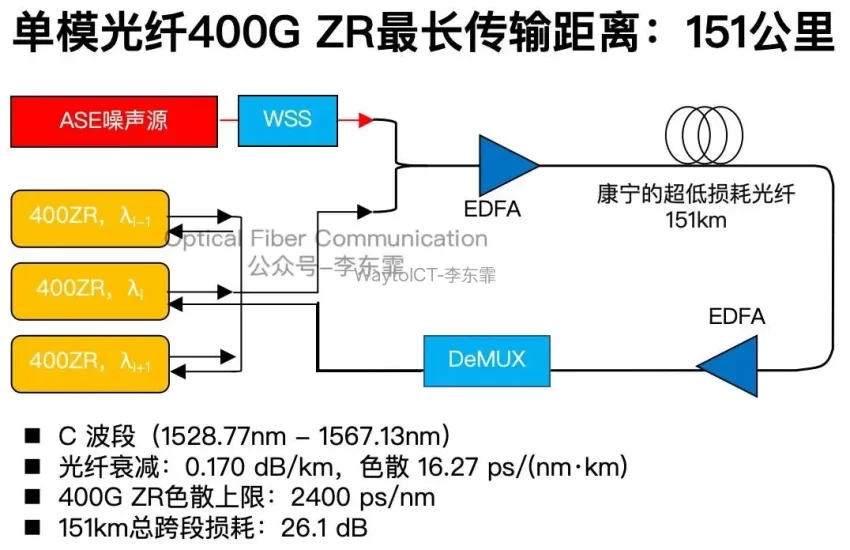
In data center and metro interconnect scenarios, the typical distance of 400G ZR over traditional SMF is 80-120 km; the best record of 400G ZR over existing ultra-low-loss SMF is 151 km.
The maximum Tx launch power of a 400G ZR module is 0 dBm, while 151 km of fiber can have a loss of up to 26.1 dB. If directly connected to the fiber, only -26.1 dBm reaches the receiver, far below the module’s receiver sensitivity of about -18 dBm, so the module cannot work. Therefore an EDFA must be added at the transmit end.
To further increase the distance, better coherent optical devices are needed, such as the ZR+ series, but both cost and power consumption will rise.
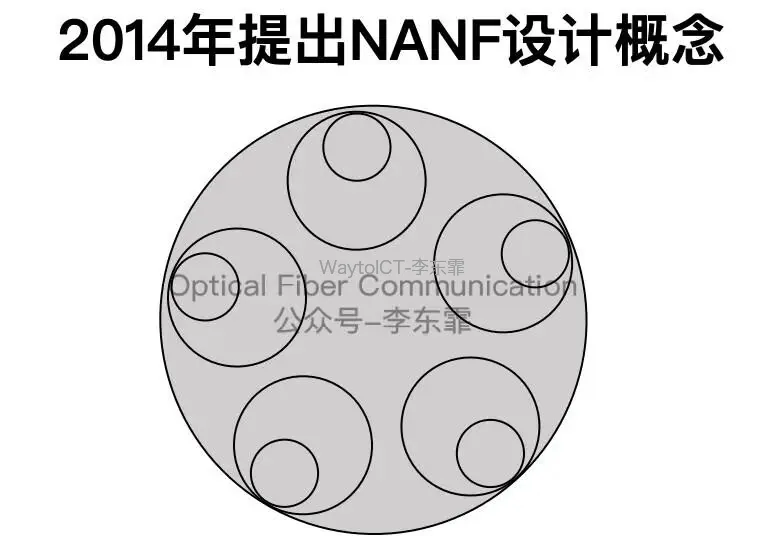
Another approach is to improve the transmission medium, such as hollow-core fiber. Compared with traditional single-mode fiber, hollow-core fiber has lower attenuation, lower nonlinearity, and lower latency. The single-nested NANF design concept proposed in 2014 is a typical representative.
Low nonlinearity allows HCF to withstand higher transmit power, thereby supporting longer distances; low dispersion can reduce the dispersion compensation burden of the receive-end DSP, improving the feasibility of longer-distance transmission without exceeding ZR-level dispersion tolerance and power limits.
Microsoft has also been laying out hollow-core fiber in recent years, for example acquiring the hollow-core fiber manufacturer Lumenisity at the end of 2022.
In the same year, it proposed the DNANF double-nested antiresonant hollow-core fiber, composed of 5 groups of nested glass microtubes (large, medium, and small tubes), with a C-band loss of 0.174 dB/km.
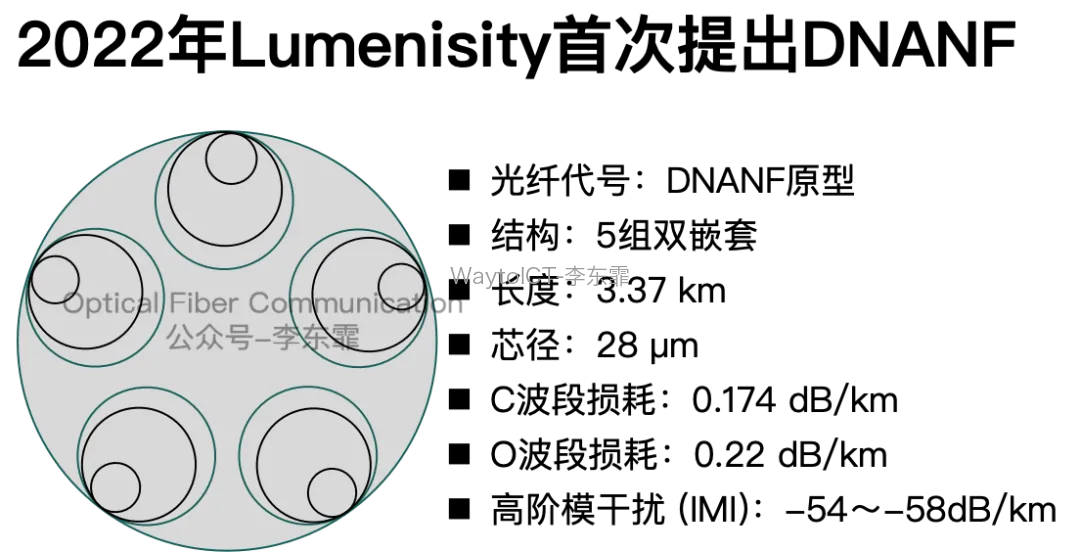
Microsoft’s focus is to verify that the leakage loss is about 10 times lower than that of the traditional single-nested NANF. However, its higher-order mode interference IMI is about -54 to -58 dB/km, which is usable but may still produce crosstalk in long-distance coherent transmission.
In 2024, a 4.12 km HCF1 was fabricated and measured to have extremely low loss, but the fiber was too short, and the 0.055-0.11 dB/km values given by several instruments differed greatly, making it hard to form a credible conclusion.
In 2025, still using DNANF, a 15 km commercial-grade HCF2 was fabricated, and a theoretical model proved that a core diameter of about 29 um can better balance surface scattering loss and microbend loss.
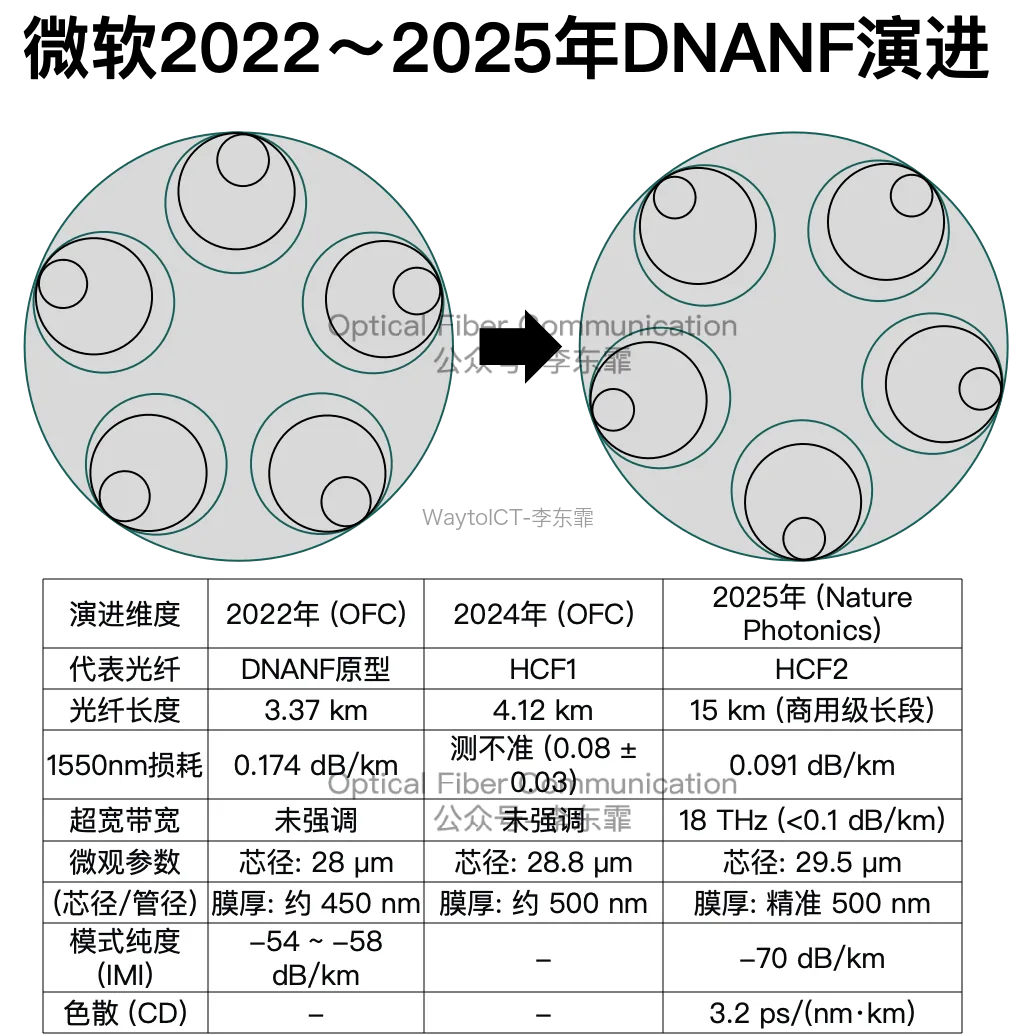
Its attenuation dropped below 0.1 dB/km, and by reducing the inner small tube size to optimize mode purity, the IMI was reduced to -70 dB/km, reducing the dispersion compensation burden of the receive-end DSP, which can support Microsoft’s 400G ZR transmission over 400 km or more.
At ECOC 2026, based on this DNANF fiber, Microsoft spliced 41 fiber spools with lengths ranging from 1.82 km to 20.12 km into three spans totaling 427.97 km, verifying the long-distance transmission capability of 400G ZR modules.
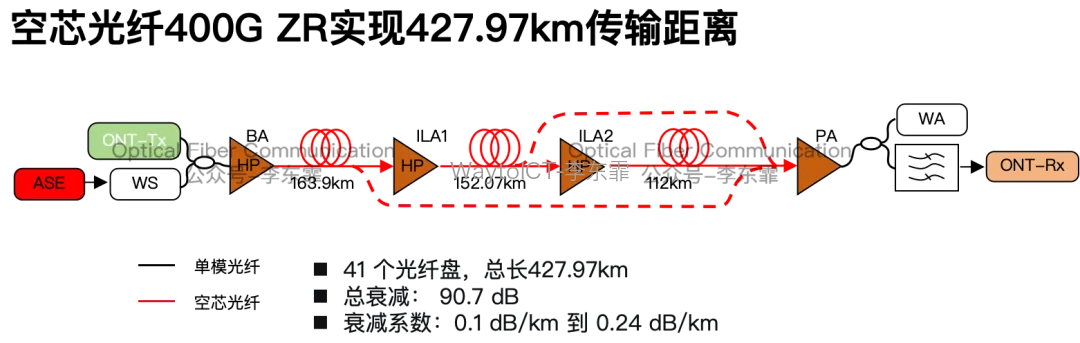
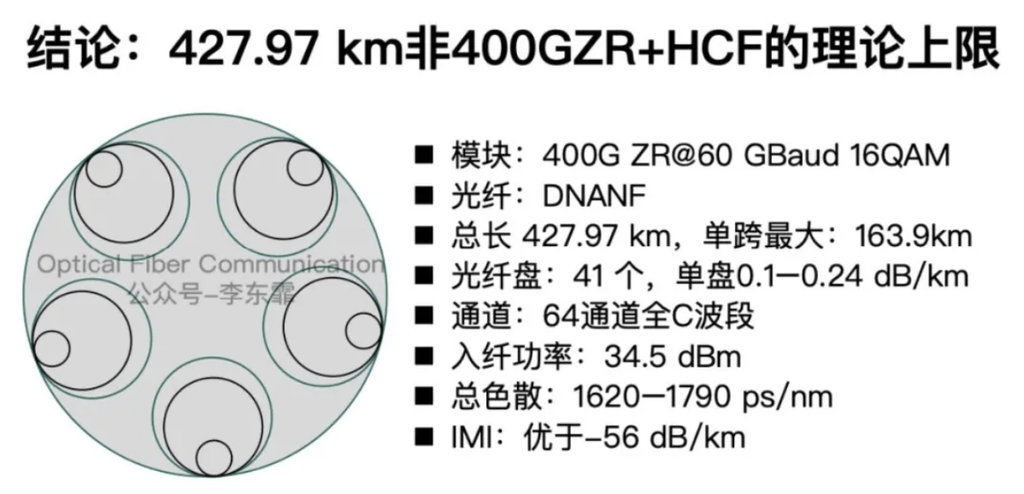
Among them, the longest single span was 163.9 km and the longest double span was 315.97 km, with total dispersion of 1620-1790 ps/nm, far below the OIF upper limit of 2400 ps/nm, indicating that dispersion is no longer a limiting factor with hollow-core fiber.
At the same time, HCF has extremely low nonlinearity and can withstand a high launched power of 34.5 dBm, almost unrestricted by the Kerr nonlinear effect.
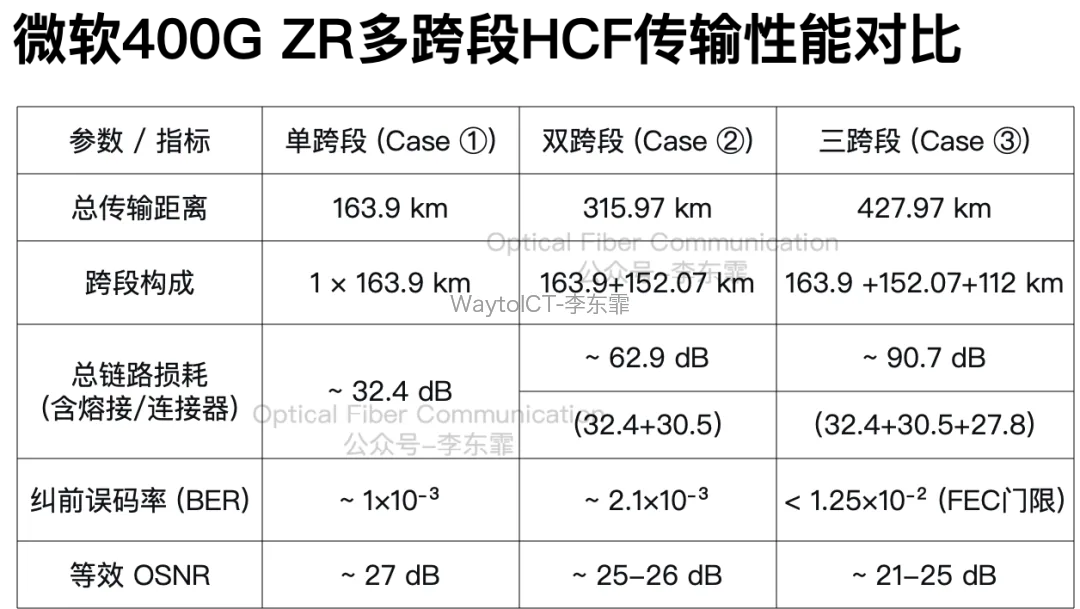
However, at a specific absorption peak around 195.33 THz in the C-band, some fibers contain abnormally high gas absorption loss to achieve the required span length, adding about 0.05 dB/km on average.
Therefore, the 427.97 km record is not yet the theoretical upper limit of the technology. The performance is mainly limited by the gas absorption defects of the current fiber samples, and the HCF + 400G ZR scheme still has room for further capacity expansion and distance increase.
Let me briefly record Microsoft’s validation data of the 400G ZR coherent module over hollow-core fiber.
Extended reading:
《YOFC: ST-HCF Hollow-Core Fiber with Support Tube Structure and Its Progress》
《YOFC: Small-Outer-Diameter Hollow-Core Fiber Mode-Matched to Single-Mode Fiber》
II-VI: Three Coupling Schemes from Hollow-Core Fiber to Single-Mode Fiber
Corning: Nodeless Antiresonant Leakage-Suppressed Hollow-Core Fiber
You can add WeChat WaytoICT to be invited to join the Semiconductor & Optical Components Industry Chain Group.
Welcome to join our community to obtain high-value technical documents, trend research reports, and various supply-demand business opportunities in the fields of semiconductor chips / optical components / optical modules.
If you are interested in semiconductors / optical components / optical modules / optical fiber communication, welcome to follow us!
Related Reading
- Revealed: What Is Hollow-Core Fiber?
- Hollow-Core Fiber – What Is Photonic Bandgap Fiber?
- Hollow-Core Fiber 6: Nested and Non-Nested ANF Hollow-Core Fibers
Enjoy this article?
Subscribe to get new optical communication insights delivered to your inbox. Free, unsubscribe anytime.