Before modern communication systems were established, human communication relied on shouting, walking, or what was within sight.

For example, the Greeks built a 500-kilometer-long fire beacon line in 1084 BC to transmit the news of the capture of Troy, and in ancient China King You of Zhou used beacon fires to summon the feudal lords. At that time, firelight and smoke signals were used to transmit a single piece of information. These methods can also be called optical communication, but the information and distance they carried were very limited, and all parties had to agree in advance, otherwise miscommunication would occur. This was the most primitive optical communication.

Therefore, many people tried every means to increase the amount of information that could be transmitted. For example, navigation lighthouses could transmit information through the length of light-dark intervals, the color of the light, or a combination of both, which has the same effect as the various encodings in our modern communication.
In the 18th century, to achieve longer-distance transmission of more information, the Frenchman Claude Chappe designed a signal tower with large mechanical arms, each capable of making 196 movements that could encode hundreds of kinds of information.
To make it visible to people more than ten kilometers away, the signal towers were built on high mountains, and the signal arms were also very tall. In addition, by building signal towers several kilometers apart in succession, it was still a relatively primitive long-distance communication method.
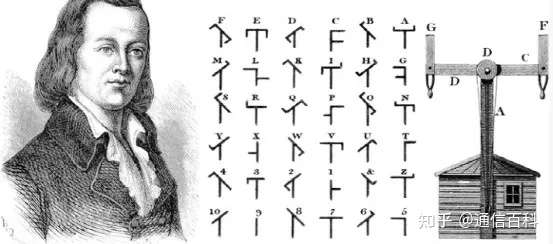
Looking at the figure above, this mechanical signal tower consists of a large horizontal beam (regulator) and smaller component arms (indicators) installed at both ends, like a person with open arms holding signal flags in each hand. Through the angle of the indicators and adjusting the position of the regulator, hundreds of symbols could be encoded.
These methods still used the transmission of light, relying on human visual ability. If it rained or was foggy, it would not work. Therefore, people had to find other means. This predicament only changed after Faraday discovered electromagnetic induction. Relying on Samuel Morse’s invention of the telegraph in 1837, we began the history of using electricity as an information carrier.
Morse encoded information by using two electrical pulses of different durations (the dots and dashes of Morse code), with information transmission efficiency reaching a few bits per second. Through the use of relays, true long-distance communication was achieved. In fact, the first successful transatlantic telegraph cable was put into use in 1866.
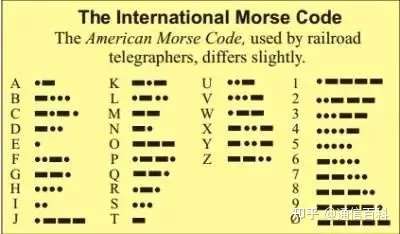
Morse code
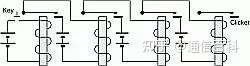
Relay schematic (a familiar feeling). Later, the invention of the telephone brought revolutionary changes, allowing electrical signals to be transmitted in analog form through continuously varying current.
For quite a long time, analog electrical technology dominated communication systems, until the real start of optical communication 100 years later.

Enjoy this article?
Subscribe to get new optical communication insights delivered to your inbox. Free, unsubscribe anytime.