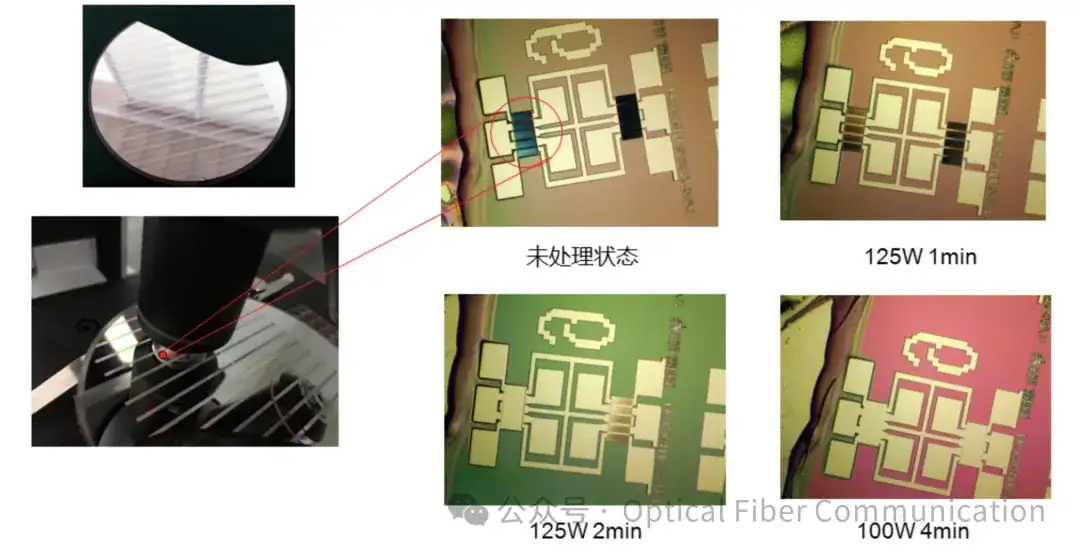
Usually, photoresist is only used as a temporary mask in the pattern-construction step. Therefore, the final step of the lithography process is usually to remove the photoresist, which we call stripping or resist removal. The requirements for the stripping process are: remove the resist quickly without residue, and cause no damage to the substrate or the materials deposited on it, so this is not an easy step to achieve.
Semiconductor photoresist removal processes are generally divided into two types: wet stripping and dry stripping. Here we call the solvent or solution used to remove photoresist the stripper, resist stripper, or resist remover; in the lift-off process, we also call it a stripping solution.
So, what kinds of strippers are there? And what is their stripping principle? Today let us first talk about the common wet strippers, which mainly come in the following four types:
Alkaline Stripper
Photoresist is mainly composed of organic polymers and contains a large number of chemical bonds such as ester bonds and ether bonds. In an alkaline environment, these chemical bonds are broken, causing the photoresist molecules to decompose. When the photoresist molecules decompose or their molecular weight decreases to a certain extent, their solubility in the alkaline stripper increases significantly, and they are then dissolved and removed from the wafer.
In addition, photoresist also contains certain acidic components, such as acidic photoinitiators, which are neutralized in an alkaline environment, further destroying the photoresist structure. Commonly used alkaline stripping chemicals are KOH and NaOH, which are powerful, fast-acting, and low-cost. However, this type of stripper also has an obvious drawback: sodium and potassium ions are common sources of mobile-ion contamination, which adversely affects chip manufacturing.
Acidic Stripper
Acidic strippers usually use concentrated sulfuric acid or a mixed solution of concentrated sulfuric acid and hydrogen peroxide. When sulfuric acid is combined with hydrogen peroxide, strongly oxidizing hydrogen sulfate (HSO₄⁻) and hydroxyl radicals (OH·) are produced. These oxidants can oxidize the organic substances in the photoresist, converting them into low-molecular-weight compounds that are more soluble in water. At the same time, hydroxyl radicals can also induce the breaking of the photoresist polymer chains, further reducing their molecular weight. However, acidic strippers also have limitations: they are somewhat corrosive to the underlying metals and can remove various metals, so they can only be used in specific fields.
Solvent-Based Stripper
The stripping principle of solvent-based strippers is mainly based on the diffusion of solvent molecules. Solvent molecules penetrate into the photoresist layer and interact with the photoresist molecules through physical adsorption, gradually entering the network structure of the photoresist. Over time, the interaction between solvent molecules and photoresist molecules gradually strengthens, causing the chemical bonds between photoresist molecules to break gradually. Due to the dissolving effect of the solvent on the photoresist molecules, the cross-linked network structure of the photoresist is gradually destroyed, eventually making it loose and completely removed. The advantage of this stripper is that it is gentle and causes no damage to the wafer, but the disadvantage is that the stripping rate is slow and it is volatile.
Hybrid Stripper
The hybrid stripper integrates the advantages of the above three strippers, usually combining an alkaline stripper with a surfactant. This hybrid stripper compensates for the slow stripping rate of solvent-based strippers and also solves the problem of alkaline strippers damaging the underlying metal. However, it is not easy to make an alkaline solution and a solvent blend harmoniously; if handled improperly, phase separation may occur.
Finally, different strippers have their own advantages and disadvantages, just like different people—there is no perfect stripper. In practical applications, only by fully leveraging a stripper’s advantages while avoiding its drawbacks can you select the appropriate stripper and ensure the smooth progress of chip manufacturing.
Related Reading
- What Is Strained-Layer Epitaxy?
- Structure and Principle of Common Dry Etching Equipment for MEMS
- What Is the Difference Between a Semiconductor Substrate and an Epitaxial Layer?
Enjoy this article?
Subscribe to get new optical communication insights delivered to your inbox. Free, unsubscribe anytime.