When light is transmitted in an optical fiber, the main losses come from three aspects: absorption by the optical medium, Rayleigh scattering, and loss caused by bending. Among the above factors, the loss caused by medium absorption of the fiber itself mainly occurs above 1700 nm. Relative to our optical communication windows of 850 nm,…
Technology
Light and Technology: The Road to Expanding Optical Transmission Capacity
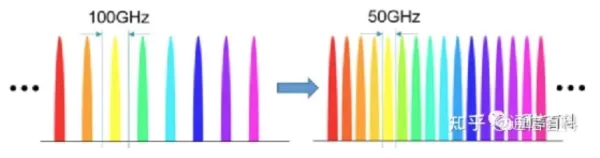
Since the invention of optical fiber decades ago, we have been trying every means to increase the capacity transmitted by optical fiber links. In the early days of optical communication, although single-wavelength on-off keying (OOK) modulation (turning the laser on and off to represent “1” and “0”) significantly improved the performance of previous electrical signal…
Understanding the Principles Behind Optical Fiber Communication Through Animations!
Optical fiber communication, due to its large communication capacity and long transmission distance, has become one of the main pillars of modern communication. Below is a wave of animations to give you a simple and intuitive understanding of the principles behind optical fiber communication. 1 Electromagnetic spectrum The operating wavelength of optical fiber communication is…
Light and Technology (3): Where Does the Light in Optical Communication Come From?
What is the essence of sunlight and lamplight, and how do they differ from the light in optical fiber communication? With these questions, we begin this installment of the “Light and Technology” journey. Ancient China has a relatively long history of studying light. In the “Mojing” compiled by Mozi, the sage of science, it is…