Murata has historically focused on materials, ceramic processing, RF, and high-frequency packaging. According to Murata’s presentation at this year’s CIOE2026, it is now moving into the optical engine and optical module markets.
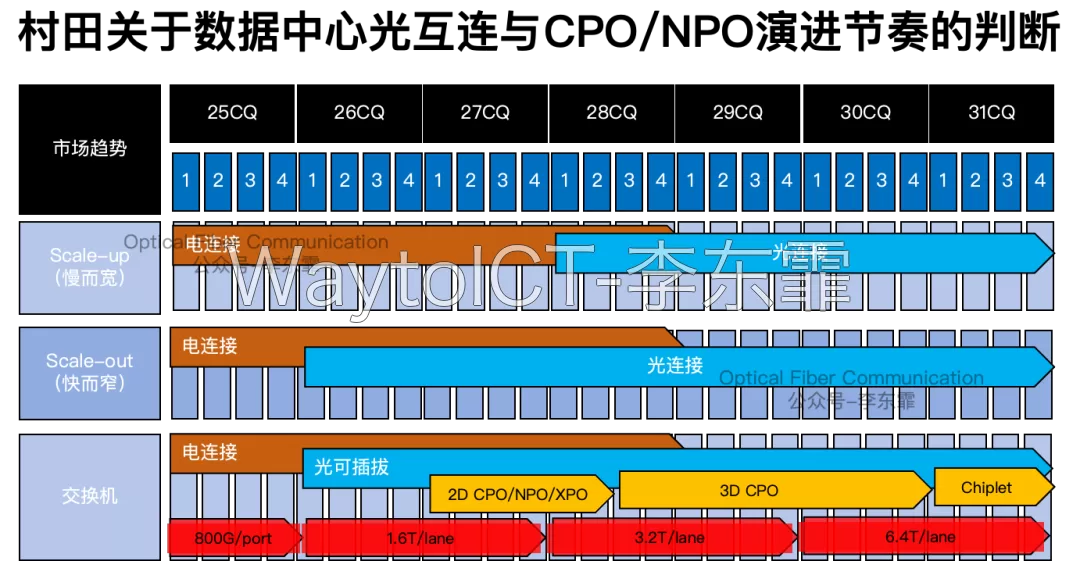
Murata believes that AI data centers, Scale Up/Out, and switches are all shifting from electrical to optical connections, concentrated in the 2026-2028 window — a clear market opportunity.
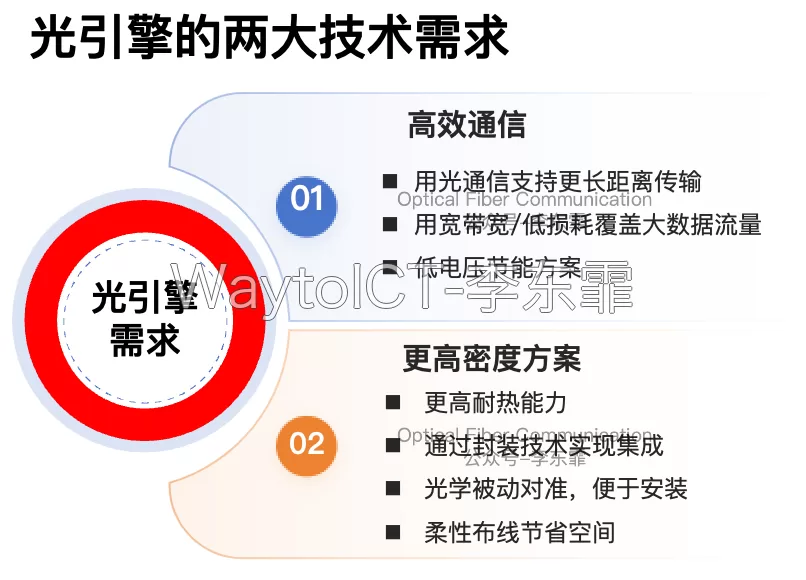
The corresponding optical engine requirements are twofold. One is long reach, higher bandwidth density, lower insertion loss, and low power — typical of low-power, narrow-linewidth Scale Out scenarios. The other is smaller size, denser routing, and flexible routing to save space — typical of high-speed, wide-temperature Scale Up scenarios.
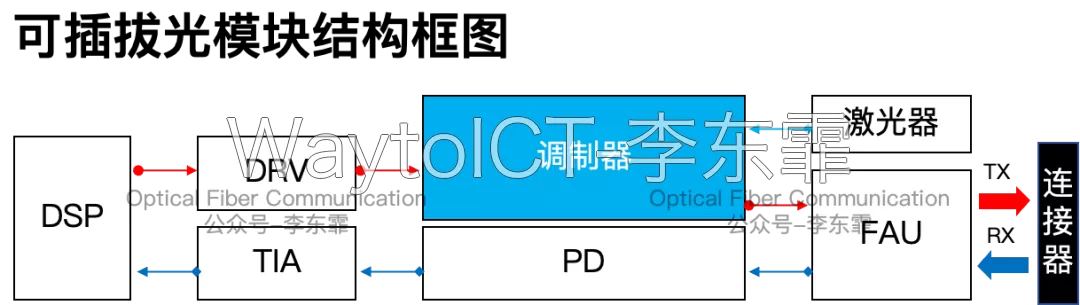
Murata plans to enter the market first with 400G/lane modulators in pluggable modules, then upgrade toward NPO/CPO and 800G/lane. Achieving 400G/lane modulation is the key, using the modulator position in a pluggable optical module as an example.
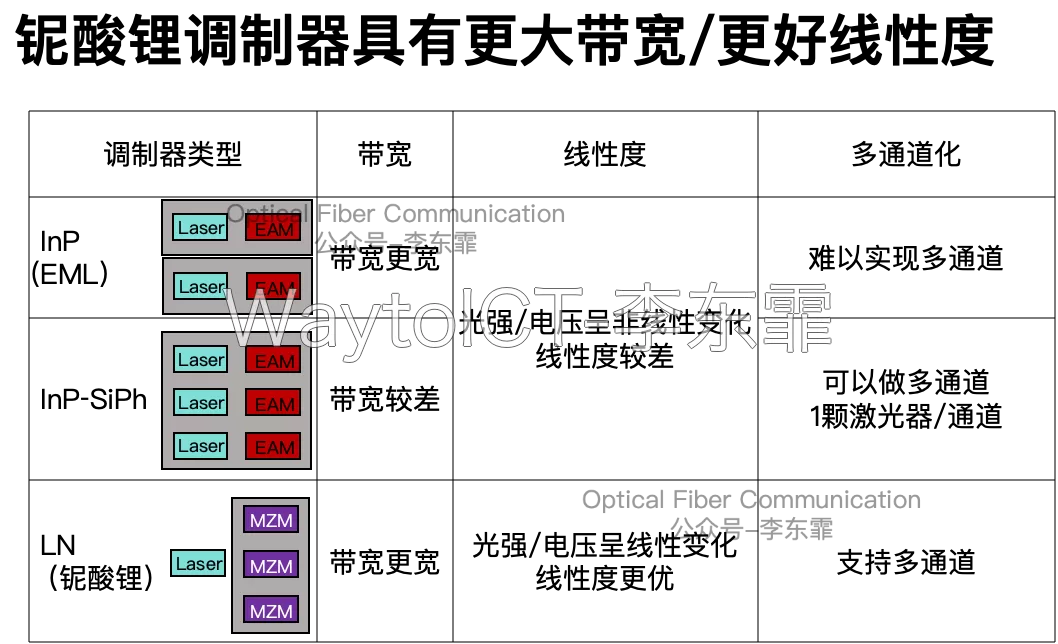
Murata compared several modulator technologies. Compared with other materials, TFLN offers wider bandwidth, higher linearity, and higher extinction ratio.
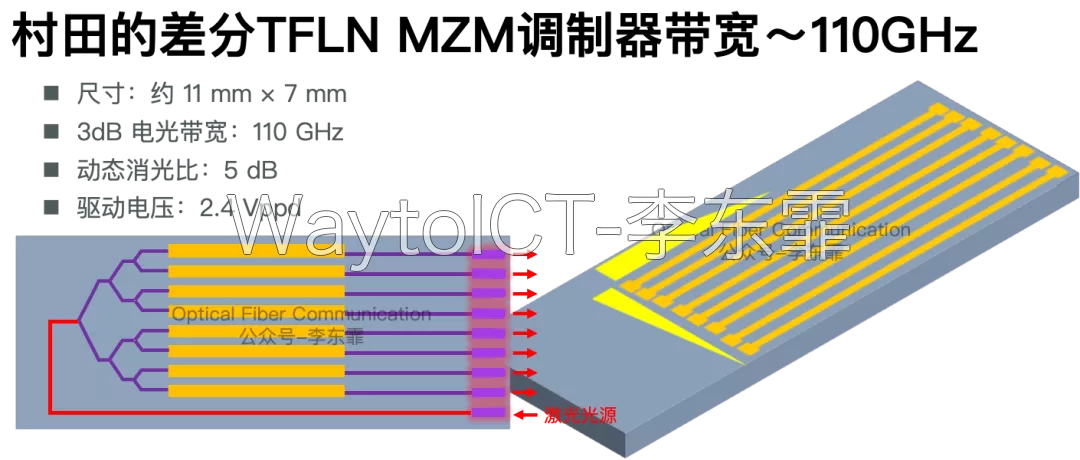
Murata’s TFLN modulator bandwidth can reach 110 GHz, achieving multi-channel output from a single laser and supporting 400G/lane and higher rates.
According to the CIOE2026 presentation, Murata will demonstrate and pursue design wins at OFC 2027, and begin sampling to Murata customers and driver IC vendors in Q4 2026.
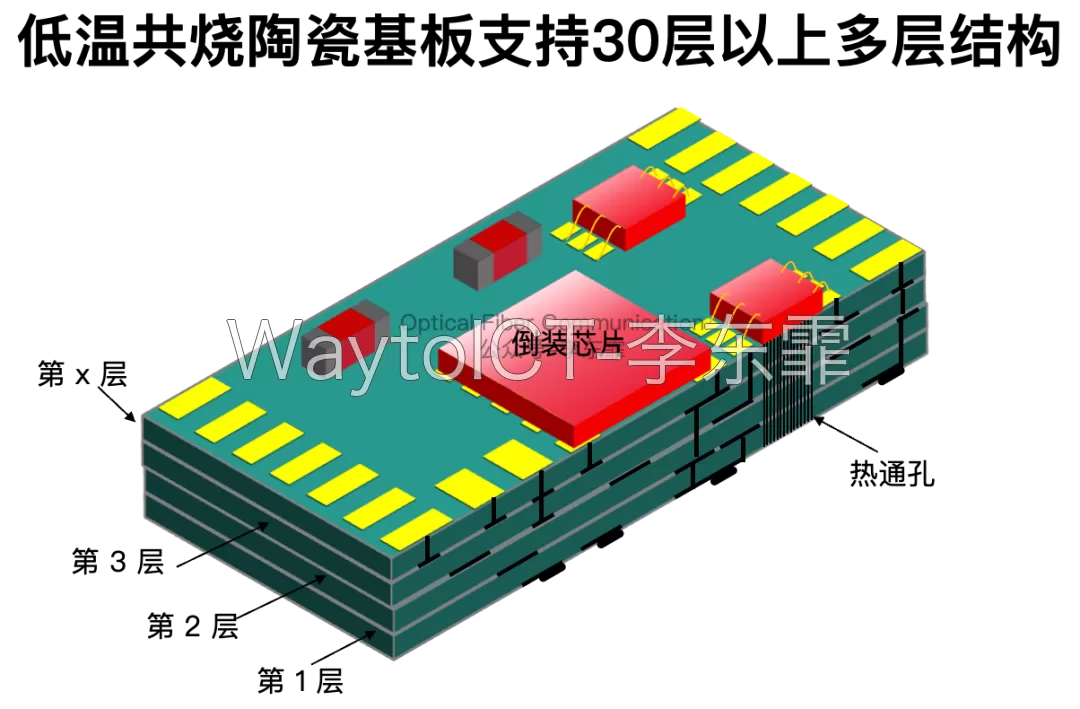
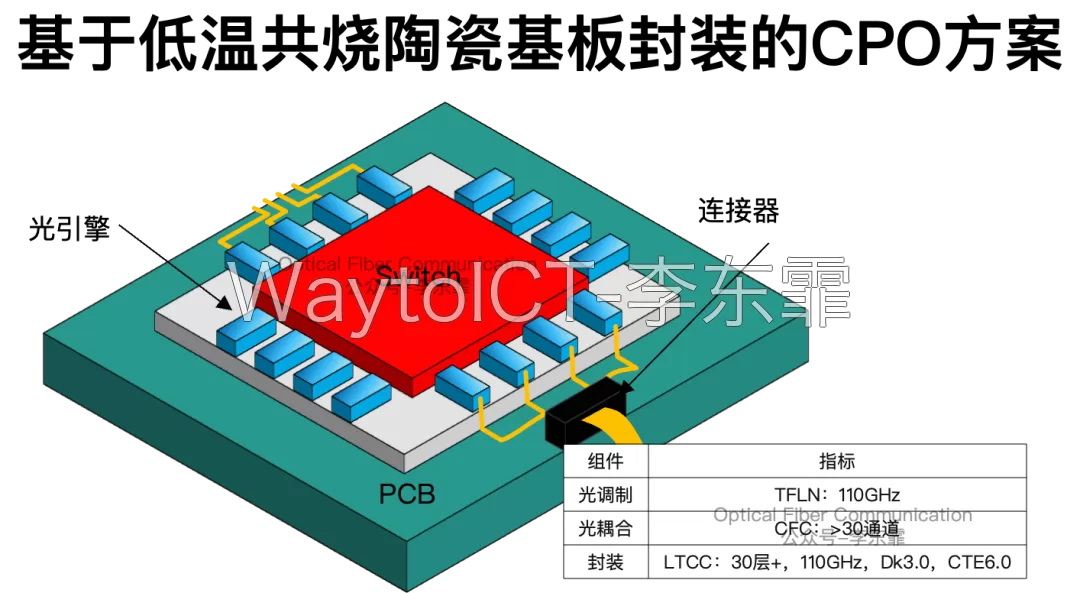
It also plans to launch LTCC-based NPO/CPO solutions for 3.2 Tbps and 400G/lane in 2028-2030. Its low-temperature co-fired ceramic (LTCC) substrate can support multilayer structures of over 30 layers. The CTE of LTCC is 6.0, versus 9.0 for ordinary PCB, so LTCC’s CTE is closer to the 2.6 of silicon photonics chips.
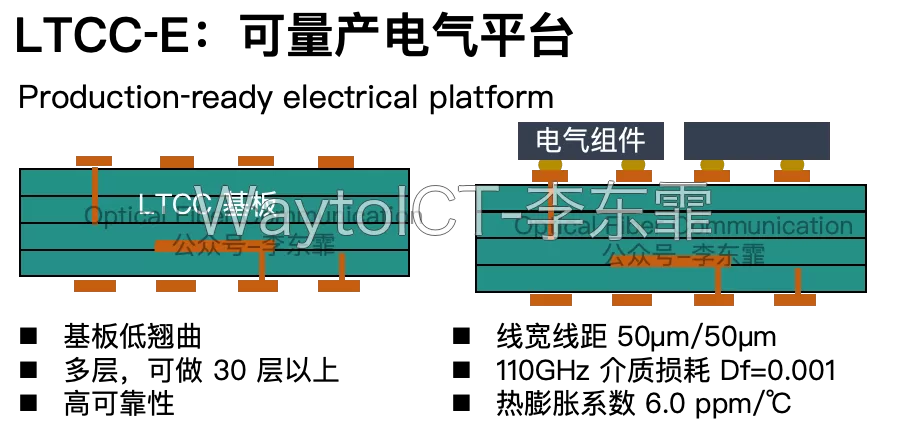
The current-stage LTCC-E is a production-ready pure-electrical platform, mainly for high-speed electrical connections and substrate support, featuring low loss, low warpage, and high reliability — suitable for existing optical module electrical substrate needs.
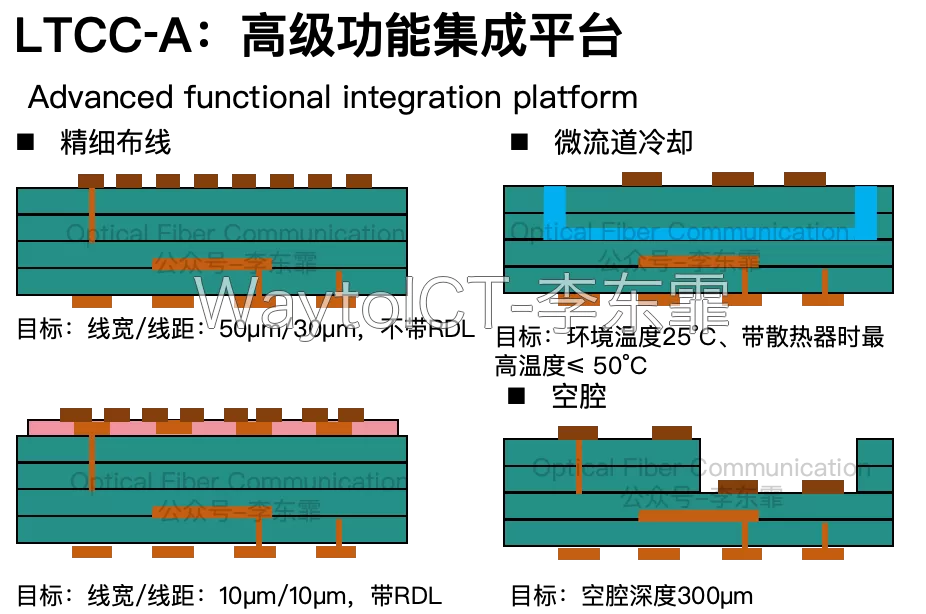
Under development is the LTCC-A advanced functional integration plane, which introduces finer routing, microfluidic cooling, and cavity structures on top of the electrical foundation, beginning to integrate thermal and mechanical functions for higher-integration, higher-power scenarios.
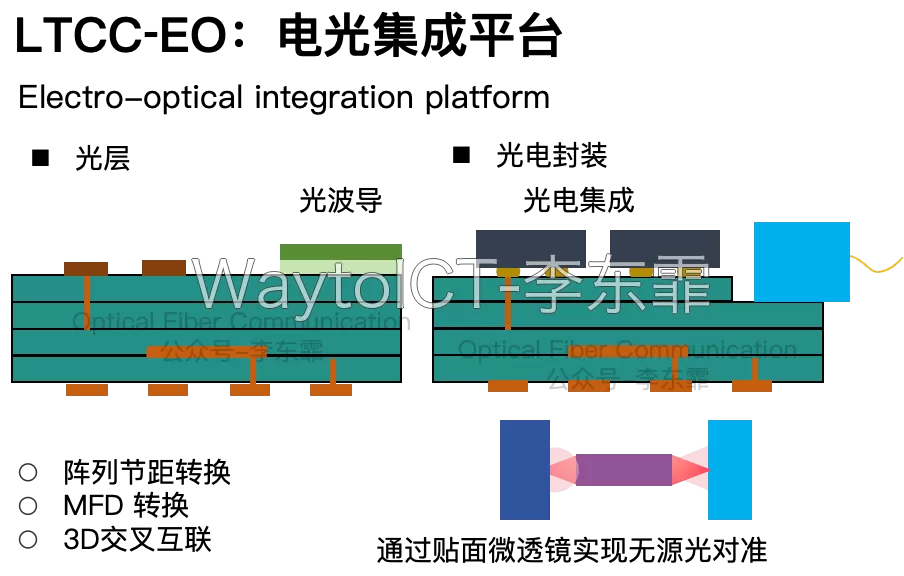
LTCC-EO is the ultimate goal, integrating optical waveguides, optical coupling, and opto-electronic assembly into the LTCC package to support CPO/NPO optical engines.
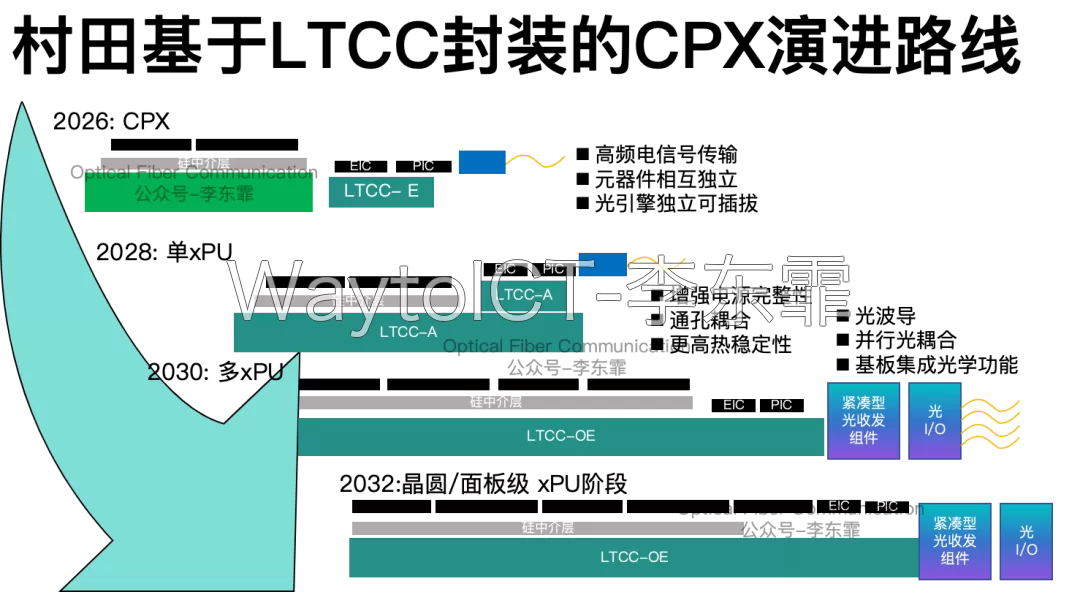
Finally, look at Murata’s three-stage evolution roadmap. Through the co-design of electrical, optical, thermal, and mechanical functions, it progresses step by step from LTCC-E and LTCC-A to LTCC-EO, evolving from an electrical substrate into an integrated optical engine platform.
Thanks for reading.
Apologies for any inaccuracies!
Optical chips, optical devices, and optical modules (OFC2026) report compilation, color-printed and A4-bound, ~525 pages in two volumes, ~200,000 characters. Please contact us to order at an affordable price!
Related Reading
- Scale Up: PLO, NPO, or CPO?
- Pluggable, OBO, NPO and CPO
- Two types of CPX socket interfaces for NPO and CPO
Enjoy this article?
Subscribe to get new optical communication insights delivered to your inbox. Free, unsubscribe anytime.