In 2023, the broadband market was characterized by rapid network expansion and evolution. Moreover, in large cities and rural areas alike, whether fixed access or wireless networks, network coverage in our country has been greatly improved and enhanced. In 2024, optimizing coverage and signal quality will be the major trend. For example, the “Signal Enhancement”…

The Capacity Limit of Optical Fiber Transmission Systems!
In the early 1980s, the rate of telephone modems was always 9.6 kbps; if this speed were increased, serious problems would appear on the line. To address this problem, a new error-correcting code was developed that could increase the modem rate by 1/4. This raises three questions: is there a better error-correcting code to further…
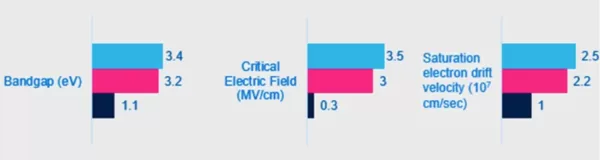
What Are Wide-Bandgap Semiconductors?
Gallium nitride and silicon carbide both belong to a class of materials called wide-bandgap (WBG) semiconductors. The energy difference between the highest occupied state of the valence band and the lowest unoccupied state of the conduction band is called the bandgap, and it represents the electrical conductivity of the material. In plain terms, the energy…
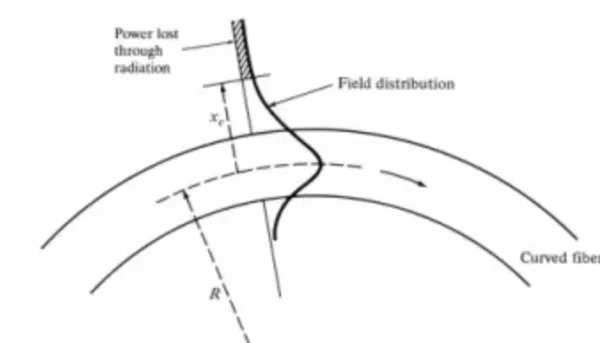
What Is Microbend Loss in Optical Fiber?
Among the optical losses of fiber in applications, a relatively complex type is microbend loss. With the development of components and fibers, microbend loss has become a loss factor worthy of attention. Components increasingly introduce direct optical switching to replace electrical switching, and in a very small space, fiber is prone to long-term stress. For…