
People in the optical communications field know that OFC is the industry’s annual technical bellwether, where global leading vendors and university labs put a year’s progress on the table. The problem is that there are thousands of papers, dozens of talks, and hundreds of slides scattered everywhere, all in pure-English data descriptions that are tedious…
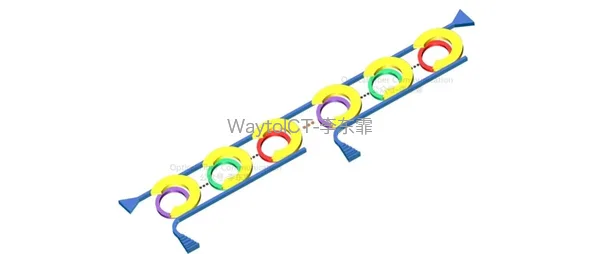
Basics: Microring Modulators and Optical Switches
I have already written about many companies’ solutions regarding microrings, and today let me discuss it again. HiSilicon / Intel: SiN-SOI Microring Modulator for CPO Intel: A 16-wavelength 800G DWDM optical interconnect solution based on microrings NVIDIA: A low-sensitivity microring resonator for reducing process error HG Genuine: A CPO silicon photonic engine with cascaded Bragg…
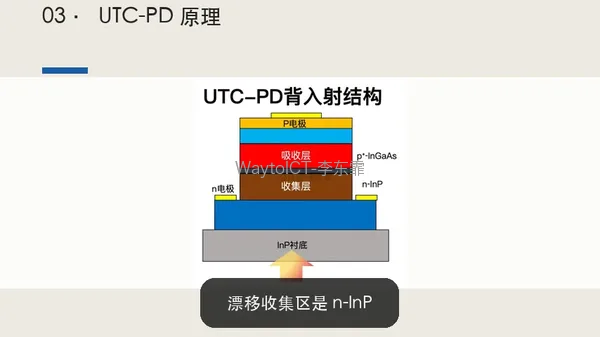
UTC-PD Basics: Uni-Traveling-Carrier Photodiode (Video)
This 2-minute-40-second video explains the uni-traveling-carrier photodiode (UTC-PD): why the conventional PIN encounters a bandwidth bottleneck, how the UTC-PD bypasses it, and how the waveguide-type structure improves absorption efficiency. The Conventional PIN Detector The conventional Si-PIN photodiode adds an I layer (intrinsic layer) between the P-type and N-type semiconductors, usually used as the absorption layer….
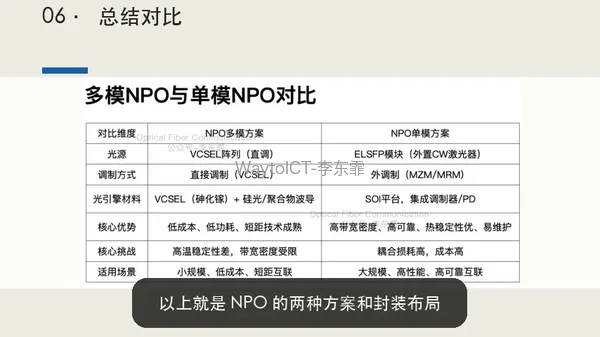
NPO Basics: Multimode and Single-Mode Schemes and Package Layout (Video)
This 2.5-minute video uses a slide deck to explain three key points about NPO (Near-Packaged Optics): why NPO is needed, the two schemes of multimode and single-mode, and how the package layout is arranged. Why NPO? In the conventional approach, the pluggable optical module is mounted at the panel edge, and the electrical signal has…