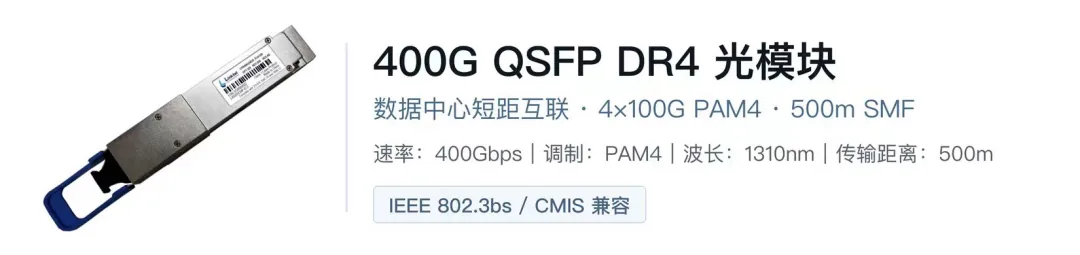
Murata has historically focused on materials, ceramic processing, RF, and high-frequency packaging. According to Murata’s presentation at this year’s CIOE2026, it is now moving into the optical engine and optical module markets. Murata believes that AI data centers, Scale Up/Out, and switches are all shifting from electrical to optical connections, concentrated in the 2026-2028 window…
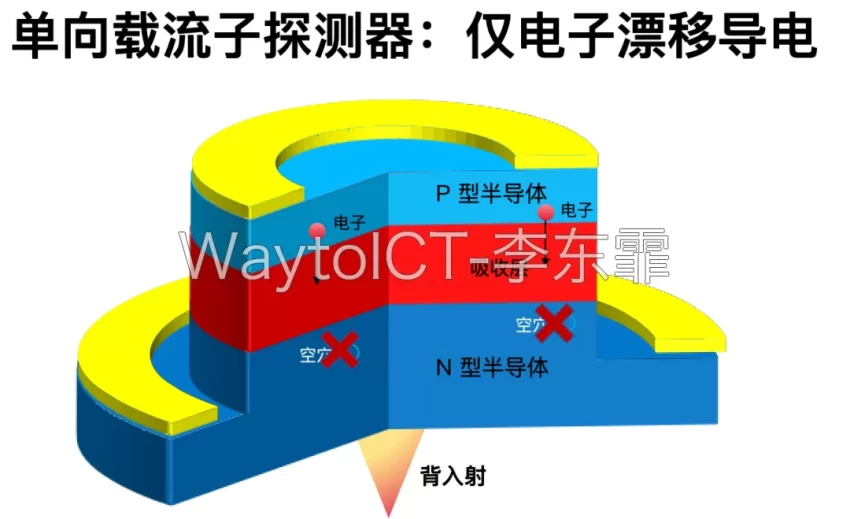
Fundamentals: Uni-Traveling-Carrier Photodetectors
A conventional Si-PIN photodiode adds an I layer, also called the intrinsic layer, between the P-type and N-type semiconductors, usually used as the absorption layer. After absorbing photons, the I layer generates electron-hole pairs. Under the reverse bias electric field, electrons drift toward the N side and holes drift toward the P side, and the…
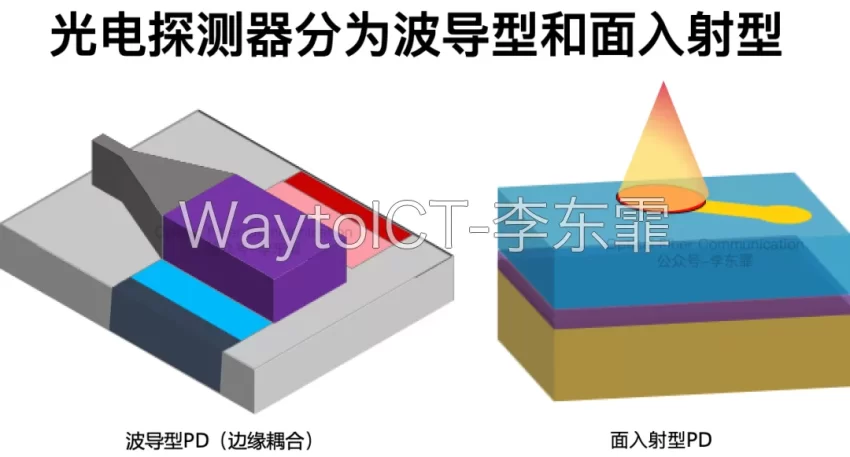
Fundamentals: Waveguide Photodetectors
A few days ago, in the article “AMD: Electro-Optical Co-Design and Key Trade-Offs of CPO Optical Transceivers“, it was mentioned that to minimize the input capacitance entering the TIA, a waveguide photodetector should be chosen. According to the way light is incident, photodetectors can be divided into surface-illuminated photodetectors and waveguide photodetectors. Surface illumination means…
What Is OCS? Working Principle, MEMS Technology, and Industry Landscape of Optical Circuit Switches
OCS (Optical Circuit Switching) is a hot technology in AI data center networking. It does not parse data packets; instead, it directly establishes configurable pure-optical paths between input and output ports, so the optical signal passes through the switch without any optical-electrical conversion. This is fundamentally different from packet-switching electrical devices such as Ethernet switches…