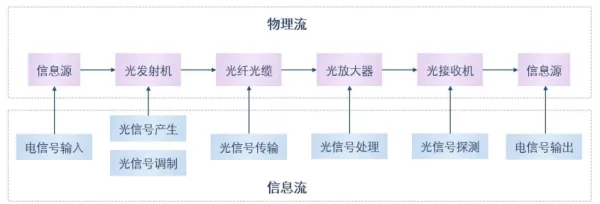
Optical communication, i.e., optical fiber communication, uses light waves as the signal carrier and optical fiber as the transmission medium, and is currently the mainstream fixed-network communication method. The optical communication revolution, from wide area networks and metropolitan area networks to local area networks, is gradually replacing electrical signal information transmission. Optical communication equipment is…
What Is the Exact Relationship Among Wafer, Silicon Wafer, Bare Die, and Chip?
Silicon wafer, silicon wafer, bare die, and chip represent the various stages of chip manufacturing. Below, let us look at the relationship among them, and by the way sort out the chip manufacturing flow. After melting silicon raw material (sand) at high temperature and undergoing process treatment, ultra-pure polycrystalline silicon with a purity of 9-11N…
4T-DNANF Nodeless Anti-Resonant Hollow-Core Fiber
Hollow-core fiber (HCF) is limited in its application to high-speed coherent communication and fiber optic gyroscopes due to its multimode characteristics, so there is an urgent need to efficiently filter out higher-order modes (HOM) within a short fiber length. However, existing designs find it difficult to simultaneously achieve ultra-low fundamental mode (FM) loss and ultra-high…
What Is G.654E Fiber, and What Are Its Advantages?
From the birth of the first optical fiber to the present, the types of fiber have become increasingly diverse, supporting optical communication systems in various fields. Today, let us talk about a new type of fiber – G.654E fiber, and its advantages compared with traditional G.652D fiber. Let us first give the basic concept. What…