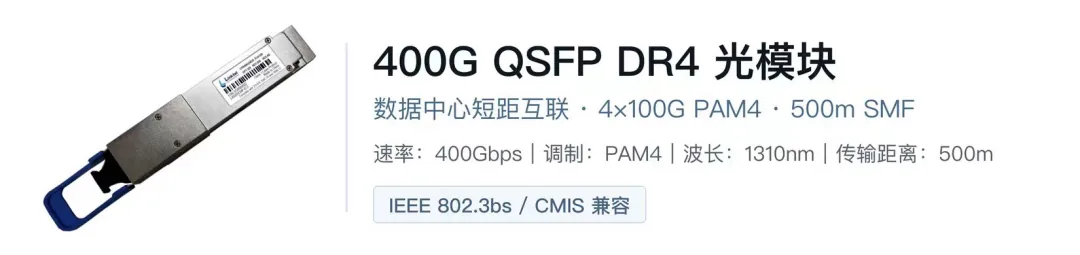
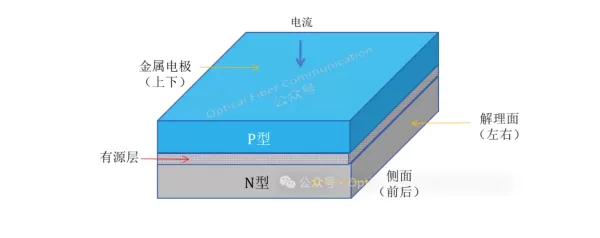
A laser is a high-frequency (10¹³~10¹⁵ Hz) electromagnetic wave, whose amplitude, frequency, phase, and intensity can all be controlled and varied. By making any one of these parameters change according to the modulation signal, information can be loaded onto and transmitted by the laser. Through the modulation process, low-frequency information such as speech, text, and…
Do Hybrid Optical-Electrical Cables Have Disadvantages?
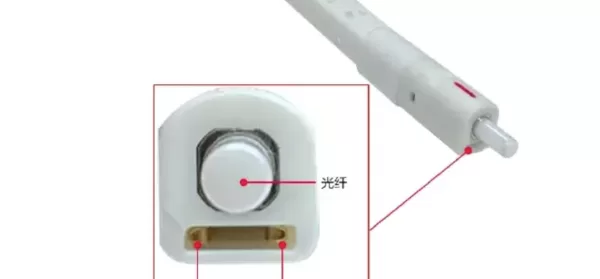
With the rapid development of technology, the hybrid optical-electrical cable, as an innovative cable integrating optical fiber and power-carrying copper wire, has many advantages but also some disadvantages. Today, let us talk about the disadvantages of hybrid optical-electrical cables. Before discussing the disadvantages, let me briefly summarize what a hybrid optical-electrical cable is, why it…
How Is Numerical Aperture Defined in Photolithography?
In the semiconductor photolithography process, when light passes through holes on the mask or passes sharp edges, the light intensity distribution changes direction due to diffraction effects. At the same time, diffraction takes away the exposure energy and causes the light to diverge, exposing areas on the photoresist that should not be exposed. To suppress…
What Is the Narrow-Channel Effect?
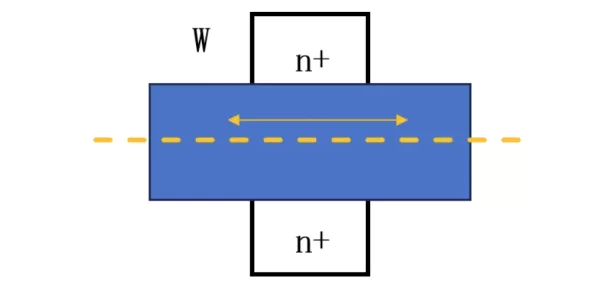
The channel width (usually denoted by W) is the lateral physical dimension of the conductive channel between the source and drain in a metal-oxide-semiconductor field-effect transistor (MOSFET), that is, the width perpendicular to the direction of carrier flow. When the channel width W shrinks to approach the lateral extension scale of the depletion layer, the…