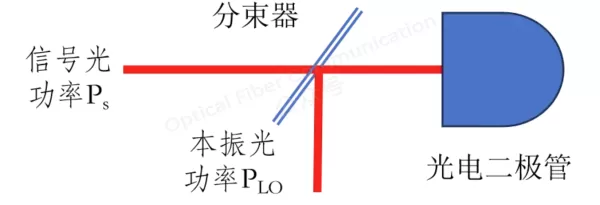
The detection of optical signals is divided into direct detection and heterodyne detection. Direct detection is a detection method that directly demodulates the information-bearing optical signal by using the photoelectric conversion function of the photodetector. It responds only to the time-varying information of the optical wave power and not to the phase information of the…
What Exactly Is a Semiconductor?
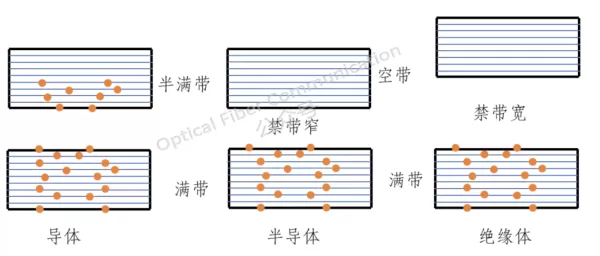
Substances in nature can be divided into conductors, semiconductors, and insulators according to their conductivity. Conductors, such as common metals, have strong conductive properties; insulators exhibit almost no conductivity; while semiconductors exhibit unique conductivity between that of conductors and insulators. This intermediate-state property makes them the core material for manufacturing electronic devices. From the perspective…
A 51.2Tb/s 5nm Monolithic Switch Chip for AI/ML Networks!
The Tomahawk 5 (BCM78900 series, abbreviated TH5) chip launched by Broadcom is a breakthrough product designed for next-generation data centers and AI/ML networks. This monolithic switch chip built on a 5nm process sets a new industry benchmark with a 51.2Tb/s switching capacity, doubling the bandwidth over the previous generation, while balancing high performance and low…
The Technology Evolution of DSP Chips for 1.6T Coherent Optical Communications!
Since the commercialization of CMOS chips and indium phosphide optical device technology in 2008, companies such as Marvell have promoted the transformation of coherent optical modules from traditional fixed equipment to pluggable form through six generations of DSP chip iterations. Taking the first-generation DSP in the 40 nm process as an example, its power consumption…