
In high-speed optical modules at 100G/200G/400G/800G and up to 1.6T/3.2T/6.4T, the EML (Electro-absorption Modulated Laser) is an almost indispensable core light source. It monolithically integrates a DFB laser and an electro-absorption modulator (EAM) on the same InP substrate, retaining the narrow linewidth and high power of the DFB while leveraging the high-speed electro-absorption effect of…
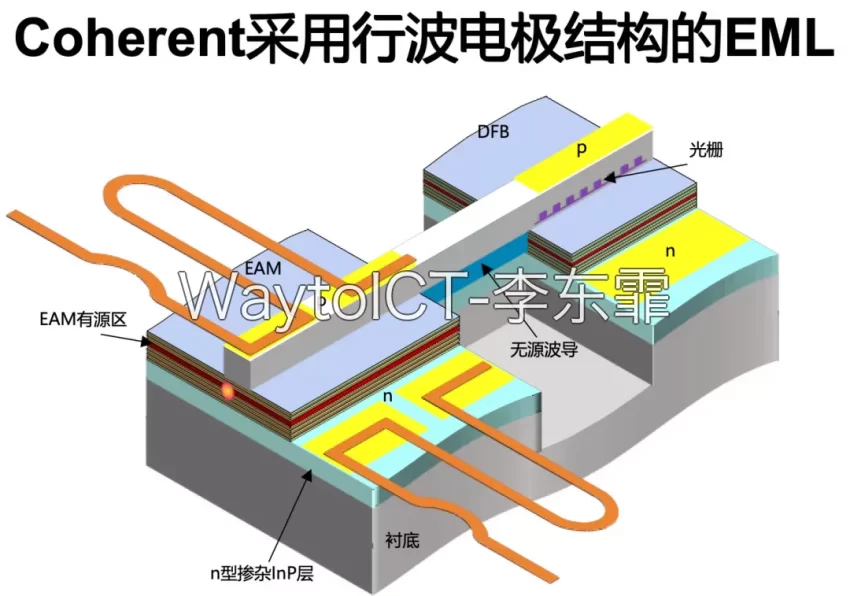
Coherent: Traveling-Wave Electrode High-Speed EML Solution
This article is part of the WaytoICT paid reading column. The following is a free preview; the technical analysis and accompanying schematics require a ¥19.9 payment to unlock! Key Knowledge Points Single-ended drive vs. conventional differential drive; Analysis of the lumped differential drive scheme and its shortcomings; Comparison of traveling-wave electrode structure and lumped structure;…
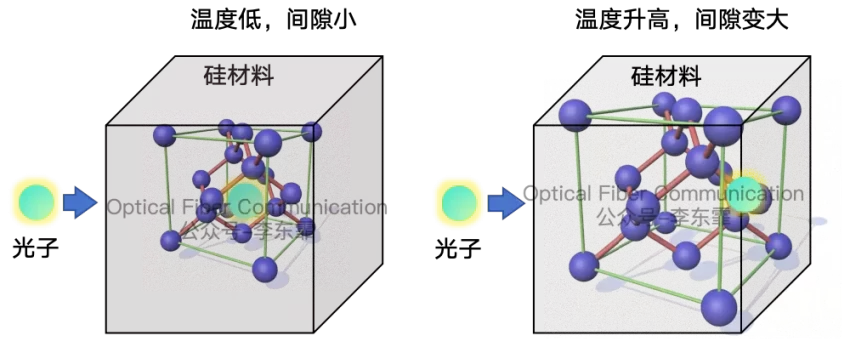
Basics: Thermo-Optic Effect in Silicon Photonics Chips
The phenomenon where the refractive index of a transparent optical material changes with temperature is called the thermo-optic effect. We use the following formula to quantify its magnitude. Here, the refractive index of the medium equals the speed of light in vacuum divided by the speed of light in the medium, that is: When the…
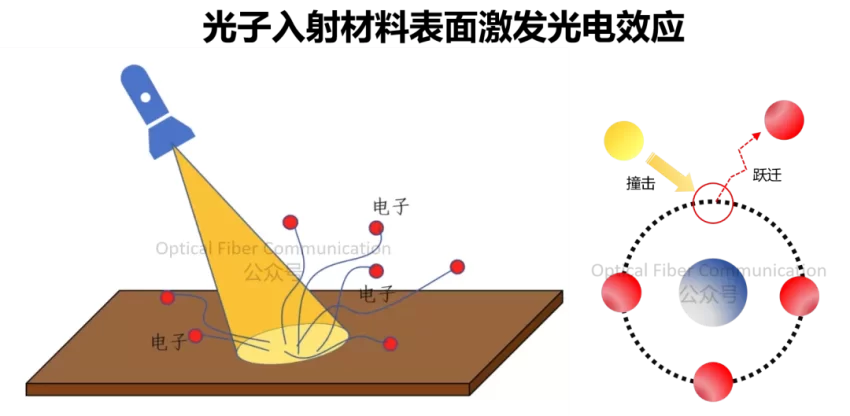
Basics: Photoelectric Effect and Electro-Optic Effect
When discussing the technology or principles of modulators, photodetectors, and silicon photonics chips, we often mention the photoelectric effect and the electro-optic effect. These two effects are both essentially changes in the energy and state of electrons/holes – a hole strictly corresponds to the absence of an electron. They only differ in the driving source…