In the traditional chip manufacturing and packaging flow, chips are first fabricated on the wafer, then cut into individual dies and packaged to protect them from physical damage and provide electrical connections. Moving the packaging step earlier to the wafer stage – packaging the chips directly on the wafer and eliminating the steps of dicing…

Why Is the Fiber End Face Polished at an 8-Degree Angle?
A fan sent us a private message in our community: “Why is the fiber end face usually polished at an 8-degree angle?” I believe everyone is already very familiar with the structure and transmission principle of fiber, so let us go straight to two images: The figure below is a fiber with a vertical end…
Hollow-Core Fiber – What Is Photonic Bandgap Fiber?
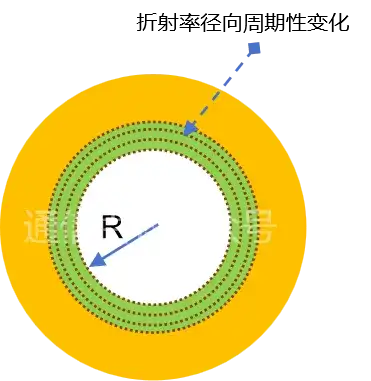
For a long time, the development of optical fiber communication has been limited by the characteristics of the core material, especially the loss characteristics. Silicon dioxide has low loss in the visible to near-infrared wavelength range, matching the operating wavelength of lasers, and therefore has become the preferred core material for fiber in long-distance telecommunications…
It’s Actually That Simple: The Mach-Zehnder (M-Z) Modulator
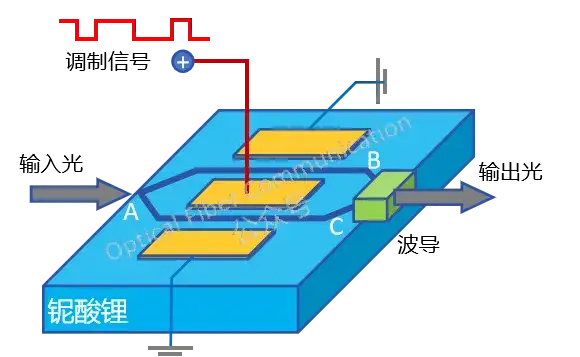
The moment I understood the principle of the Mach-Zehnder (M-Z) modulator, I thought of the double-slit experiment, which I believe we are all familiar with. It was first performed by Thomas Young in 1801 to demonstrate the wave nature of light. In this experiment, a beam of light passes through two very close slits and…